Estimated value
$4–14/lb fresh
Dried $18–45/lb
Dried, clean, fully zoned brackets. PSK/PSP extract market is huge; wild dried tea is a smaller cottage SKU. Must show true pores, not teeth.
medicinal · medicinal
Trametes versicolor
Also called Yun zhi, Kawaratake
$4–14/lb fresh
Dried $18–45/lb
Dried, clean, fully zoned brackets. PSK/PSP extract market is huge; wild dried tea is a smaller cottage SKU. Must show true pores, not teeth.
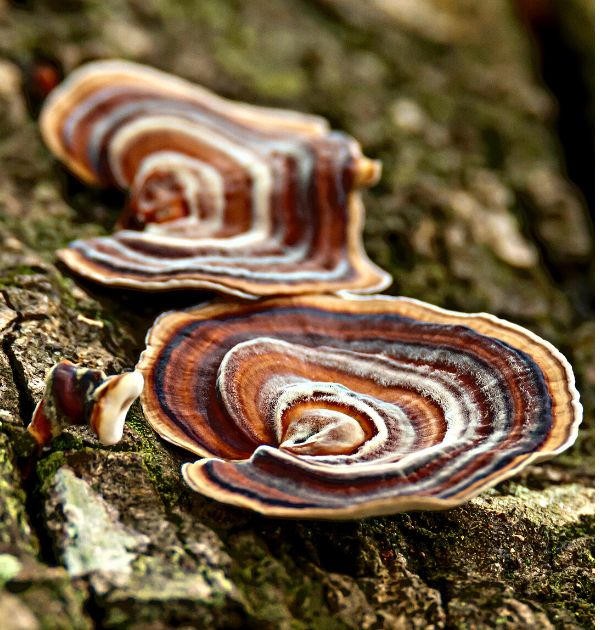
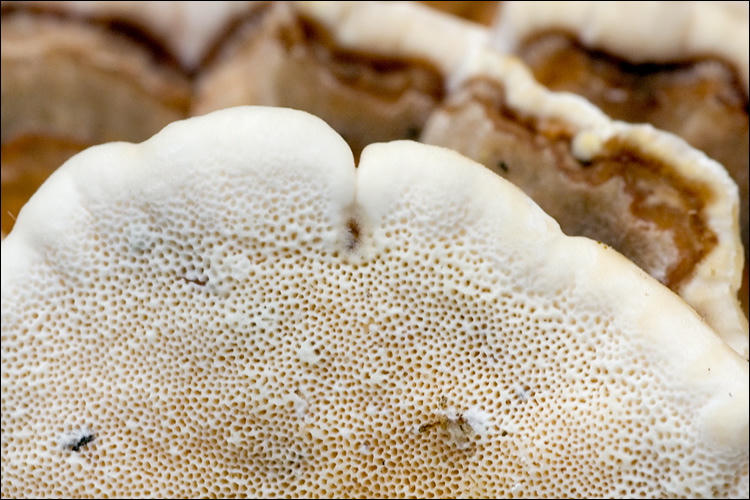
Thin, flexible brackets with concentric zones of brown, rust, blue-gray, and a white growing edge. Underside is a layer of tiny round white-to-cream pores — never gills, never teeth. Flesh is thin and leathery. One of the most studied medicinal polypores (PSK).
Dead hardwood logs and stumps.
Almost any hardwood deadwood in the wet months. Look at the ends of oak, maple, and beech logs. Year-round woody body; new growth after rain.
Cut clean brackets, brush, and dry immediately. Leave plenty. Confirm pores with a hand lens — false turkey tails have a smooth or toothed underside.
PSK (krestin) is a prescribed adjuvant in Japan. Western evidence is mixed-to-promising for immune support. This is not a cancer cure. Selling disease claims is regulated. Tea/food use is the conservative path; talk to a clinician.
None.
Legal tea/food. Supplement claims are regulated (FDA/CFIA/EU).
False turkey tail (Stereum)
Smooth underside, no pores. Common. Weaker tea, different fungus.
Violet-toothed polypore
Tooth-like underside, purple tones. Not T. versicolor.
Tick every required mark in the woods. 0/3 required. This still is not laboratory certainty.
Do not eat or sell this specimen. Missing required marks.