Estimated value
$3–10/lb fresh
Dried $18–40/lb
Cultivated supply is huge, so wild oysters are a chef novelty, not a gold rush. Tight, unyellowed clusters only.
culinary · choice
Pleurotus ostreatus complex
Also called Tree oyster, Dhingri
$3–10/lb fresh
Dried $18–40/lb
Cultivated supply is huge, so wild oysters are a chef novelty, not a gold rush. Tight, unyellowed clusters only.
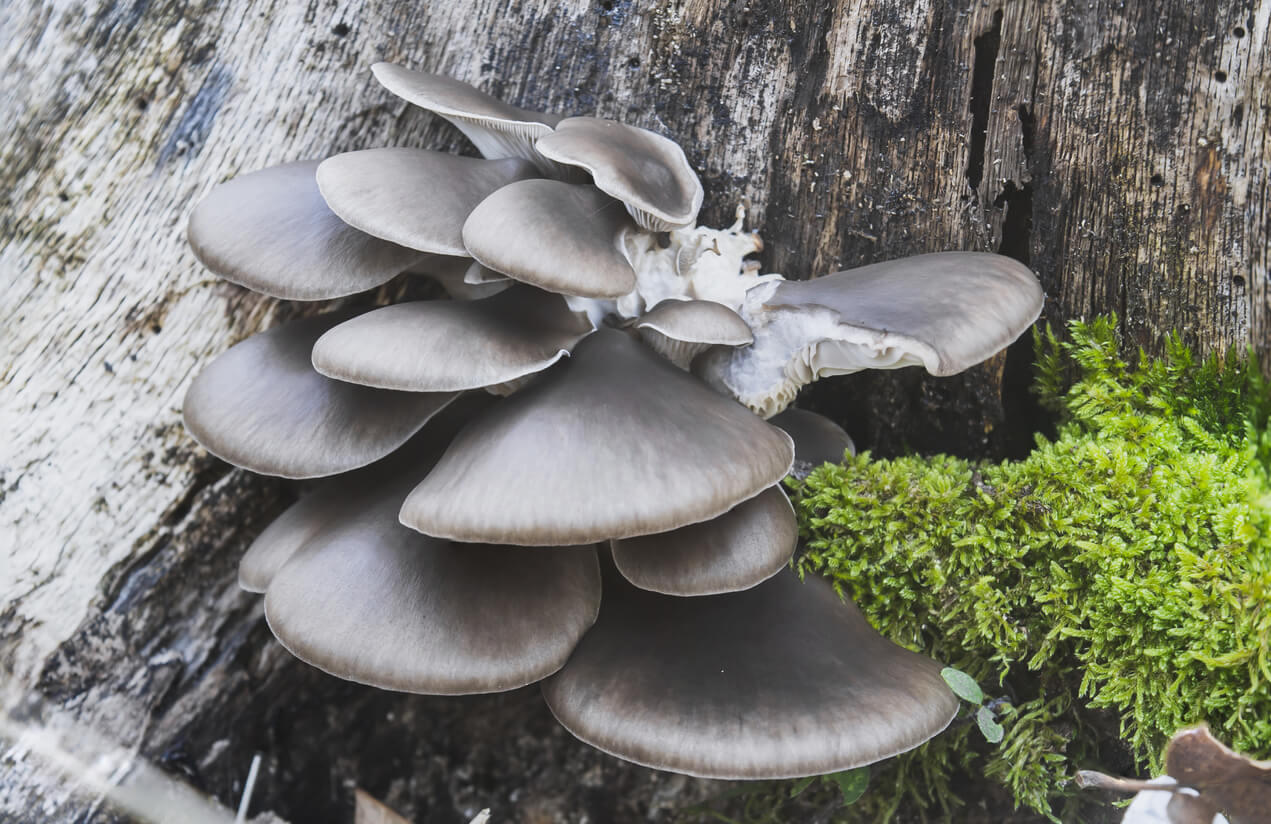
Shelf-like clusters on hardwood with off-center stems, decurrent white-to-cream gills, and a lilac-gray to tan cap. Spore print is lilac-gray. One of the safer beginner wood mushrooms — but still confirm gills + wood + no ring, and never confuse with small brown wood fungi.
Dead and dying hardwoods — aspen, cottonwood, oak, beech, elm.
Scan standing dead and fallen hardwoods after cold rains. They often fruit in the same log for years. Winter on the coast, cooler months inland.
Cut the cluster at the wood. Leave a pad. Trim tough bases. Use within two days; they sour fast.
Common food. Some cholesterol and immune research on cultivated Pleurotus. Not a substitute for medicine.
None. Not a Psilocybe. Does not bruise blue.
Legal food. Easy to cultivate legally if you want volume.
Angel wings (Pleurocybella)
Pure white, thinner, on conifer. Linked to rare but serious poisonings in Japan. Know your host tree.
Tiny, rusty-brown spores, on wood. Not a cluster of oyster shelves — but beginners mix 'wood mushrooms.'
Tick every required mark in the woods. 0/4 required. This still is not laboratory certainty.
Do not eat or sell this specimen. Missing required marks.