Estimated value
Not a sellable food species.
NEVER sell. NEVER eat. A single cap can kill. Responsible for most mushroom fatalities worldwide.
poisonous · deadly
Amanita phalloides
Also called Destroying cap
Not a sellable food species.
NEVER sell. NEVER eat. A single cap can kill. Responsible for most mushroom fatalities worldwide.
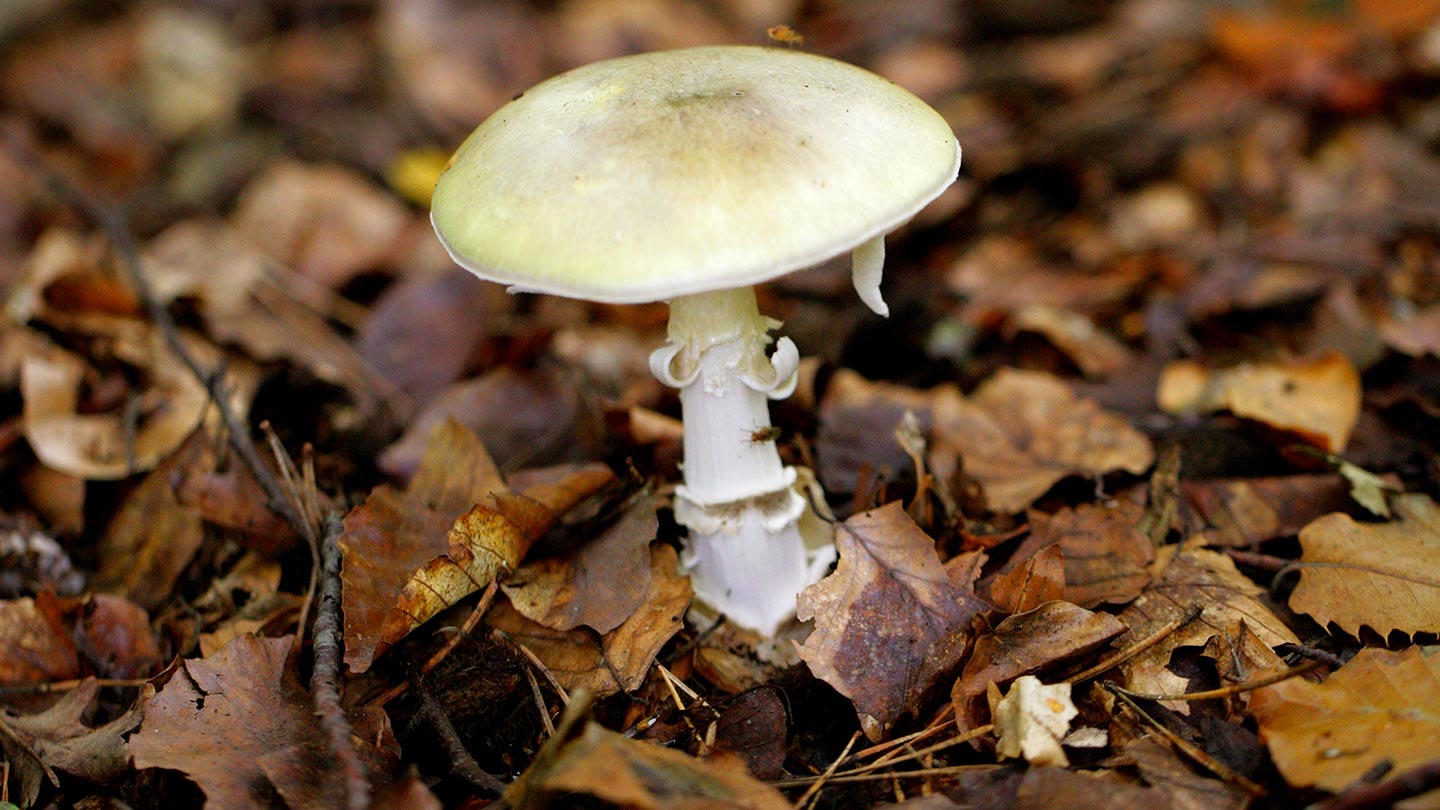
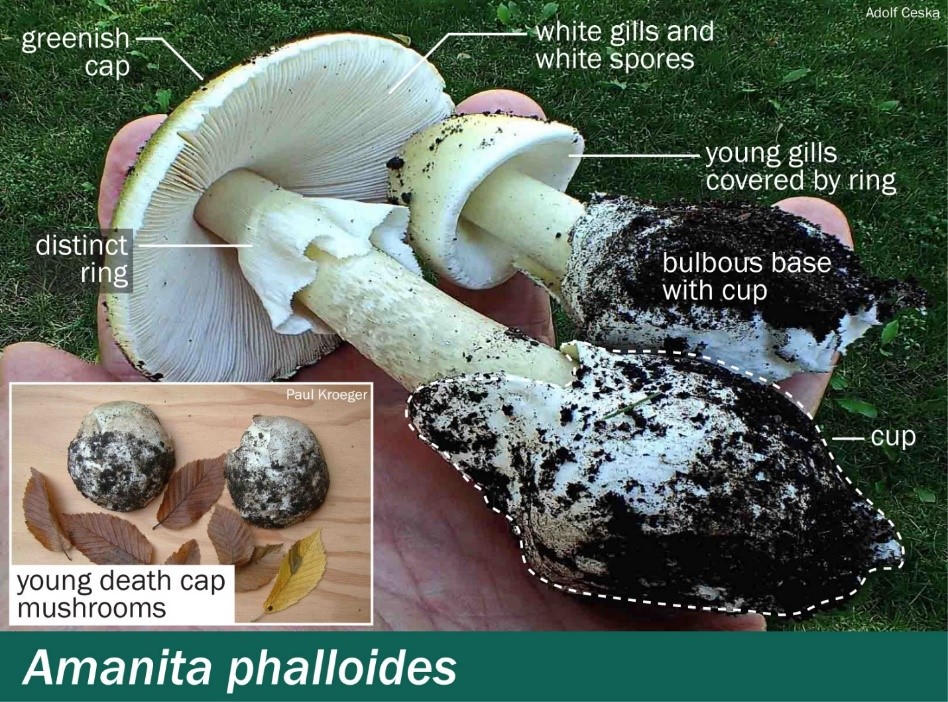
Green-yellow to olive (sometimes pale) cap, white free gills, white ring, and a sack-like cup (volva) at the base. Smells sweet then sickly. Invading North American oaks and urban plantings. This is why you always dig the base of white-gilled mushrooms.
Oak woodland, cemeteries, city parks, landscaped yards.
You do not hunt this to eat. You learn it so you never pick it. Common under oak, hazel, and urban landscaping trees in fall.
Do not pick for the table. Photograph, bag separately if collecting for a club ID table, wash hands.
None. Amatoxins destroy liver and kidneys after a false recovery period.
None. Delay-to-symptom poisoning is often mistaken for 'just a stomach bug.'
Not a food. Possession as a specimen is legal; selling as food is a crime.
Paddy straw / Caesar's / meadow mushrooms
People mistake death caps for edible Agaricus or Volvariella. Volva + white gills + ring = stop.
Tick every required mark in the woods. 0/3 required. This still is not laboratory certainty.
Do not eat or sell this specimen. Missing required marks.