Estimated value
$2–12/lb fresh
Dried $15–40/lb
Village wet-market staple across the Western Ghats after first monsoon. Price is local and volume-driven. Outsiders undercutting women sellers is a bad business.
culinary · choice
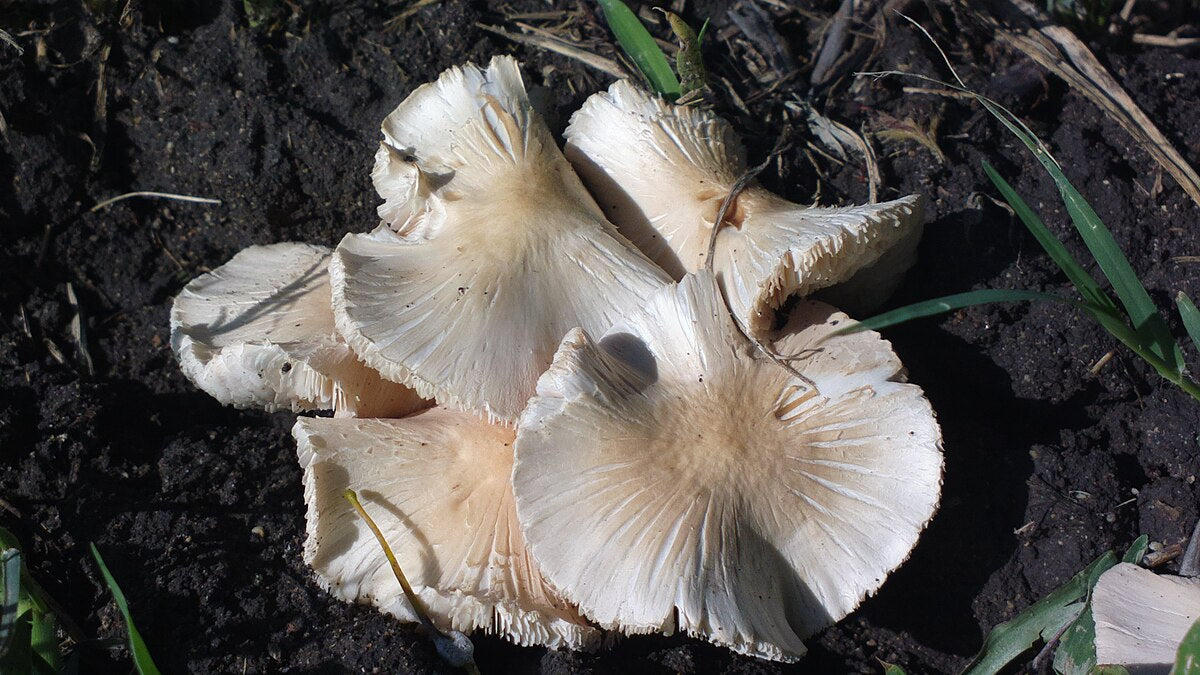
Termitomyces clypeatus / T. heimii / T. eurrhizus
Also called Termite hill mushroom, Waan / oli / perun-kōl
$2–12/lb fresh
Dried $15–40/lb
Village wet-market staple across the Western Ghats after first monsoon. Price is local and volume-driven. Outsiders undercutting women sellers is a bad business.
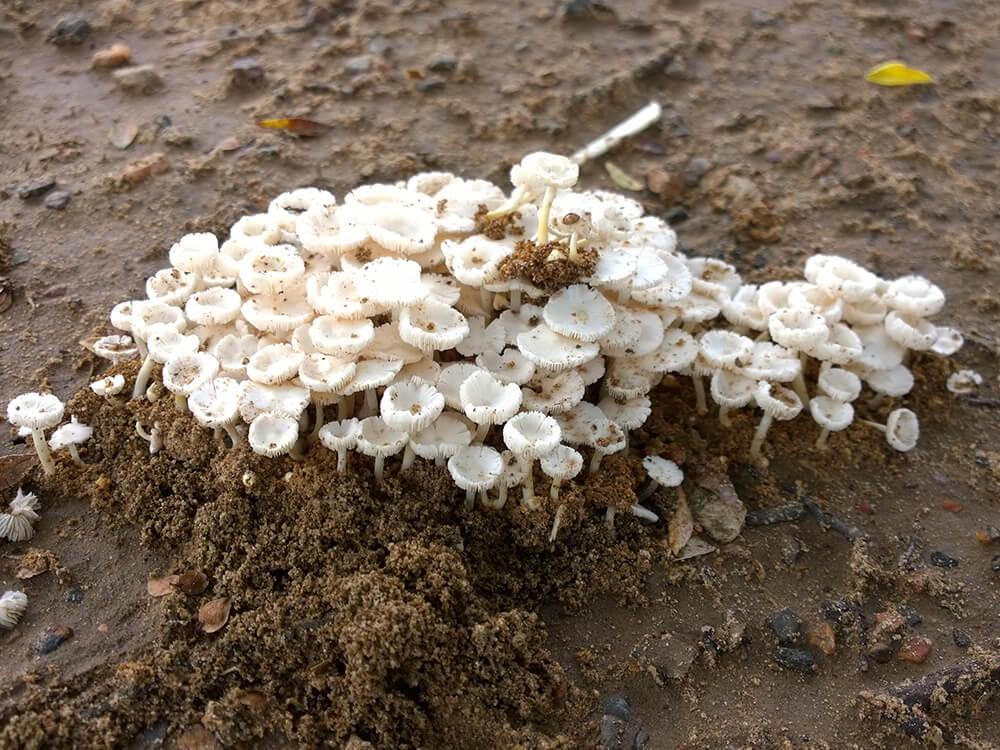
Pale cream to tan umbrella or spinytop mushrooms that fruit from termite combs. Many species have a long, rooting 'pseudorhiza' that traces down to the nest. Flesh is tender, gills crowded and free-to-adnexed, spore print pinkish-cream. This is the monsoon edible of South and Southeast Asia — not a chanterelle forest.
Active termite mounds, laterite fields, monsoon farm edges — never old-growth reserves.
Walk farm bunds, laterite, and village commons 3–10 days after the first soaking southwest-monsoon week. Look at active termite mounds and the soil around them. Small T. microcarpus fruits in dense white troops on the mound itself.
Twist and lift; the long root may snap. Brush dirt, do not soak. Cook the same day — they do not travel. Buy from the people who already work that ground if you are a visitor.
Traditional protein food. Some local tonic use. Treat as cuisine, not a drug.
None.
Legal food in village markets. Wildlife sanctuaries and reserve forests are closed. Respect community harvest rights.
Chlorophyllum / false parasol
Green spore print, no termite root, often on lawns. Causes violent GI upset. Print it.
Amanita buttons
Volva cup at the base, white free gills, no termite rhizomorph. Dig every base.
Tick every required mark in the woods. 0/4 required. This still is not laboratory certainty.
Do not eat or sell this specimen. Missing required marks.