Estimated value
$10–40/lb fresh
Dried $90–180/lb
A-grade unwormed buttons $15–40/lb. Wormy kings collapse to $3/lb or get dried.
culinary · choice
Boletus edulis complex
Also called Cep, Steinpilz, Penny bun
$10–40/lb fresh
Dried $90–180/lb
A-grade unwormed buttons $15–40/lb. Wormy kings collapse to $3/lb or get dried.
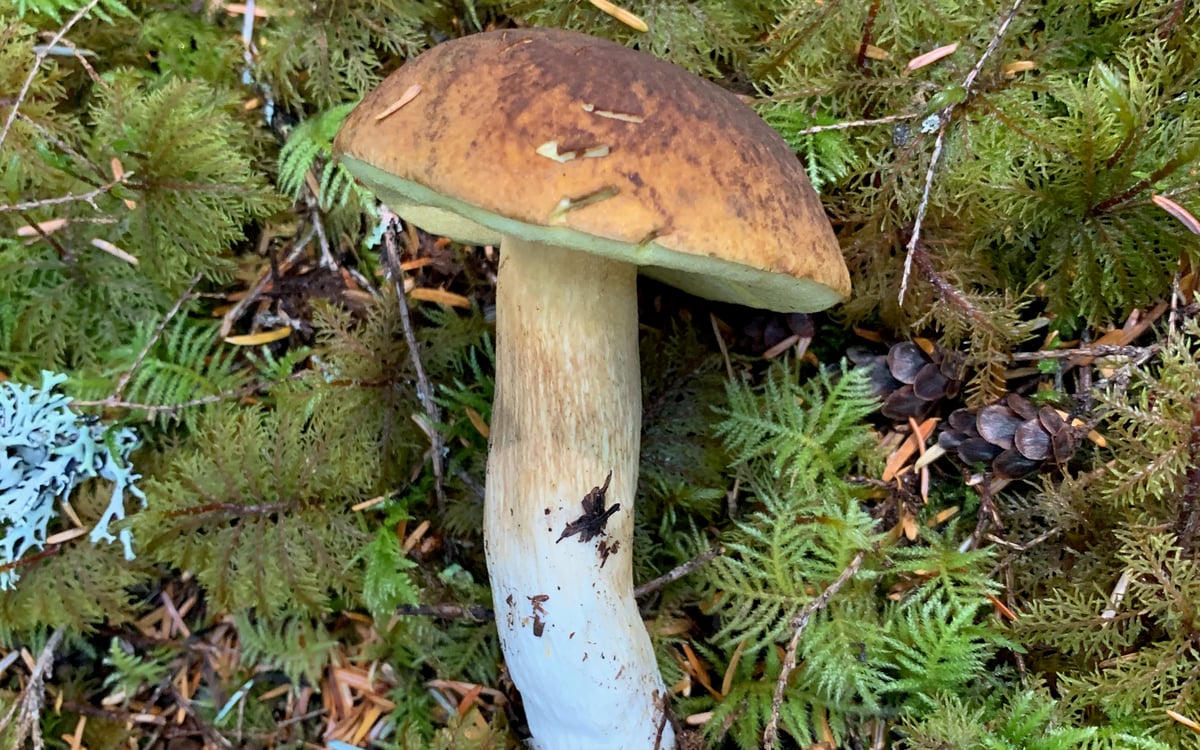
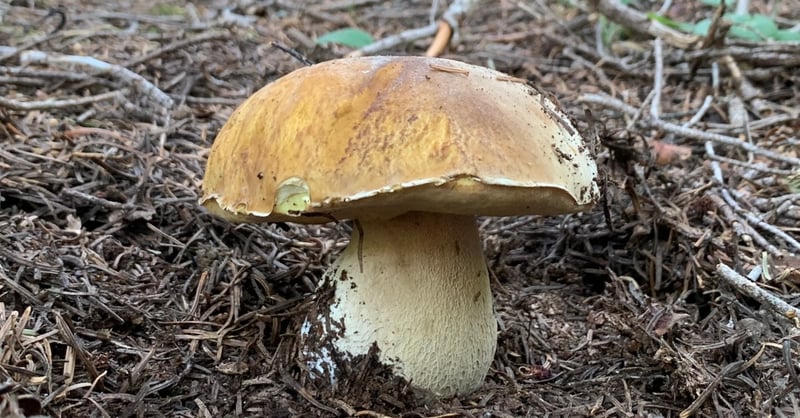
Fat brown bun cap over a swollen white stem with a fine net (reticulum) near the top. Underside is a sponge of pores, never gills. Pores start white, age yellow-olive. Flesh does not stain blue in true B. edulis.
Conifer and mixed woods, often near spruce.
Mycorrhizal with spruce, fir, pine, and birch. Hunt after cool rains in late summer–fall. Look on forest edges, old roads, and mossy benches. Check every button for maggots by slicing the stem.
Cut high enough to leave the base. Slice immediately — if the sponge is green and the stem is tunneled, dry it or leave it. Never soak.
Culinary. High protein for a fungus. Not a medicinal staple.
None.
Legal food. Commercial permits required on most public forests.
Bitter bolete (Tylopilus felleus)
Pink pores, strong bitter taste. Not toxic but ruins a pot. Nibble-and-spit test only after you know the genus.
Blue-staining boletes
Some are edible, some are not. Instant deep-blue stain + red pores = do not eat.
Tick every required mark in the woods. 0/4 required. This still is not laboratory certainty.
Do not eat or sell this specimen. Missing required marks.