Estimated value
$20–50/lb fresh
Dried $160–280/lb
Chefs pay most for small, clean, unwashed blacks and burn morels. Dirt in the pits tanks grade.
culinary · choice
Morchella spp.
Also called Yellow morel, Black morel, Burn morel
$20–50/lb fresh
Dried $160–280/lb
Chefs pay most for small, clean, unwashed blacks and burn morels. Dirt in the pits tanks grade.
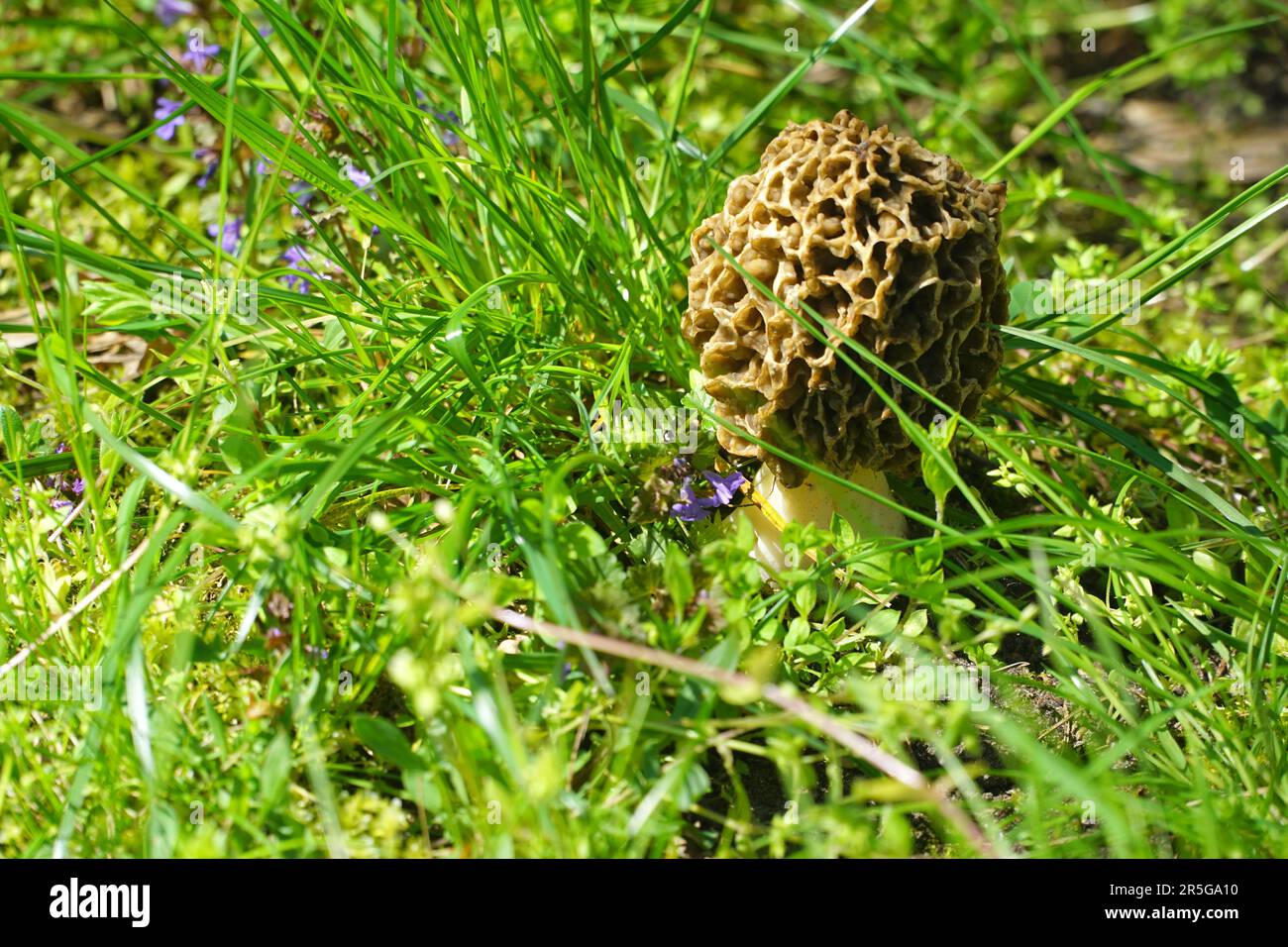
Hollow honeycomb cap fused to a hollow stem. Pits are true pits (not wrinkles). The single most hunted spring mushroom in North America. Always cut in half lengthwise — true morels are hollow from tip to base.
Disturbed hardwoods, orchards, river bottoms, and 1-year burn scars.
Hunt 10–18 °C soil after a warm rain. Natural morels hug dying elm, ash, apple, cottonwood and old-growth fir. Burn morels appear the spring after a wildfire, often at snowmelt line. Walk slowly and scan 1–3 m ahead; they camouflage as pinecones.
Pinch or cut at soil line. Do not yank the mycelium. Keep mesh bags so spores drop. Never wash in the woods. Split every specimen in the field and discard anything not fully hollow.
Food mushroom. Some traditional use as a general tonic. Not a primary medicinal species. Always cook — raw morels cause GI distress.
None. Not a psilocybin fungus.
Legal to forage and sell as food where permits allow. Many US national forests require a free or cheap personal-use permit; commercial permits are separate and capped.
Brain-like wrinkled (not pitted) cap; stem stuffed or chambered, not hollow. Contains gyromitrin, which can be fatal.
Verpa / half-free morel
Cap hangs like a thimble, attached only at the top. Edible to some after cooking, but treat as advanced and easy to confuse.
Tick every required mark in the woods. 0/4 required. This still is not laboratory certainty.
Do not eat or sell this specimen. Missing required marks.