Estimated value
$3–16/lb fresh
Clean, fully parasitized, unrotten pieces $3–10/lb. Soft or white-pocked rejects.
culinary · edible
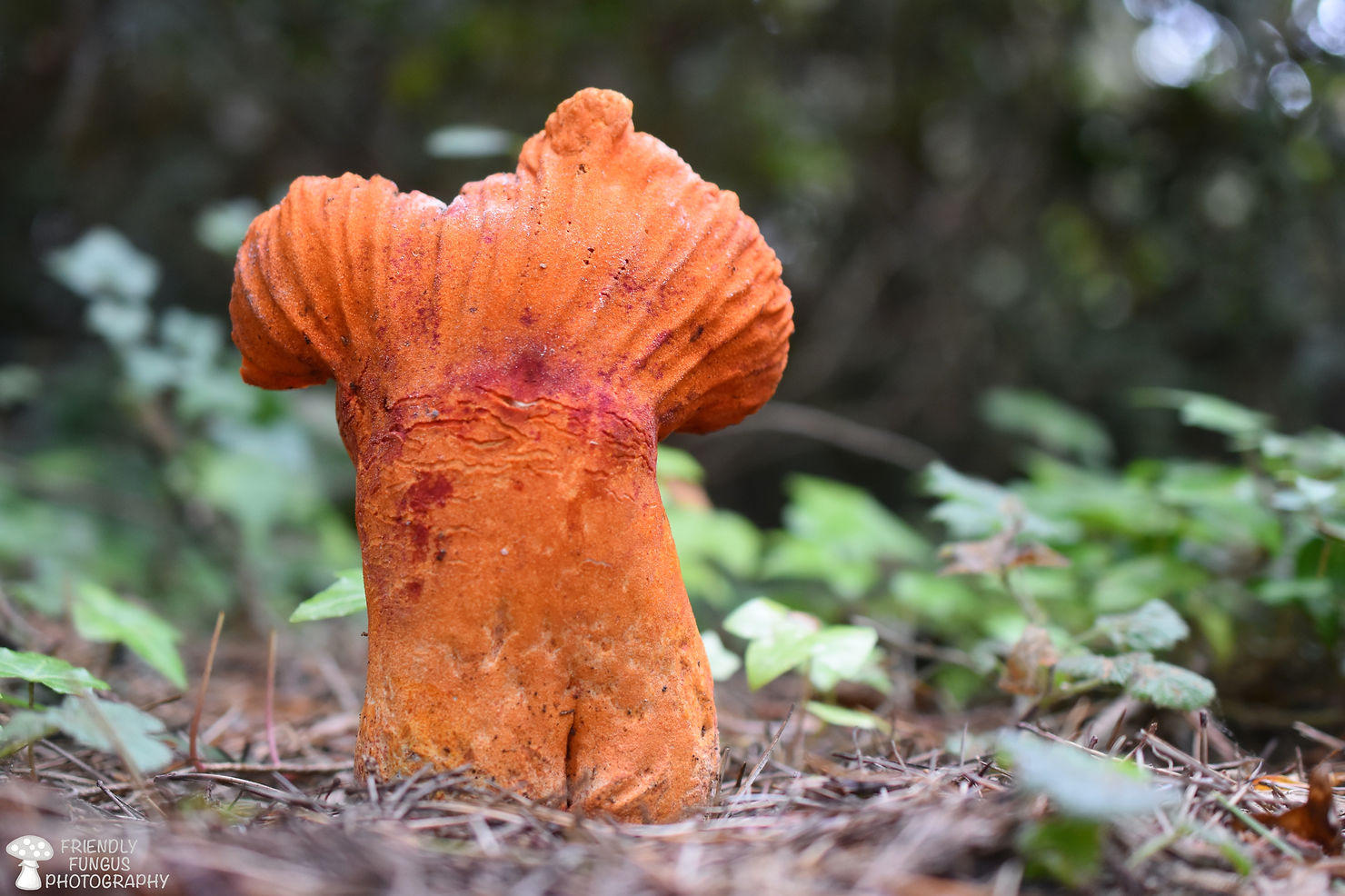
Hypomyces lactifluorum
Also called Orange lobster
$3–16/lb fresh
Clean, fully parasitized, unrotten pieces $3–10/lb. Soft or white-pocked rejects.
Not its own mushroom — a bright orange-red parasite that takes over Russula or Lactarius, turning them into a seafood-scented, dense club. Interior should be firm and white-orange, never mushy or insect-riddled.
Conifer woods where Russula/Lactarius fruit.
Scan duff for neon orange. Often half-buried. Common in fir and hemlock after summer rains into early fall.
Cut, then trim any soft, white, or buggy parts in the field. Only keep dense, fully colored specimens.
Culinary. Dense texture, seafood aroma when cooked.
None.
Legal food. Some buyers require it fully cooked on menus (standard).
Under-parasitized Russula
If white gills still show, you may have a peppery or unknown Russula. Only take fully coated, firm ones.
Tick every required mark in the woods. 0/3 required. This still is not laboratory certainty.
Do not eat or sell this specimen. Missing required marks.