Estimated value
$8–25/lb fresh
Dried $80–140/lb
PNW buyers (2025) often pay ~$8–12/lb clean yellows. Tight, unwormed buttons bring restaurant premiums.
culinary · choice
Cantharellus formosus / C. cibarius complex
Also called Pacific golden, Girolle, Pfifferling
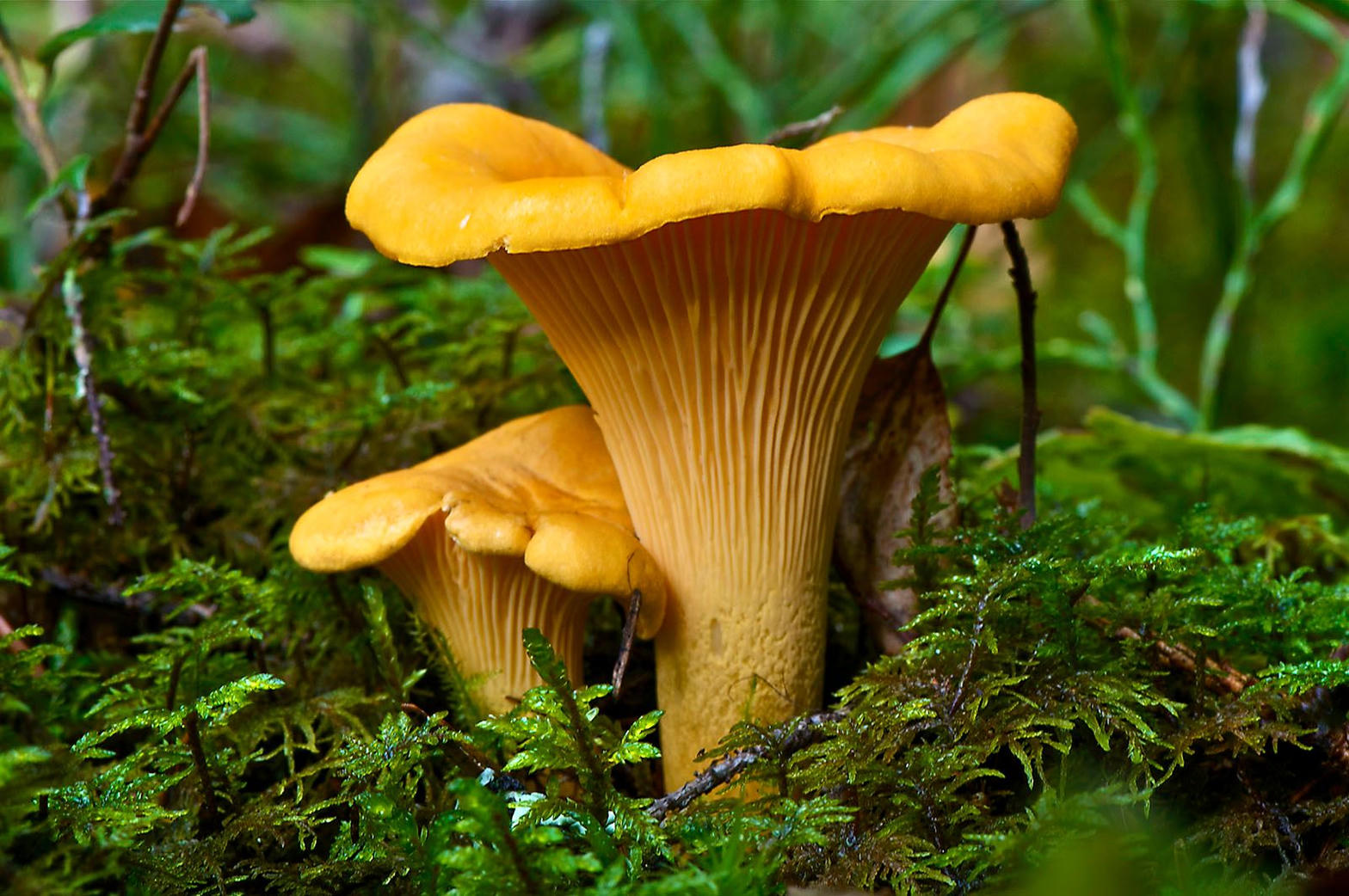
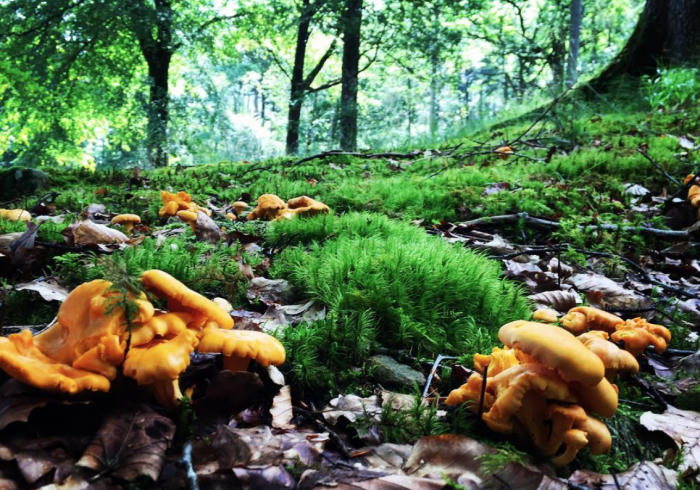
$8–25/lb fresh
Dried $80–140/lb
PNW buyers (2025) often pay ~$8–12/lb clean yellows. Tight, unwormed buttons bring restaurant premiums.
Vase-shaped gold to apricot mushroom with blunt, forked false gills that run down the stem. Flesh is solid and white-yellow. Famous apricot scent. One of the safest beginner edibles if you confirm false gills + fruity smell + white interior.
Mossy conifer woods, especially Douglas-fir, hemlock, spruce.
Look on mossy slopes under conifers 2–10 days after soaking rain when nights cool. They often fruit in the same patches yearly. Scan for gold against green moss, not on wood.
Cut or pinch at the base. Flick off slugs. Do not rake moss — that kills future flushes. Keep dry and cool; they sweat and sour if bagged wet.
Nutrient-dense food. Not a classic medicinal. Some antioxidant research; treat as cuisine.
None.
Legal food species. Commercial harvest on Crown / USFS land needs a permit. Private land needs owner permission.
True sharp gills, grows in clusters on wood, no apricot smell. Causes severe vomiting.
False chanterelle (Hygrophoropsis)
Deeper orange, thinner true gills, often on rotting wood. Not deadly but a poor edible.
Tick every required mark in the woods. 0/4 required. This still is not laboratory certainty.
Do not eat or sell this specimen. Missing required marks.