pdfvoss.com · Field Ledger
United States — Southeast & Gulf
First flush Apr 10 · Last flush Dec 1
Long season, high diversity, high snake-and-tick load. Chanterelles in summer heat. Lions and chickens love southern oaks.
Zones
Piedmont oaks
Oak-pine · 100–400 m
Southern Blue Ridge
Cove forest · 400–1,600 m
Gulf coastal plain
Pine, live oak · 0–80 m
Ozark / Ouachita
Oak-hickory ridges · 200–700 m
Season table
| Species | First | Last | Peak | $/lb |
|---|---|---|---|---|
| Golden Chanterelle Cantharellus formosus / C. cibarius complex | May 15 | Sep 20 | Jun–Jul | 8–25 |
| Chicken of the Woods Laetiporus sulphureus / L. conifericola | Apr 10 | Nov 1 | May + Sep | 4–15 |
| Black Trumpet Craterellus cornucopioides / C. fallax | Jun 15 | Sep 15 | Jul–Aug | 20–50 |
| Lion's Mane Hericium erinaceus | Sep 1 | Dec 1 | Oct | 12–28 |
Permits & selling
National forests vary. Wildlife management areas often restrict. Heat safety is part of the permit you give yourself.
Same US food-code story. Keep a cold chain — summer mushrooms sour in an hour.
Species plates
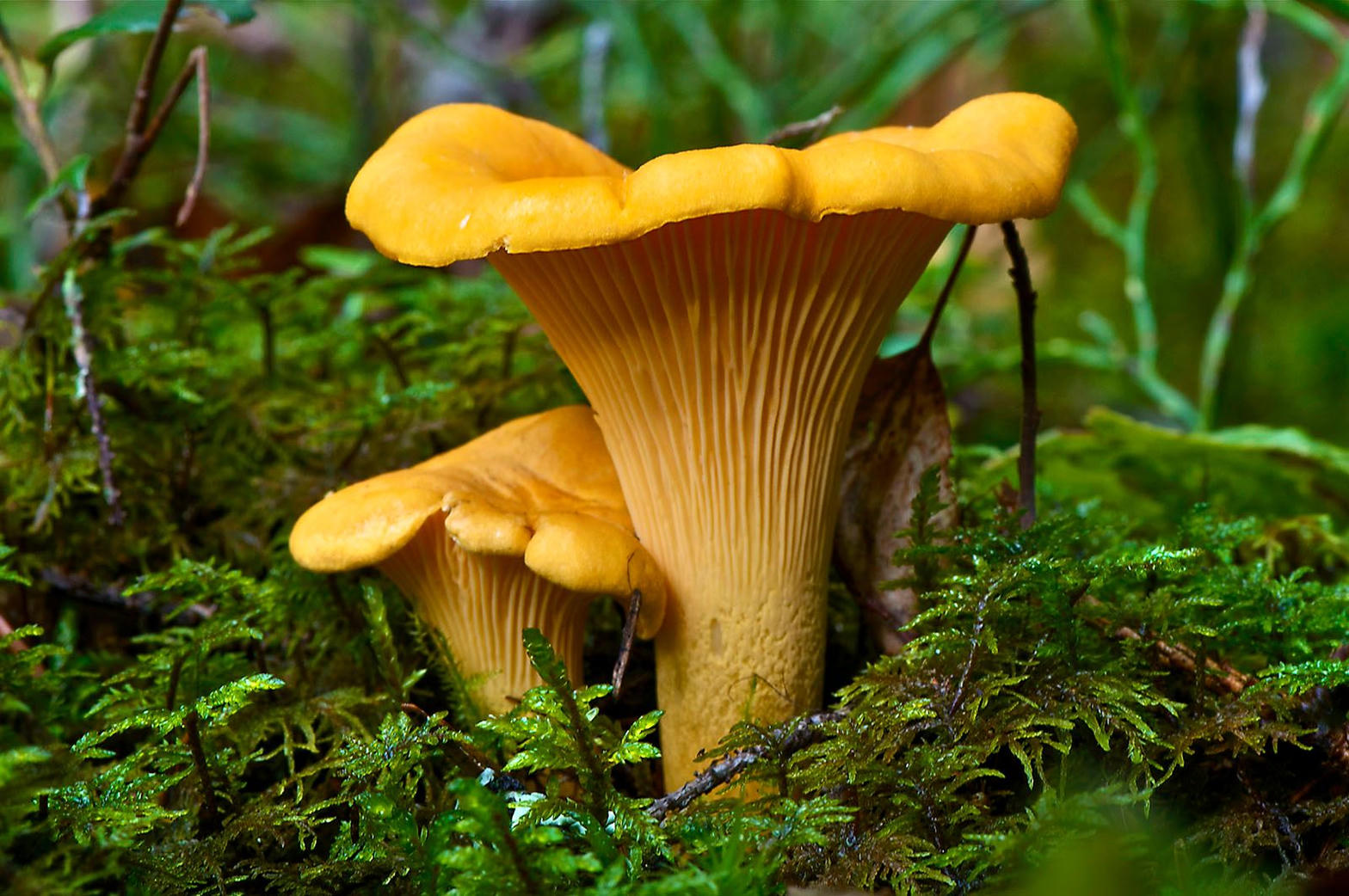
Golden Chanterelle
Cantharellus formosus / C. cibarius complex
Vase-shaped gold to apricot mushroom with blunt, forked false gills that run down the stem. Flesh is solid and white-yellow. Famous apricot scent. One of the safest beginner edibles if you confirm false gills + fruity smell + white interior.
Find: Look on mossy slopes under conifers 2–10 days after soaking rain when nights cool. They often fruit in the same patches yearly. Scan for gold against green moss, not on wood.
Pick: Cut or pinch at the base. Flick off slugs. Do not rake moss — that kills future flushes. Keep dry and cool; they sweat and sour if bagged wet.
- Blunt, forked ridges — not knife-edge gills
- Apricot / stone-fruit aroma
- Solid white-yellow flesh, not hollow
- Growing from soil, never from a log
Lookalikes: Jack-o'-lantern (Omphalotus); False chanterelle (Hygrophoropsis)
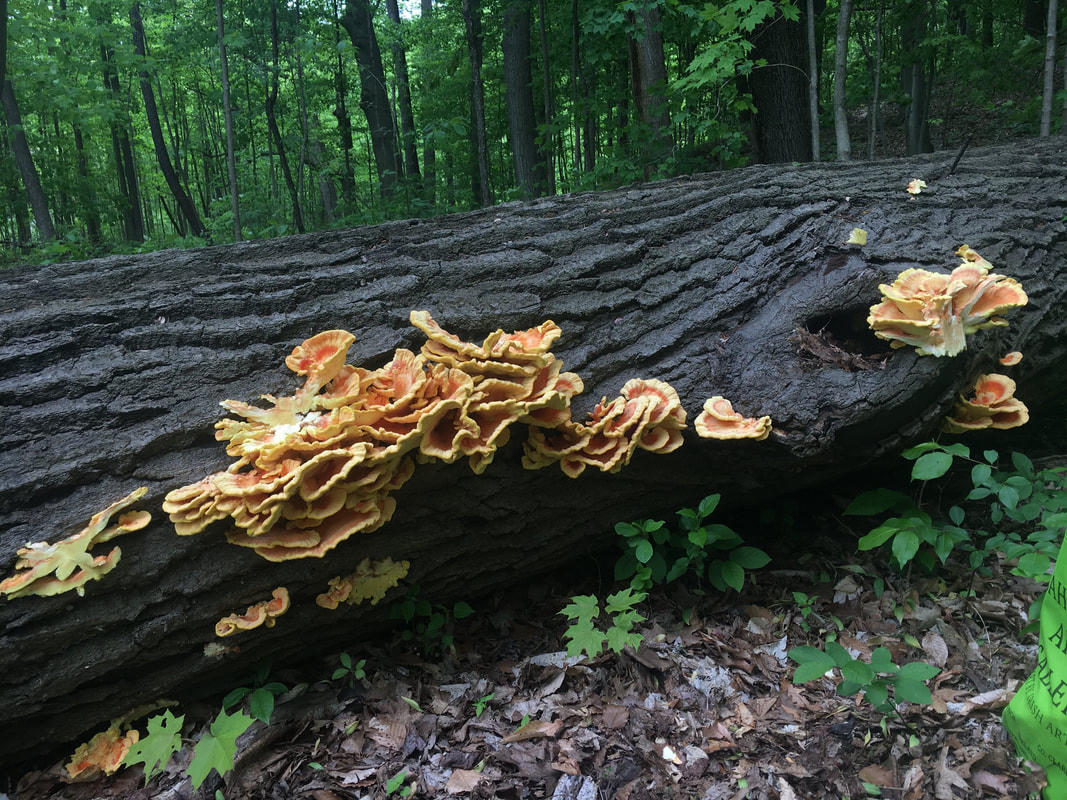
Chicken of the Woods
Laetiporus sulphureus / L. conifericola
Overlapping bright yellow-orange shelves on wood. Underside is pores, not gills. Young margins are soft and cook like chicken. Species on conifers (L. conifericola) cause more stomach upset — eat a test amount.
Find: Scan standing and fallen oaks, eucalyptus, fir, and hemlock from a distance — the color shouts. Peak after warm rains.
Pick: Take only the tender outer 3–5 cm. Leave the woody core. Harvest from living or freshly dead wood, not rotten crumbly logs.
- Shelf/bracket on wood, no central stem
- Yellow pores underneath
- Soft, moist growing edge
Lookalikes: Jack-o'-lantern
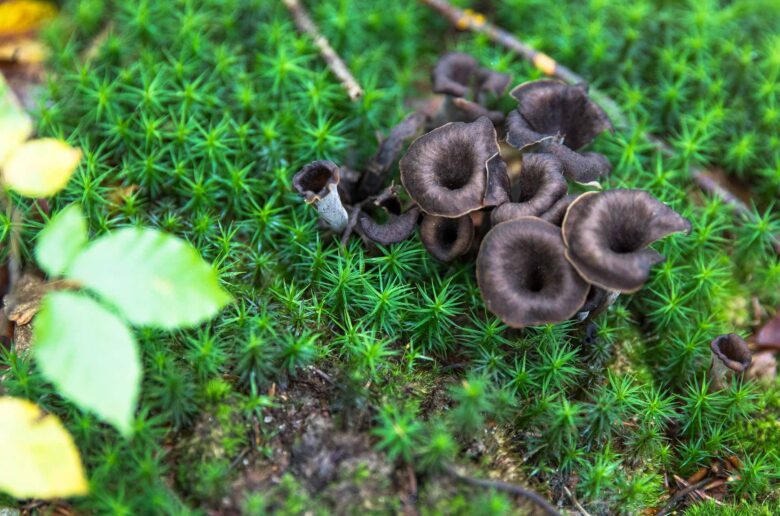
Black Trumpet
Craterellus cornucopioides / C. fallax
Thin black-to-charcoal hollow horns with a smooth or faintly wrinkled outer surface and no true gills. One of the most fragrant wild mushrooms. Easy to miss against duff.
Find: Look down, not out. They hide in oak and beech leaf litter after rain. Once you spot one, get on your knees — they fruit in troops.
Pick: Pinch at the base. They collapse if stacked wet. Dry the same day for sale.
- Hollow horn, open at the top
- Smooth or faintly wrinkled outside
- Paper-thin flesh
Lookalikes: Devil's urn (early spring)
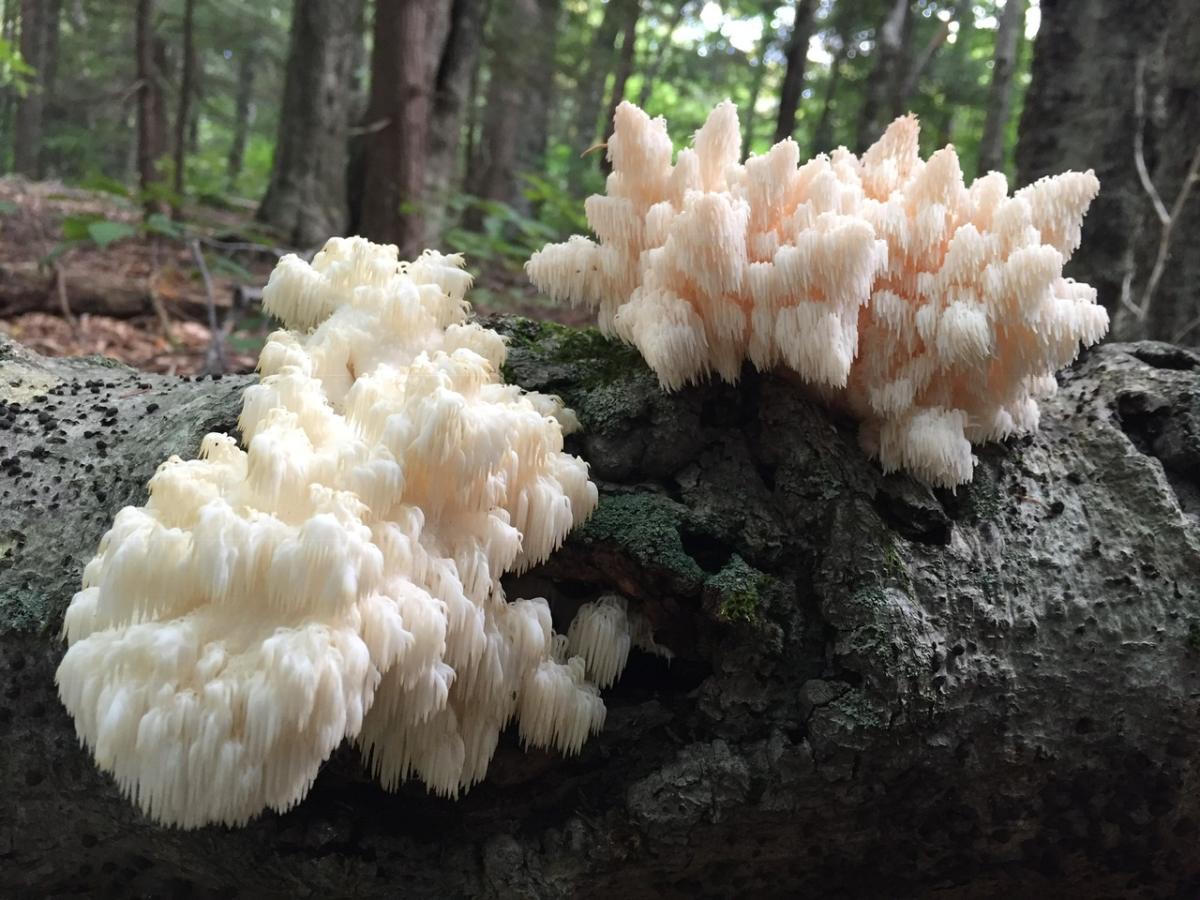
Lion's Mane
Hericium erinaceus
White cascading icicles on hardwood wounds. No cap, no gills. Looks like a pom-pom. Closest lookalikes are other Hericium, all generally edible.
Find: Walk hardwood stands and scan scars on oak, maple, beech. Often above eye level.
Pick: Cut the cluster flush, leaving a pad on the tree. Use the same day — it yellows fast.
- White hanging spines, no cap
- On hardwood, not soil
- White to cream, not orange
Lookalikes: Other Hericium (coral tooth, bear's head)