pdfvoss.com · Field Ledger
United States — Pacific Northwest
First flush Apr 1 · Last flush Feb 15
Oregon and Washington are the commercial wild-mushroom engine of North America. Two seasons: spring morels, fall everything else.
Zones
Olympics / Coast Range
Sitka / hemlock moss · 0–800 m
West Cascades
Fir-hemlock, classic chants · 200–1,200 m
East Cascades burns
Pine / fir burns · 800–1,800 m
Siskiyou / SW Oregon
Tanoak matsutake · 200–1,400 m
Gifford / St. Helens
Young stands, lobster · 400–1,200 m
Season table
| Species | First | Last | Peak | $/lb |
|---|---|---|---|---|
| True Morel Morchella spp. | Apr 1 | Jun 25 | Apr 20–Jun 1 | 20–50 |
| Lobster Mushroom Hypomyces lactifluorum | Jul 15 | Oct 5 | Aug–Sep | 3–16 |
| Golden Chanterelle Cantharellus formosus / C. cibarius complex | Sep 1 | Nov 25 | Oct | 8–25 |
| American Matsutake Tricholoma murrillianum | Sep 20 | Nov 15 | Oct | 20–120 |
| King Bolete / Porcini Boletus edulis complex | Aug 25 | Nov 5 | Sep–Oct | 10–40 |
| Winter Chanterelle / Yellowfoot Craterellus tubaeformis | Oct 15 | Feb 15 | Nov–Jan | 4–12 |
Permits & selling
National forests: personal-use permits often free or cheap at ranger stations. Commercial permits are limited and species-specific (especially matsutake). State parks usually closed. Wilderness rules vary.
Selling to buying stations is the norm. You need a commercial permit for the forest you picked. Cottage-food laws do not usually cover wild mushrooms — use a licensed buyer or processor.
Species plates
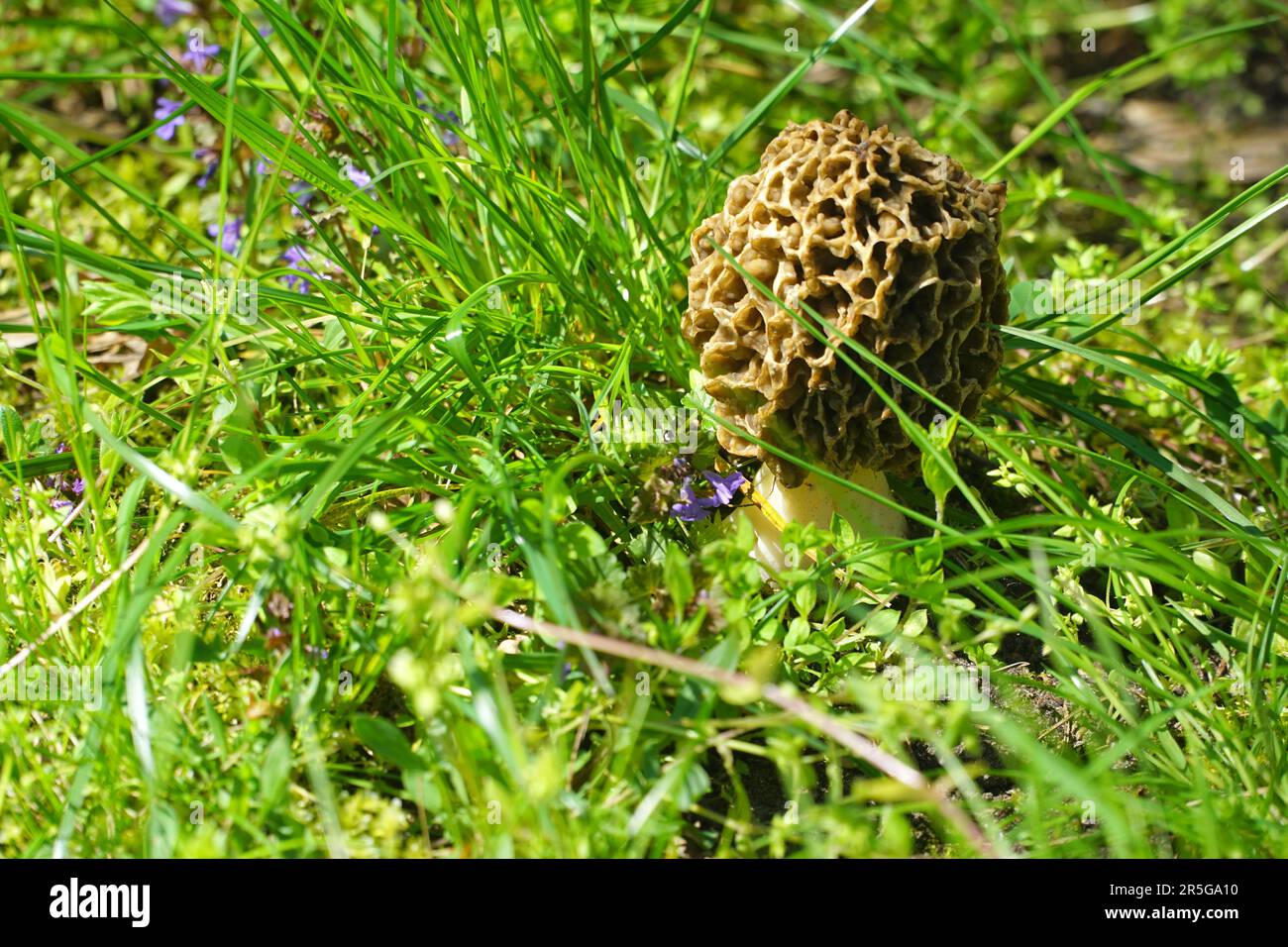
True Morel
Morchella spp.
Hollow honeycomb cap fused to a hollow stem. Pits are true pits (not wrinkles). The single most hunted spring mushroom in North America. Always cut in half lengthwise — true morels are hollow from tip to base.
Find: Hunt 10–18 °C soil after a warm rain. Natural morels hug dying elm, ash, apple, cottonwood and old-growth fir. Burn morels appear the spring after a wildfire, often at snowmelt line. Walk slowly and scan 1–3 m ahead; they camouflage as pinecones.
Pick: Pinch or cut at soil line. Do not yank the mycelium. Keep mesh bags so spores drop. Never wash in the woods. Split every specimen in the field and discard anything not fully hollow.
- True honeycomb pits, not wrinkles
- Completely hollow when sliced
- Cap fused to stem (not hanging)
- No reddish bruising or chambered pith
Lookalikes: False morel (Gyromitra); Verpa / half-free morel
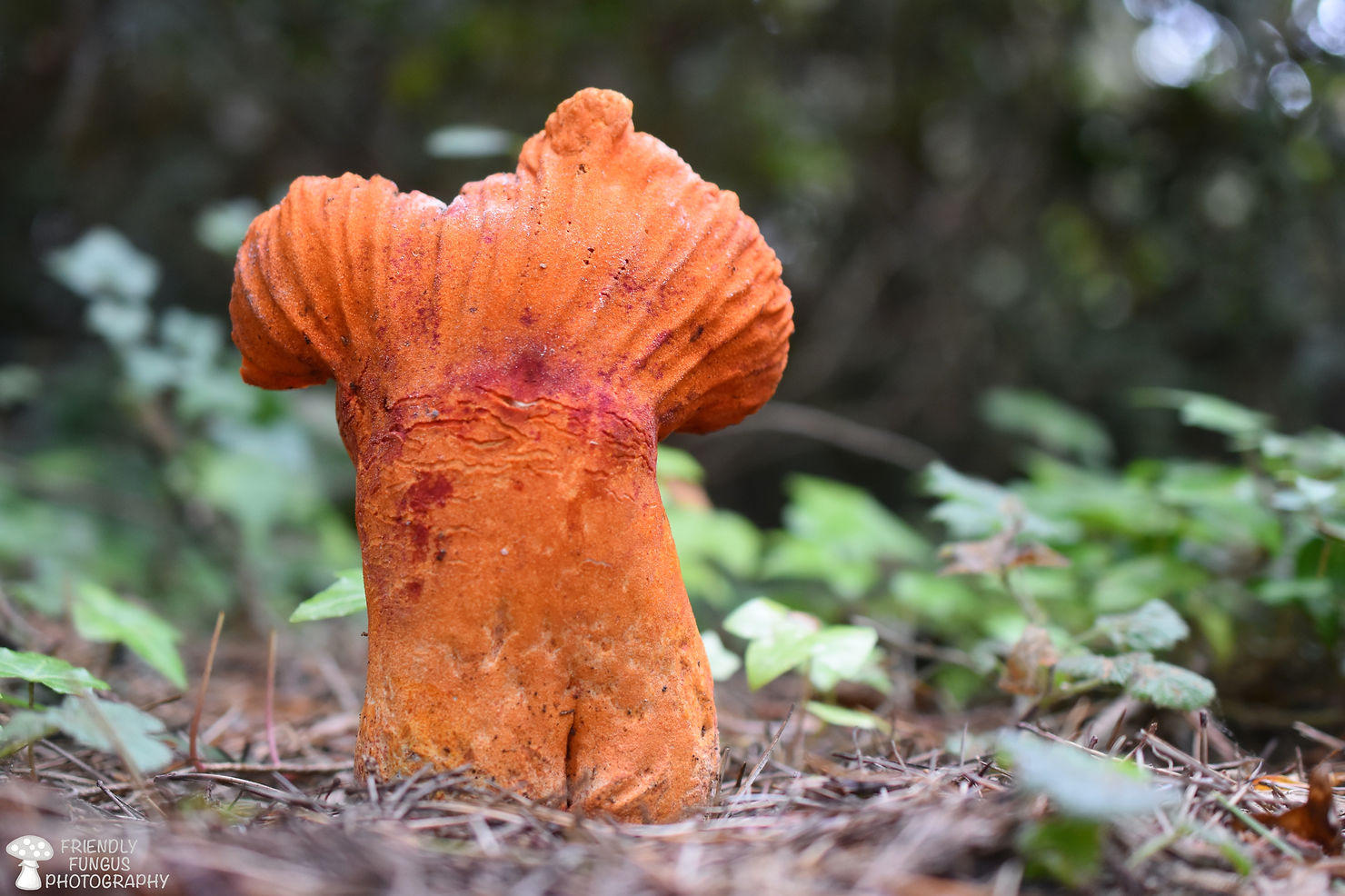
Lobster Mushroom
Hypomyces lactifluorum
Not its own mushroom — a bright orange-red parasite that takes over Russula or Lactarius, turning them into a seafood-scented, dense club. Interior should be firm and white-orange, never mushy or insect-riddled.
Find: Scan duff for neon orange. Often half-buried. Common in fir and hemlock after summer rains into early fall.
Pick: Cut, then trim any soft, white, or buggy parts in the field. Only keep dense, fully colored specimens.
- Bright lobster-orange skin overall
- Dense, not spongy or wet
- Interior firm white to pale orange
Lookalikes: Under-parasitized Russula
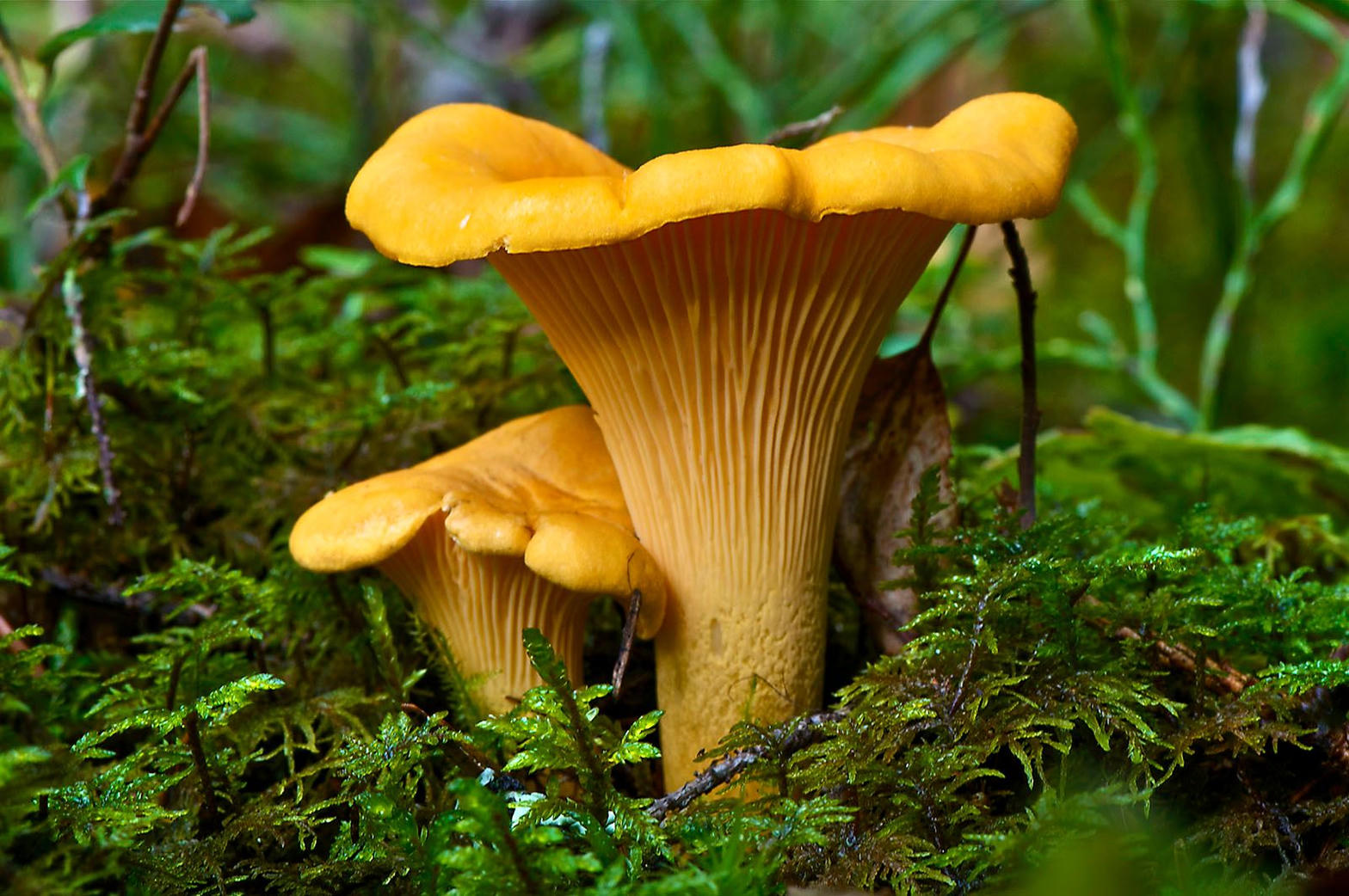
Golden Chanterelle
Cantharellus formosus / C. cibarius complex
Vase-shaped gold to apricot mushroom with blunt, forked false gills that run down the stem. Flesh is solid and white-yellow. Famous apricot scent. One of the safest beginner edibles if you confirm false gills + fruity smell + white interior.
Find: Look on mossy slopes under conifers 2–10 days after soaking rain when nights cool. They often fruit in the same patches yearly. Scan for gold against green moss, not on wood.
Pick: Cut or pinch at the base. Flick off slugs. Do not rake moss — that kills future flushes. Keep dry and cool; they sweat and sour if bagged wet.
- Blunt, forked ridges — not knife-edge gills
- Apricot / stone-fruit aroma
- Solid white-yellow flesh, not hollow
- Growing from soil, never from a log
Lookalikes: Jack-o'-lantern (Omphalotus); False chanterelle (Hygrophoropsis)
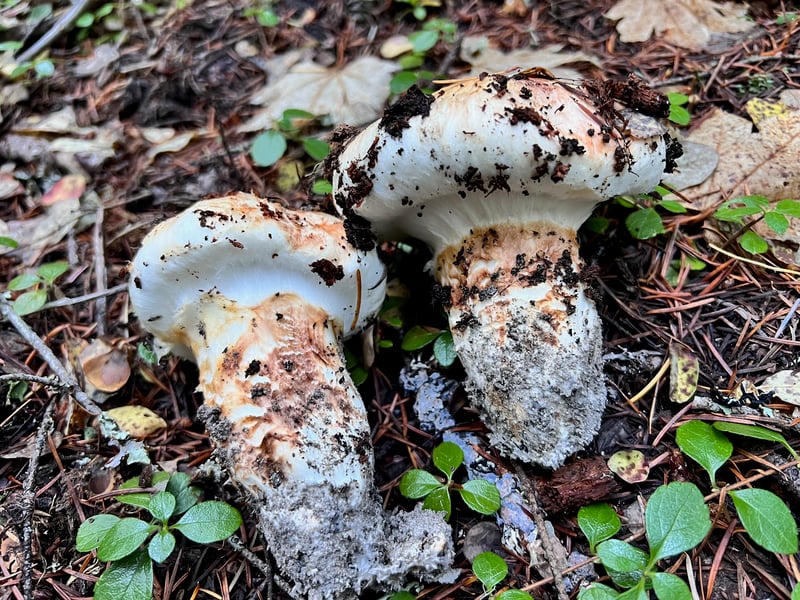
American Matsutake
Tricholoma murrillianum
White to cinnamon-stained robust mushroom often buried in duff. Spicy cinnamon-red-hots + gym-sock aroma is the field tell. Gills are white, attached, and do not bruise blue. Stem has a cottony ring zone and a dirty, tapered rooting base.
Find: Hunt tanoak, pine, and hemlock duff after the first hard fall rains. Look for humps ('mushrumps') in the needles — they fruit underground. Poke gently; do not rake.
Pick: A wooden stick to lift duff, then a twist. Re-cover the hole. Grade on the spot: veil intact = #1. Never wash; brush only.
- Cinnamon + gym-sock spice smell
- No cup/volva at the dug base
- Attached white gills, not free
- Dirty, tapering, rooting stem
Lookalikes: Destroying angel (Amanita); Catathelasma / other white trichs
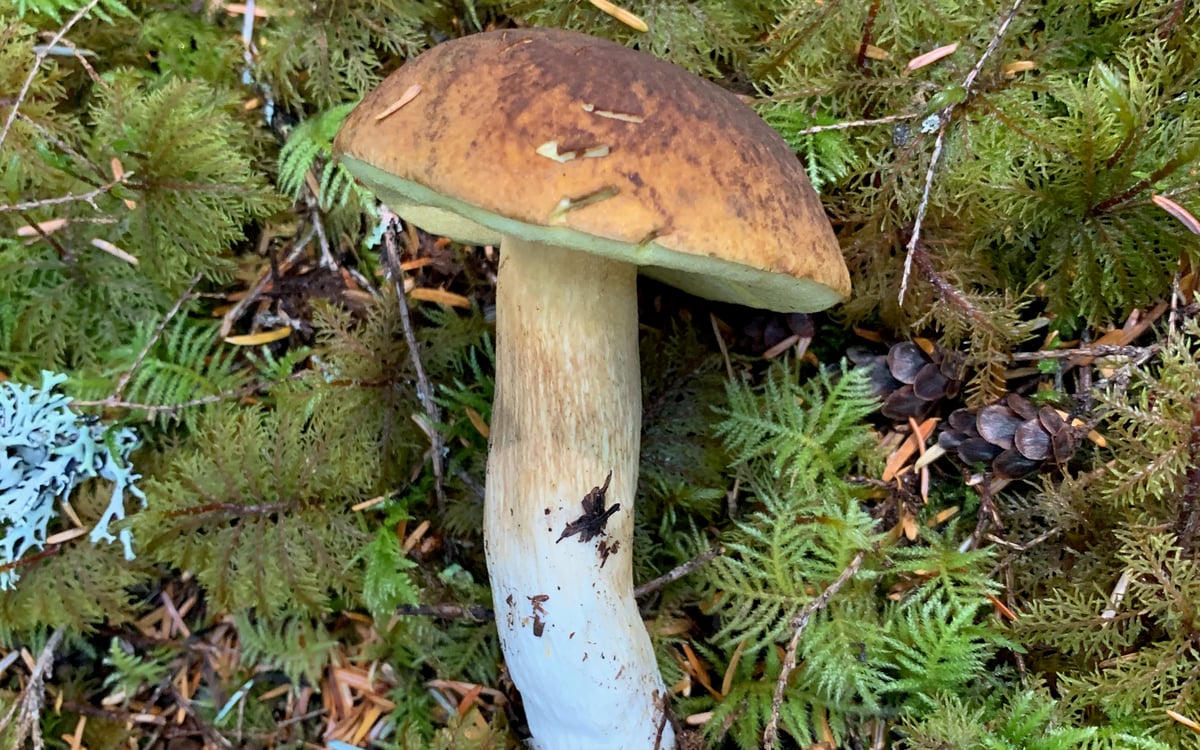
King Bolete / Porcini
Boletus edulis complex
Fat brown bun cap over a swollen white stem with a fine net (reticulum) near the top. Underside is a sponge of pores, never gills. Pores start white, age yellow-olive. Flesh does not stain blue in true B. edulis.
Find: Mycorrhizal with spruce, fir, pine, and birch. Hunt after cool rains in late summer–fall. Look on forest edges, old roads, and mossy benches. Check every button for maggots by slicing the stem.
Pick: Cut high enough to leave the base. Slice immediately — if the sponge is green and the stem is tunneled, dry it or leave it. Never soak.
- Pores (sponge), never gills
- White netting on upper stem
- Flesh does not stain blue
- Young pores white, not red
Lookalikes: Bitter bolete (Tylopilus felleus); Blue-staining boletes
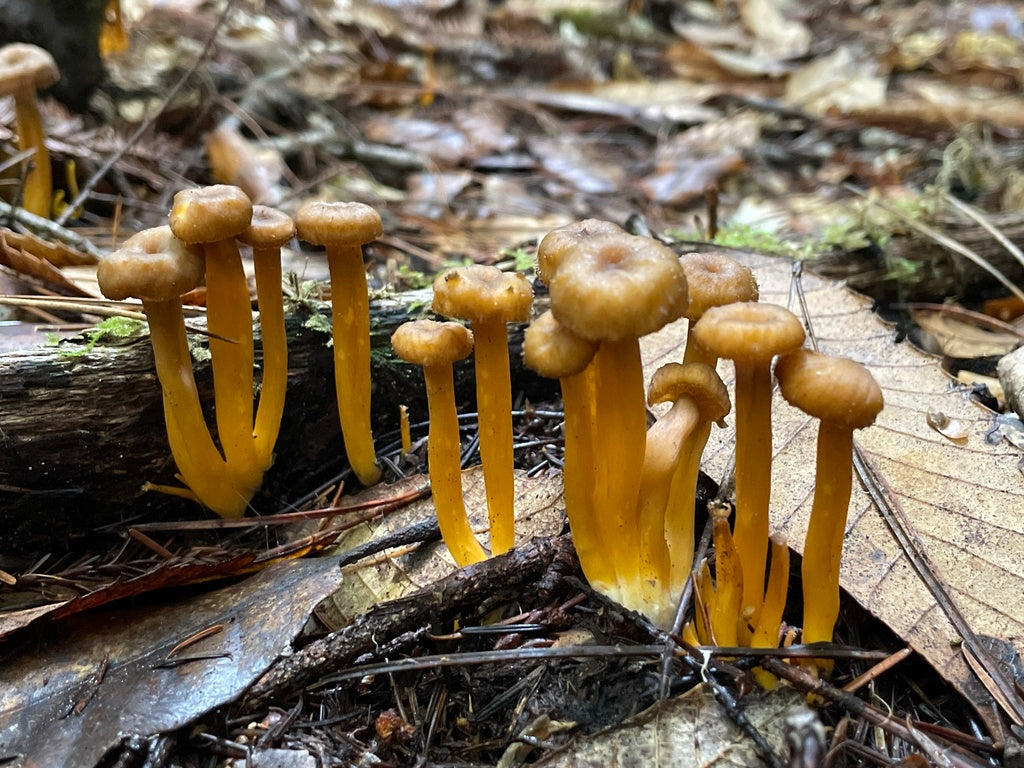
Winter Chanterelle / Yellowfoot
Craterellus tubaeformis
Small funnel with a brown-yellow cap, blunt ridges, and a hollow yellow-orange stem. Fruits in huge troops late fall into winter on mossy conifer ground.
Find: After frosts, walk wet moss under hemlock. Once you see one, the hillside is often covered.
Pick: Pinch clusters. They dry beautifully. Check for slugs in the hollow stem.
- Hollow yellow-orange stem
- Blunt decurrent ridges
- Cap depressed to funnel
Lookalikes: Small brown gilled mushrooms