pdfvoss.com · Field Ledger
United States — Northeast & Appalachia
First flush Apr 15 · Last flush Nov 5
Oldest mushroom clubs in the US. Hens, lions, black trumpets, and a serious Amanita load. Fall is the season.
Zones
Adirondacks / Greens
Birch, beech, spruce · 300–1,200 m
Catskills / Hudson
Oak, maple · 200–900 m
Allegheny / Poconos
Oak-hickory · 300–800 m
Southern Apps / Smokies
Cove hardwoods · 400–1,500 m
Season table
| Species | First | Last | Peak | $/lb |
|---|---|---|---|---|
| True Morel Morchella spp. | Apr 15 | May 25 | May | 20–50 |
| Golden Chanterelle Cantharellus formosus / C. cibarius complex | Jun 20 | Sep 10 | Jul–Aug | 8–25 |
| Black Trumpet Craterellus cornucopioides / C. fallax | Jul 1 | Sep 15 | Aug | 20–50 |
| Hen of the Woods / Maitake Grifola frondosa | Sep 5 | Oct 25 | Sep–Oct | 8–20 |
| Lion's Mane Hericium erinaceus | Aug 20 | Nov 5 | Sep–Oct | 12–28 |
Permits & selling
State-by-state. Many NE parks ban collecting. Private woodlots are the real ground — knock on doors.
Several states list wild mushrooms as a restricted farmers-market item. Use a mycological ID sign-off if required.
Species plates
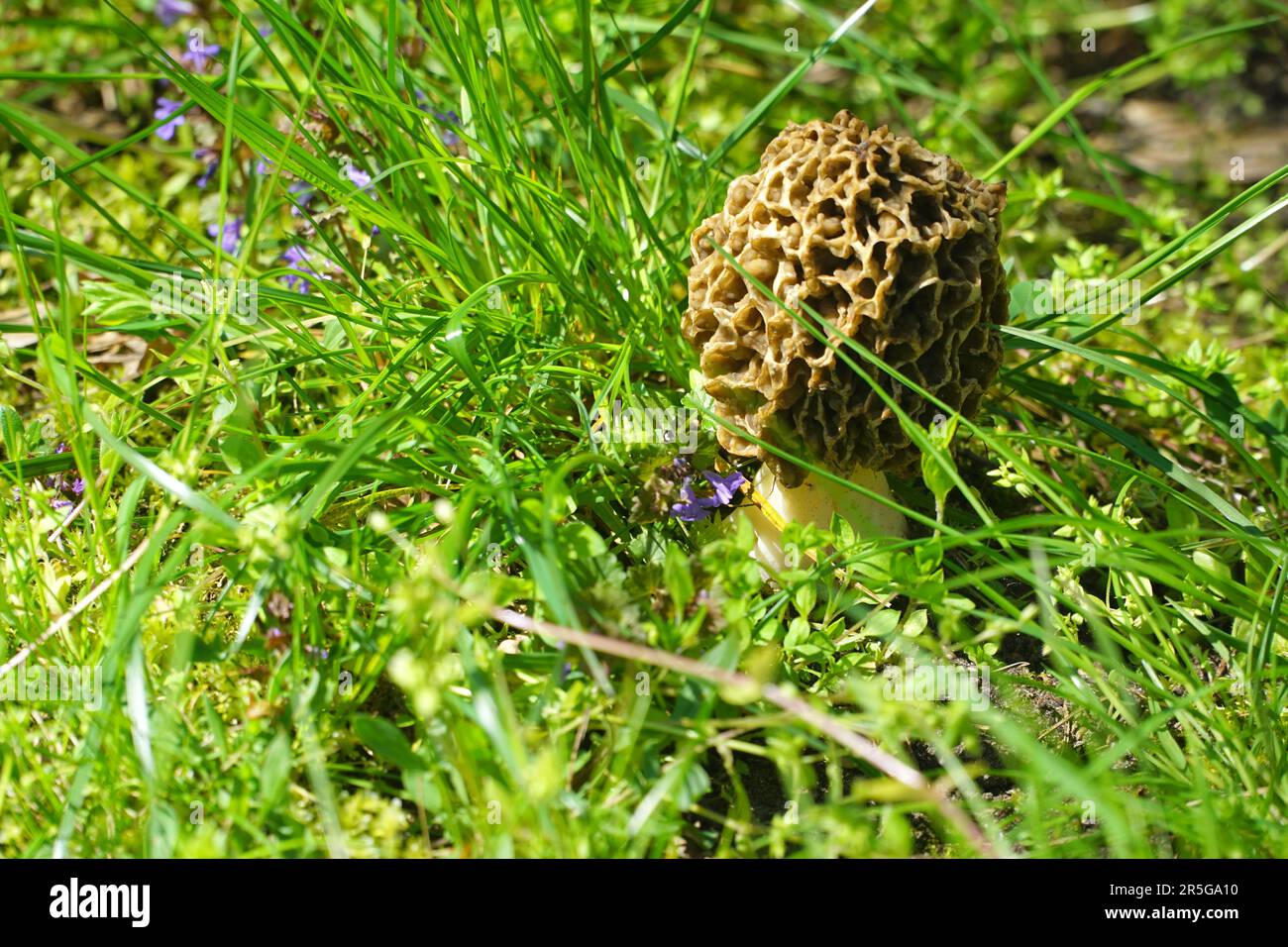
True Morel
Morchella spp.
Hollow honeycomb cap fused to a hollow stem. Pits are true pits (not wrinkles). The single most hunted spring mushroom in North America. Always cut in half lengthwise — true morels are hollow from tip to base.
Find: Hunt 10–18 °C soil after a warm rain. Natural morels hug dying elm, ash, apple, cottonwood and old-growth fir. Burn morels appear the spring after a wildfire, often at snowmelt line. Walk slowly and scan 1–3 m ahead; they camouflage as pinecones.
Pick: Pinch or cut at soil line. Do not yank the mycelium. Keep mesh bags so spores drop. Never wash in the woods. Split every specimen in the field and discard anything not fully hollow.
- True honeycomb pits, not wrinkles
- Completely hollow when sliced
- Cap fused to stem (not hanging)
- No reddish bruising or chambered pith
Lookalikes: False morel (Gyromitra); Verpa / half-free morel
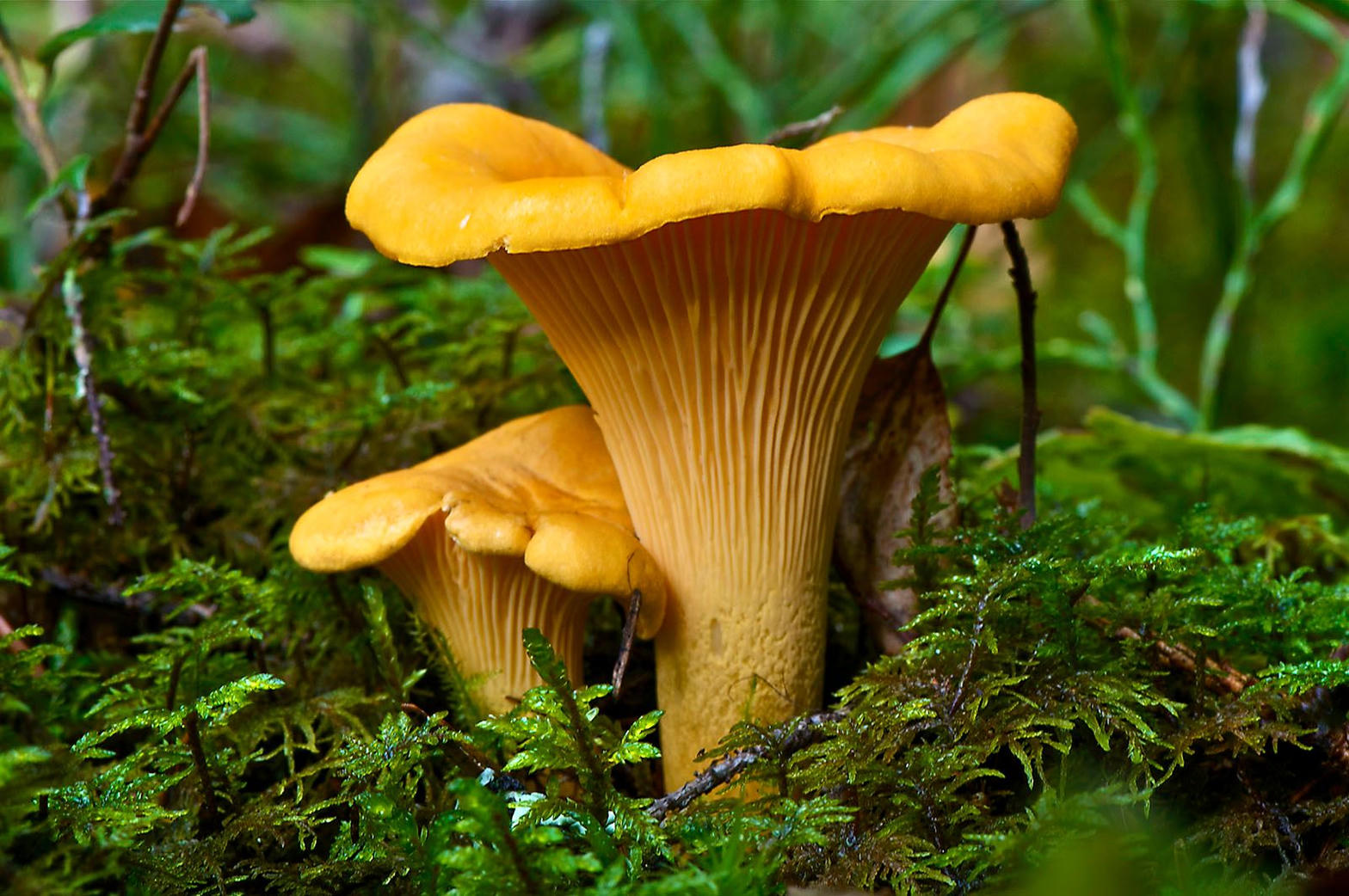
Golden Chanterelle
Cantharellus formosus / C. cibarius complex
Vase-shaped gold to apricot mushroom with blunt, forked false gills that run down the stem. Flesh is solid and white-yellow. Famous apricot scent. One of the safest beginner edibles if you confirm false gills + fruity smell + white interior.
Find: Look on mossy slopes under conifers 2–10 days after soaking rain when nights cool. They often fruit in the same patches yearly. Scan for gold against green moss, not on wood.
Pick: Cut or pinch at the base. Flick off slugs. Do not rake moss — that kills future flushes. Keep dry and cool; they sweat and sour if bagged wet.
- Blunt, forked ridges — not knife-edge gills
- Apricot / stone-fruit aroma
- Solid white-yellow flesh, not hollow
- Growing from soil, never from a log
Lookalikes: Jack-o'-lantern (Omphalotus); False chanterelle (Hygrophoropsis)
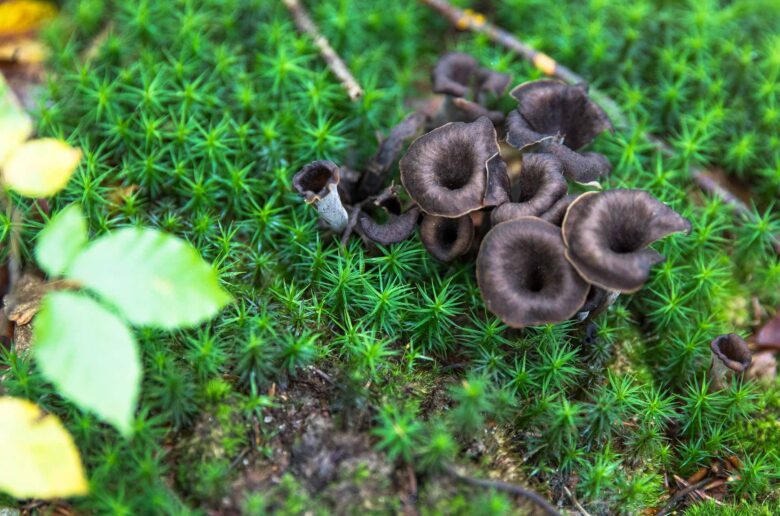
Black Trumpet
Craterellus cornucopioides / C. fallax
Thin black-to-charcoal hollow horns with a smooth or faintly wrinkled outer surface and no true gills. One of the most fragrant wild mushrooms. Easy to miss against duff.
Find: Look down, not out. They hide in oak and beech leaf litter after rain. Once you spot one, get on your knees — they fruit in troops.
Pick: Pinch at the base. They collapse if stacked wet. Dry the same day for sale.
- Hollow horn, open at the top
- Smooth or faintly wrinkled outside
- Paper-thin flesh
Lookalikes: Devil's urn (early spring)
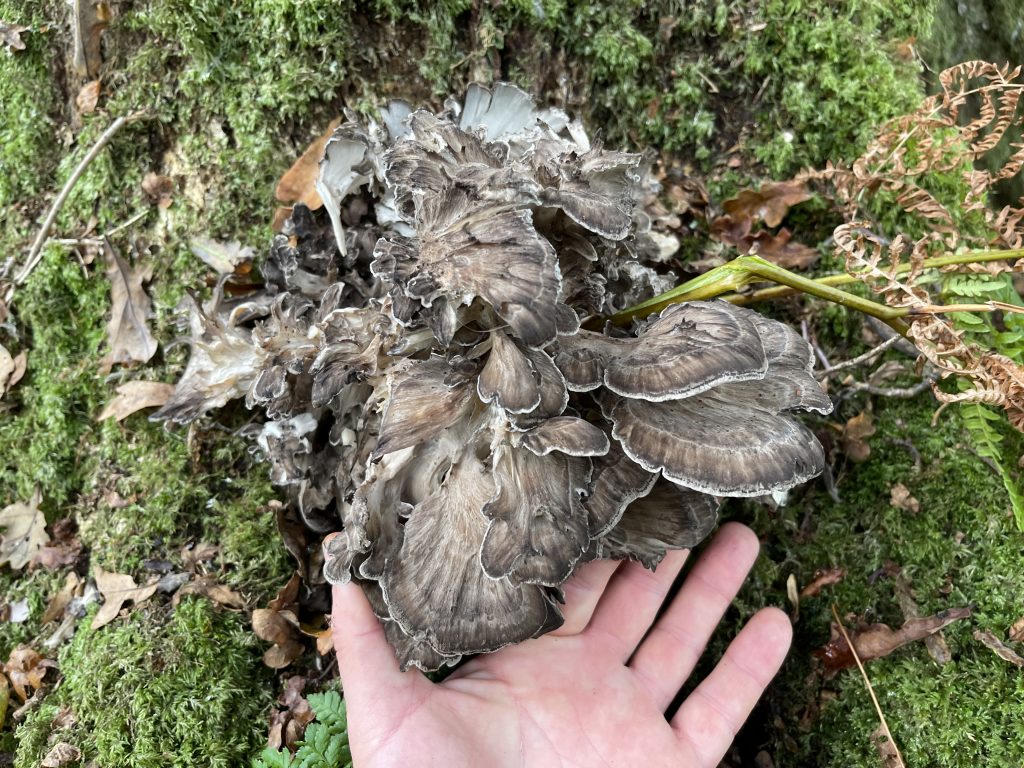
Hen of the Woods / Maitake
Grifola frondosa
Gray-brown feathery rosette at the base of oak. Many overlapping petal-like caps with white pores beneath. Can weigh several kilos.
Find: Circle mature oaks in early fall. Look at the root flare, not the canopy. Same tree fruits for years.
Pick: Cut the core above dirt. Brush, do not soak. Check for insects in the base.
- Many gray-brown overlapping petals
- At the base of oak
- White pores under each petal
Lookalikes: Berkeley's polypore; Black-staining polypore
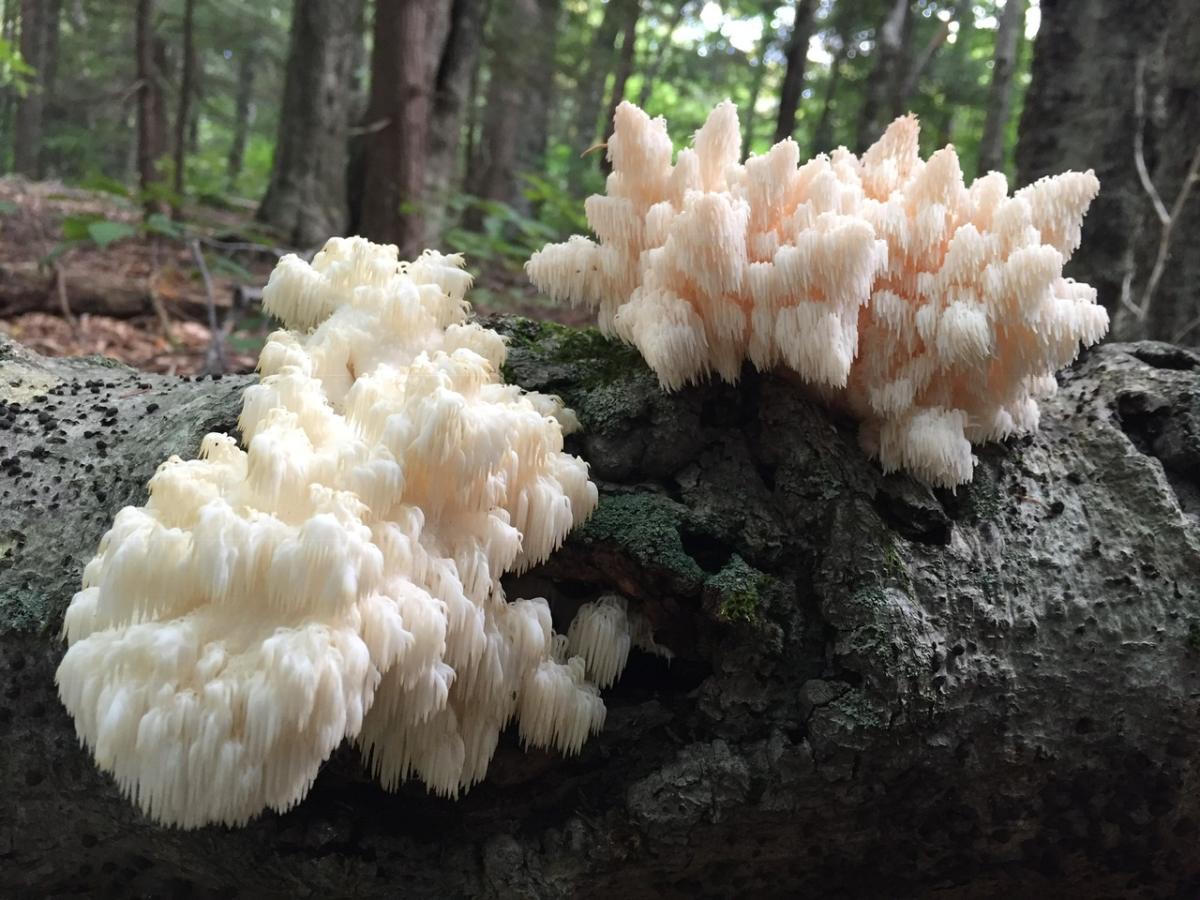
Lion's Mane
Hericium erinaceus
White cascading icicles on hardwood wounds. No cap, no gills. Looks like a pom-pom. Closest lookalikes are other Hericium, all generally edible.
Find: Walk hardwood stands and scan scars on oak, maple, beech. Often above eye level.
Pick: Cut the cluster flush, leaving a pad on the tree. Use the same day — it yellows fast.
- White hanging spines, no cap
- On hardwood, not soil
- White to cream, not orange
Lookalikes: Other Hericium (coral tooth, bear's head)