pdfvoss.com · Field Ledger
United States — Midwest & Great Lakes
First flush Mar 25 · Last flush Oct 20
Morel culture is a civic religion. Then summer chickens, fall hens, and giant puffballs in farm country.
Zones
Driftless / river hills
Elm, apple, creek bottoms · 200–400 m
UP / North Woods
Birch, hemlock, oak · 200–500 m
Ohio Valley
Oak-hickory · 150–350 m
Prairie edge farms
Puffballs, shaggy manes · 250–450 m
Season table
| Species | First | Last | Peak | $/lb |
|---|---|---|---|---|
| True Morel Morchella spp. | Mar 25 | May 25 | Apr 15–May 10 | 20–50 |
| Chicken of the Woods Laetiporus sulphureus / L. conifericola | May 20 | Sep 15 | Jun + Sep | 4–15 |
| Hen of the Woods / Maitake Grifola frondosa | Sep 1 | Oct 20 | Sep 20–Oct 10 | 8–20 |
| Giant Puffball Calvatia gigantea | Aug 1 | Oct 5 | Sep | 3–10 |
| Lion's Mane Hericium erinaceus | Aug 15 | Oct 20 | Sep | 12–28 |
| Oyster Mushroom Pleurotus ostreatus complex | Sep 15 | Nov 15 | Oct | 3–10 |
Permits & selling
State forests vary. Many Midwest states restrict or license morel harvest in parks. Always get landowner permission — most ground is private.
Farmers markets often require a certified ID or wild-mushroom expert. Cottage-food laws rarely cover wild fungi.
Species plates
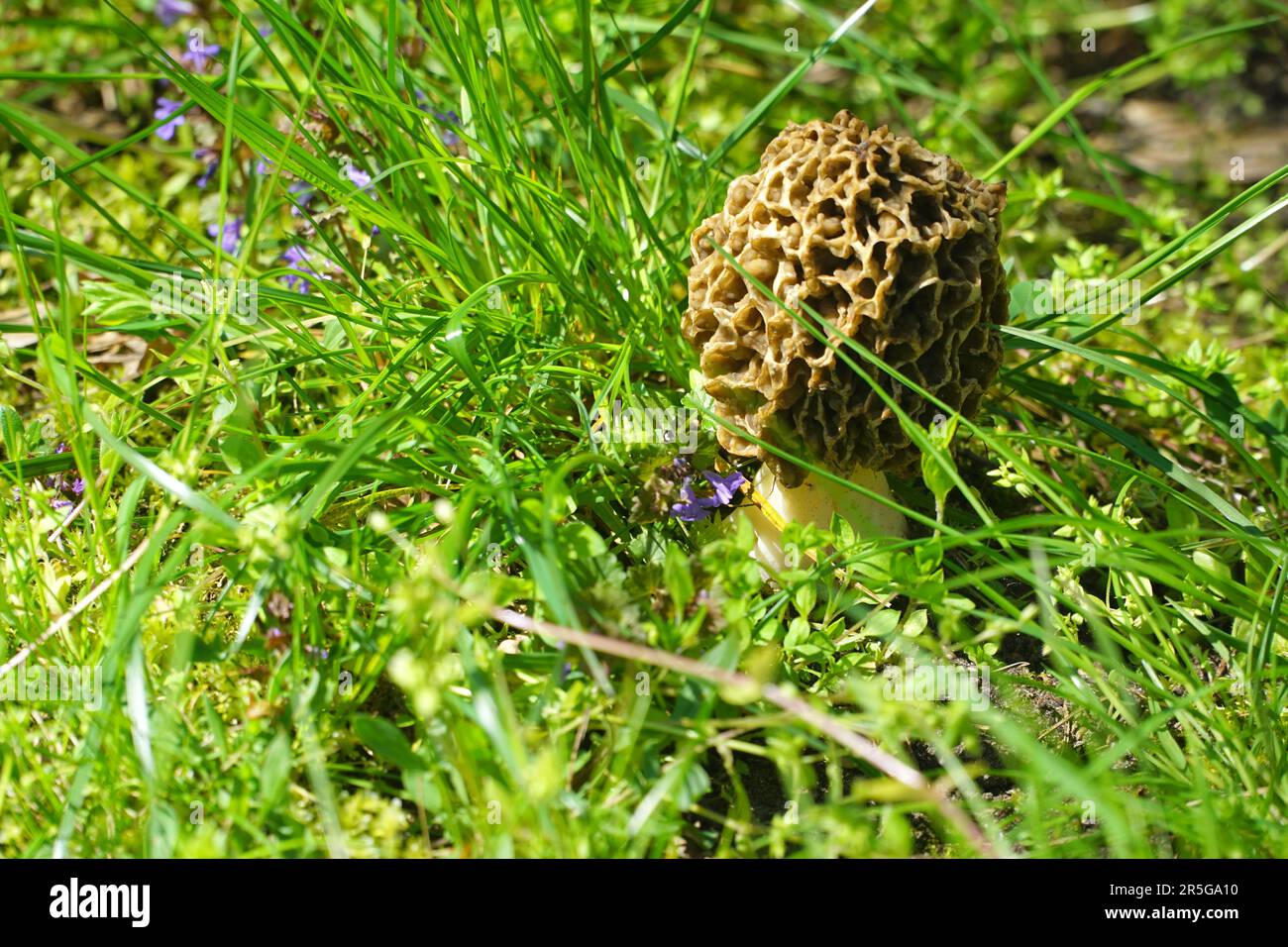
True Morel
Morchella spp.
Hollow honeycomb cap fused to a hollow stem. Pits are true pits (not wrinkles). The single most hunted spring mushroom in North America. Always cut in half lengthwise — true morels are hollow from tip to base.
Find: Hunt 10–18 °C soil after a warm rain. Natural morels hug dying elm, ash, apple, cottonwood and old-growth fir. Burn morels appear the spring after a wildfire, often at snowmelt line. Walk slowly and scan 1–3 m ahead; they camouflage as pinecones.
Pick: Pinch or cut at soil line. Do not yank the mycelium. Keep mesh bags so spores drop. Never wash in the woods. Split every specimen in the field and discard anything not fully hollow.
- True honeycomb pits, not wrinkles
- Completely hollow when sliced
- Cap fused to stem (not hanging)
- No reddish bruising or chambered pith
Lookalikes: False morel (Gyromitra); Verpa / half-free morel
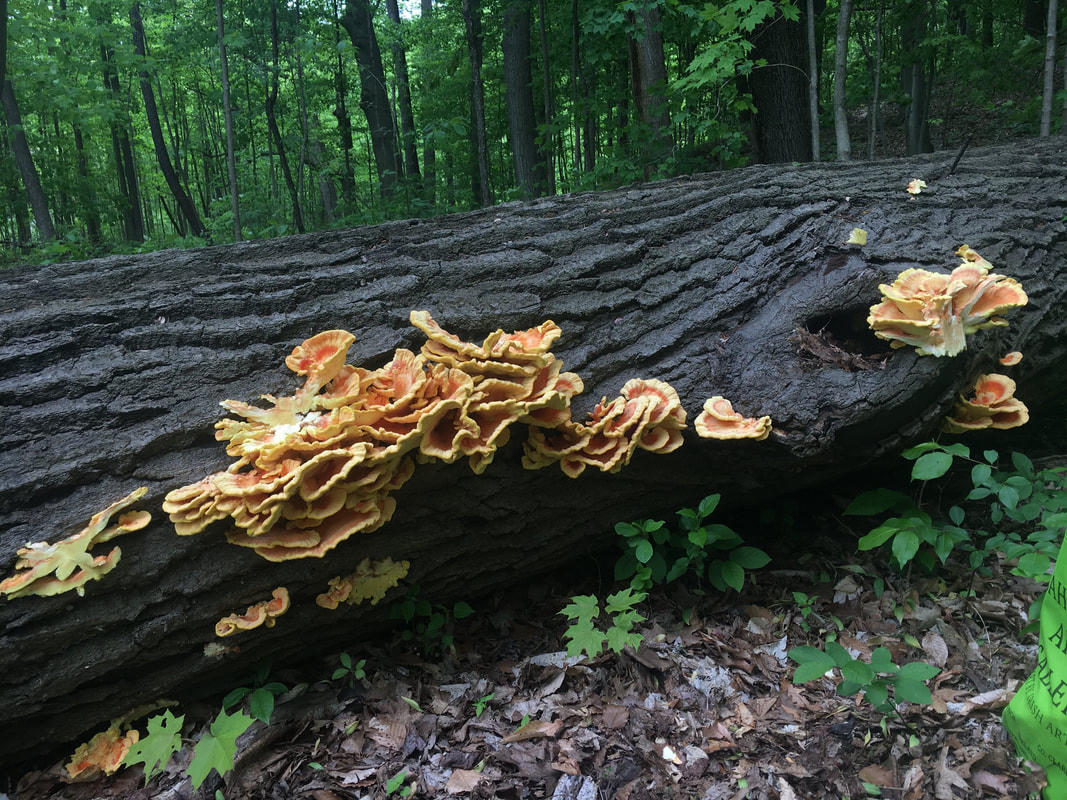
Chicken of the Woods
Laetiporus sulphureus / L. conifericola
Overlapping bright yellow-orange shelves on wood. Underside is pores, not gills. Young margins are soft and cook like chicken. Species on conifers (L. conifericola) cause more stomach upset — eat a test amount.
Find: Scan standing and fallen oaks, eucalyptus, fir, and hemlock from a distance — the color shouts. Peak after warm rains.
Pick: Take only the tender outer 3–5 cm. Leave the woody core. Harvest from living or freshly dead wood, not rotten crumbly logs.
- Shelf/bracket on wood, no central stem
- Yellow pores underneath
- Soft, moist growing edge
Lookalikes: Jack-o'-lantern
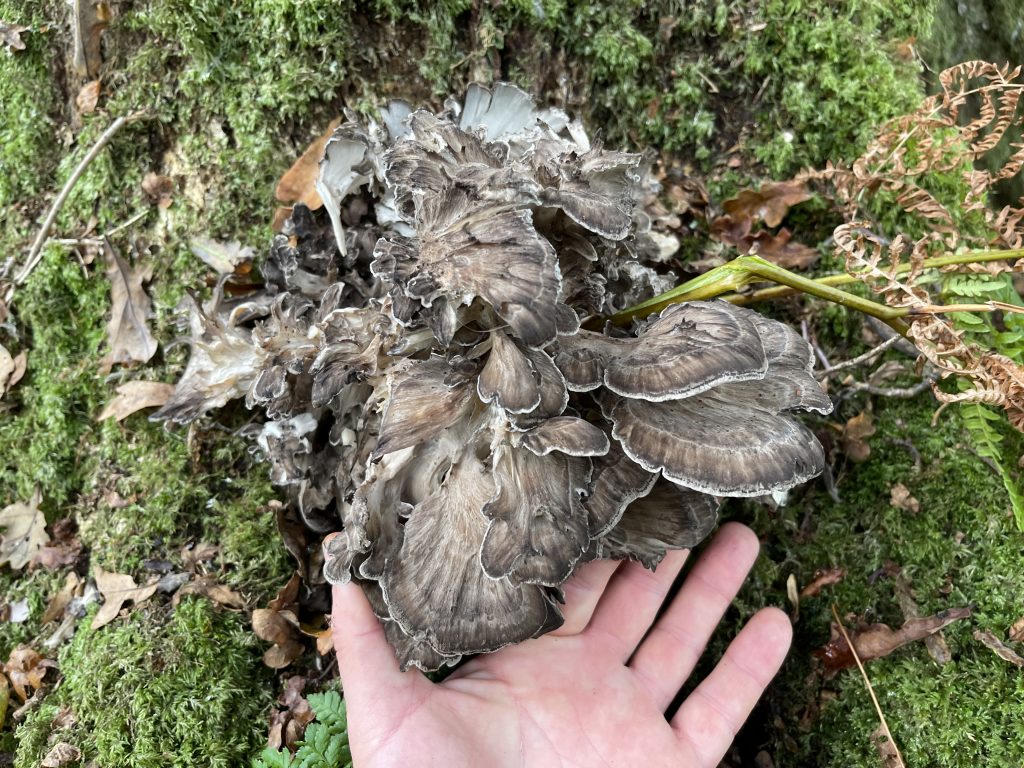
Hen of the Woods / Maitake
Grifola frondosa
Gray-brown feathery rosette at the base of oak. Many overlapping petal-like caps with white pores beneath. Can weigh several kilos.
Find: Circle mature oaks in early fall. Look at the root flare, not the canopy. Same tree fruits for years.
Pick: Cut the core above dirt. Brush, do not soak. Check for insects in the base.
- Many gray-brown overlapping petals
- At the base of oak
- White pores under each petal
Lookalikes: Berkeley's polypore; Black-staining polypore
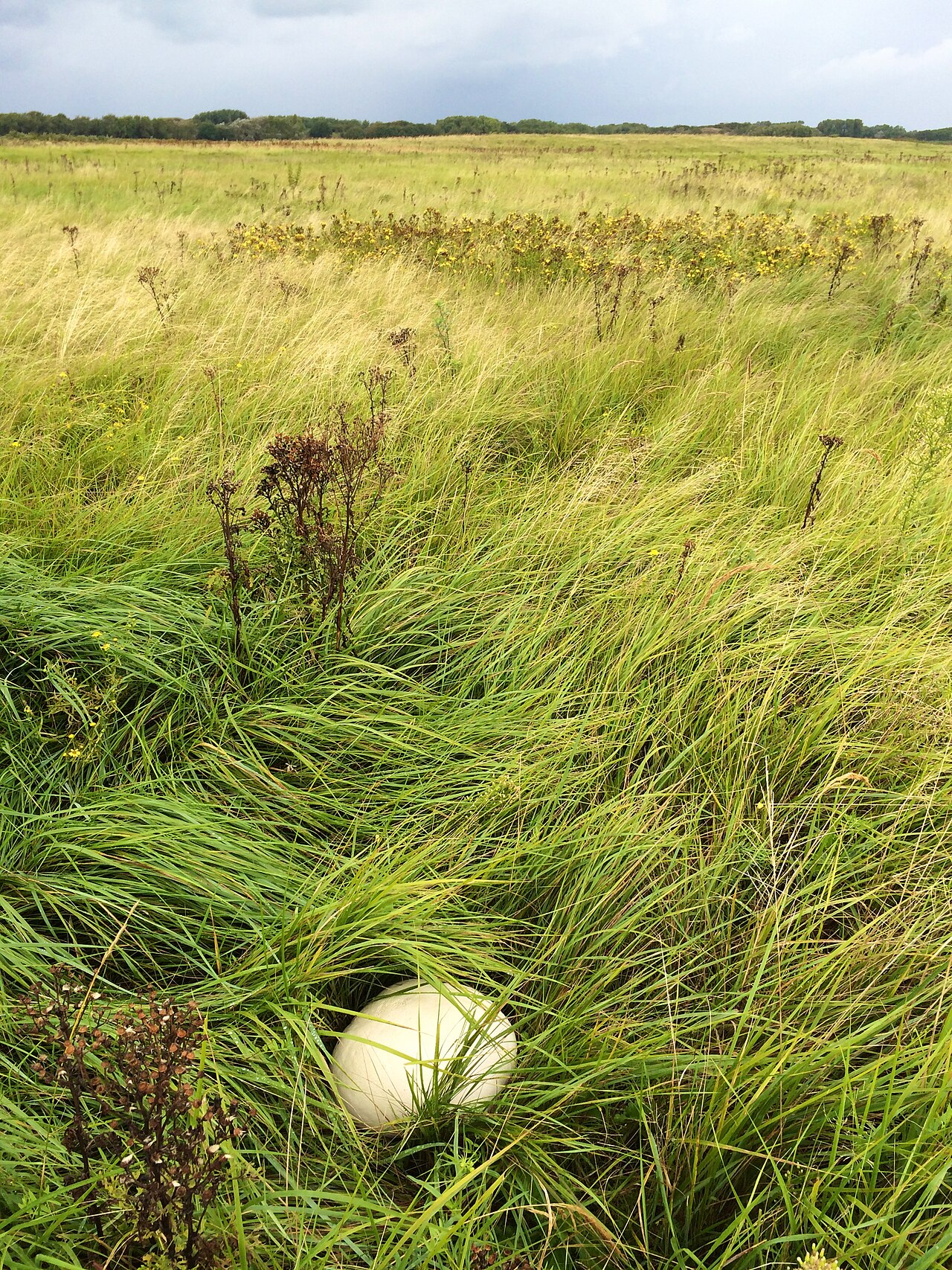
Giant Puffball
Calvatia gigantea
White soccer-ball to basketball fungus in meadows. Interior must be pure white tofu — any yellow, purple, or developing mushroom shape inside is a reject (and possibly a deadly Amanita egg).
Find: Pasture edges, orchards, rich meadows after rain. Visible from the road.
Pick: Slice in the field from top to bottom. Pure white = keep. Anything with a stalk, gills, or color inside = Amanita button, abort.
- Interior pure white, featureless
- Smooth white ball, no stem
- Marshmallow-firm, not leathery
Lookalikes: Amanita egg; Earthballs (Scleroderma)
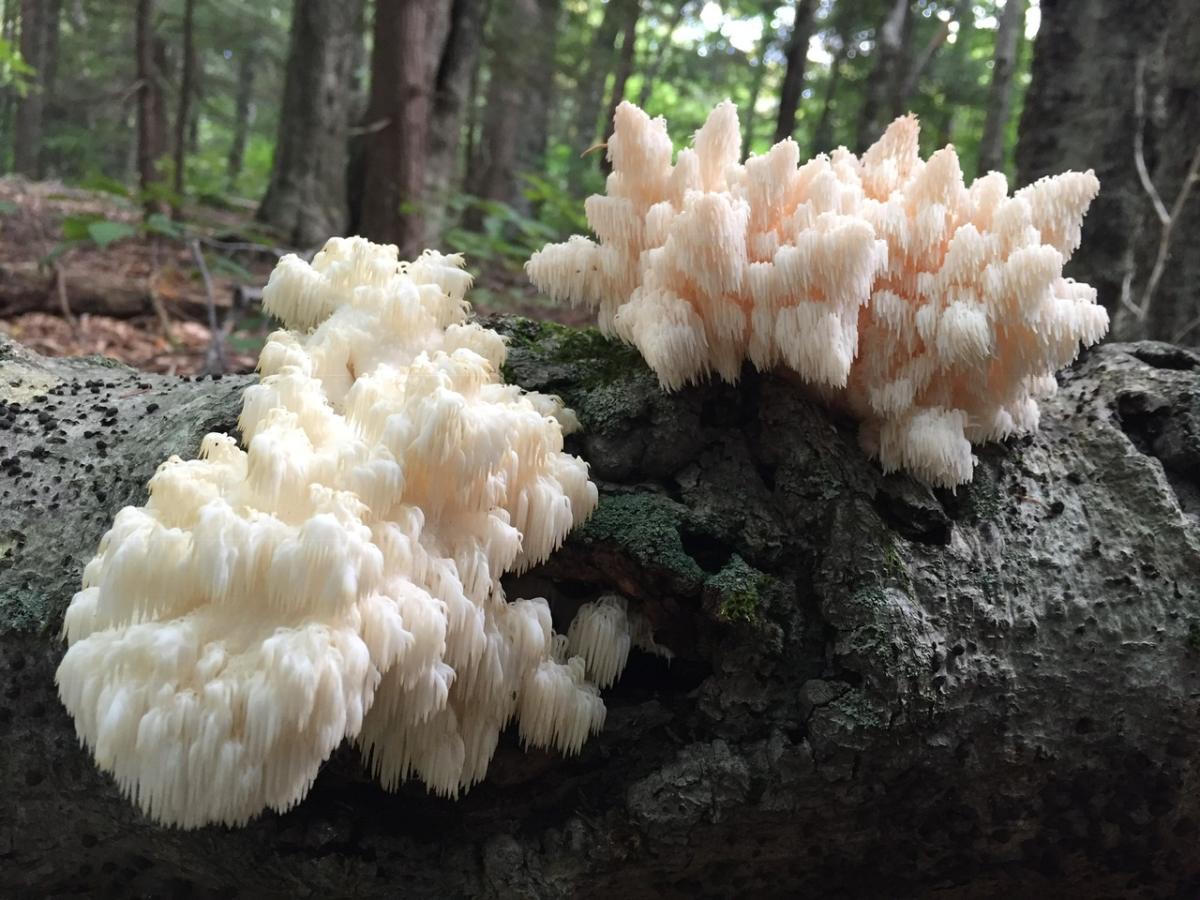
Lion's Mane
Hericium erinaceus
White cascading icicles on hardwood wounds. No cap, no gills. Looks like a pom-pom. Closest lookalikes are other Hericium, all generally edible.
Find: Walk hardwood stands and scan scars on oak, maple, beech. Often above eye level.
Pick: Cut the cluster flush, leaving a pad on the tree. Use the same day — it yellows fast.
- White hanging spines, no cap
- On hardwood, not soil
- White to cream, not orange
Lookalikes: Other Hericium (coral tooth, bear's head)
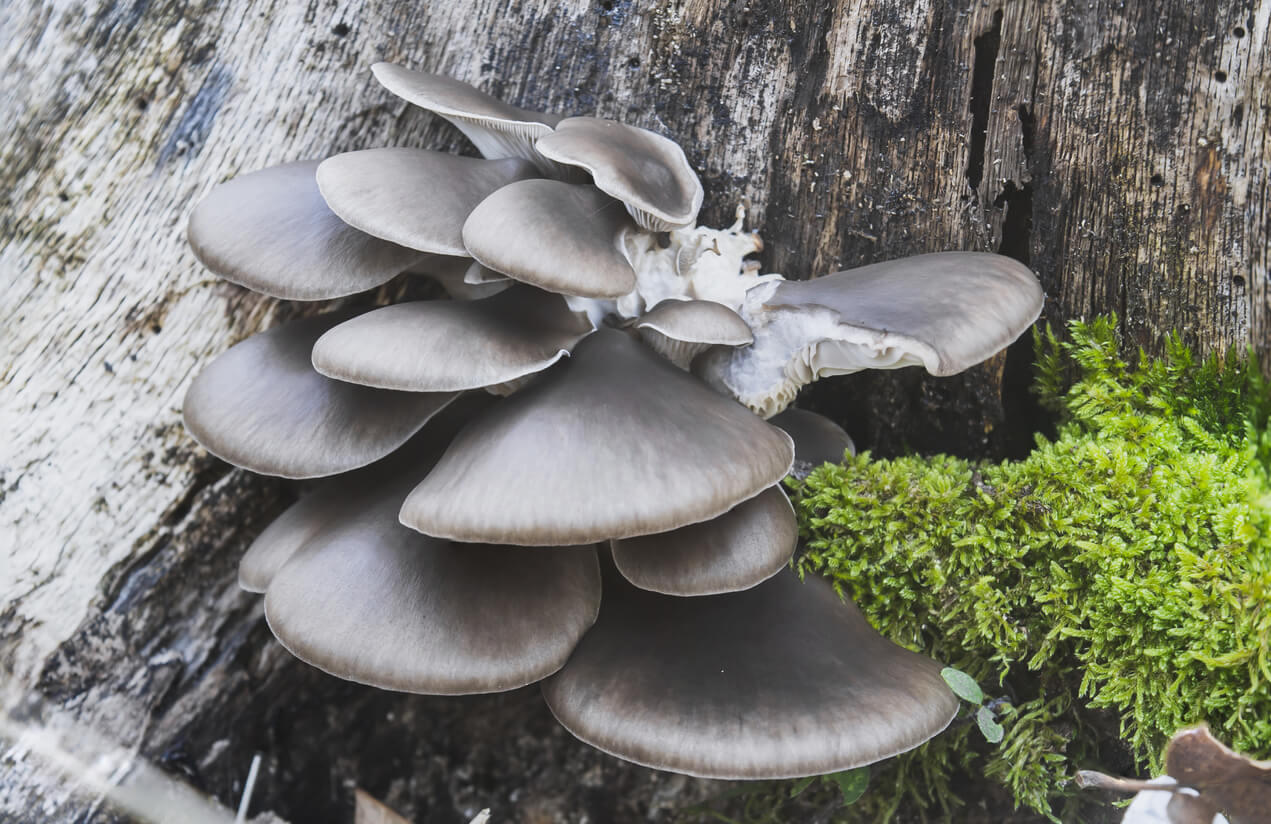
Oyster Mushroom
Pleurotus ostreatus complex
Shelf-like clusters on hardwood with off-center stems, decurrent white-to-cream gills, and a lilac-gray to tan cap. Spore print is lilac-gray. One of the safer beginner wood mushrooms — but still confirm gills + wood + no ring, and never confuse with small brown wood fungi.
Find: Scan standing dead and fallen hardwoods after cold rains. They often fruit in the same log for years. Winter on the coast, cooler months inland.
Pick: Cut the cluster at the wood. Leave a pad. Trim tough bases. Use within two days; they sour fast.
- Shelf/cluster on wood with decurrent gills
- Lilac-gray to white spore print
- No ring and no volva
- Does not bruise blue
Lookalikes: Angel wings (Pleurocybella); Deadly galerina