pdfvoss.com · Field Ledger
United States — California & Sierra
First flush Nov 1 · Last flush May 20
A winter foraging state. Coastal oaks give black trumpets and candy caps; the Sierra gives spring morels. Death caps are common in cities — study them.
Zones
NorCal redwood / tanoak
Coastal fog belt · 0–600 m
Bay Area oaks
Live oak, urban · 0–400 m
Sierra west slope
Mixed conifer, morels · 800–2,000 m
SoCal sky islands
Pine after rare rain · 1,400–2,400 m
Season table
| Species | First | Last | Peak | $/lb |
|---|---|---|---|---|
| Golden Chanterelle Cantharellus formosus / C. cibarius complex | Nov 1 | Apr 15 | Dec–Feb | 8–25 |
| Black Trumpet Craterellus cornucopioides / C. fallax | Dec 1 | Mar 15 | Jan | 20–50 |
| True Morel Morchella spp. | Mar 20 | May 20 | Apr | 20–50 |
| Death Cap Amanita phalloides | Nov 1 | Mar 1 | Dec–Jan | n/a |
Permits & selling
National forests and BLM: check each unit. Many CA state parks prohibit gathering. City oaks are often where death caps fruit — do not pick landscaping.
CDPH and county cottage-food rules are strict. Wild mushrooms usually need an approved wild-mushroom expert or licensed vendor path.
Species plates
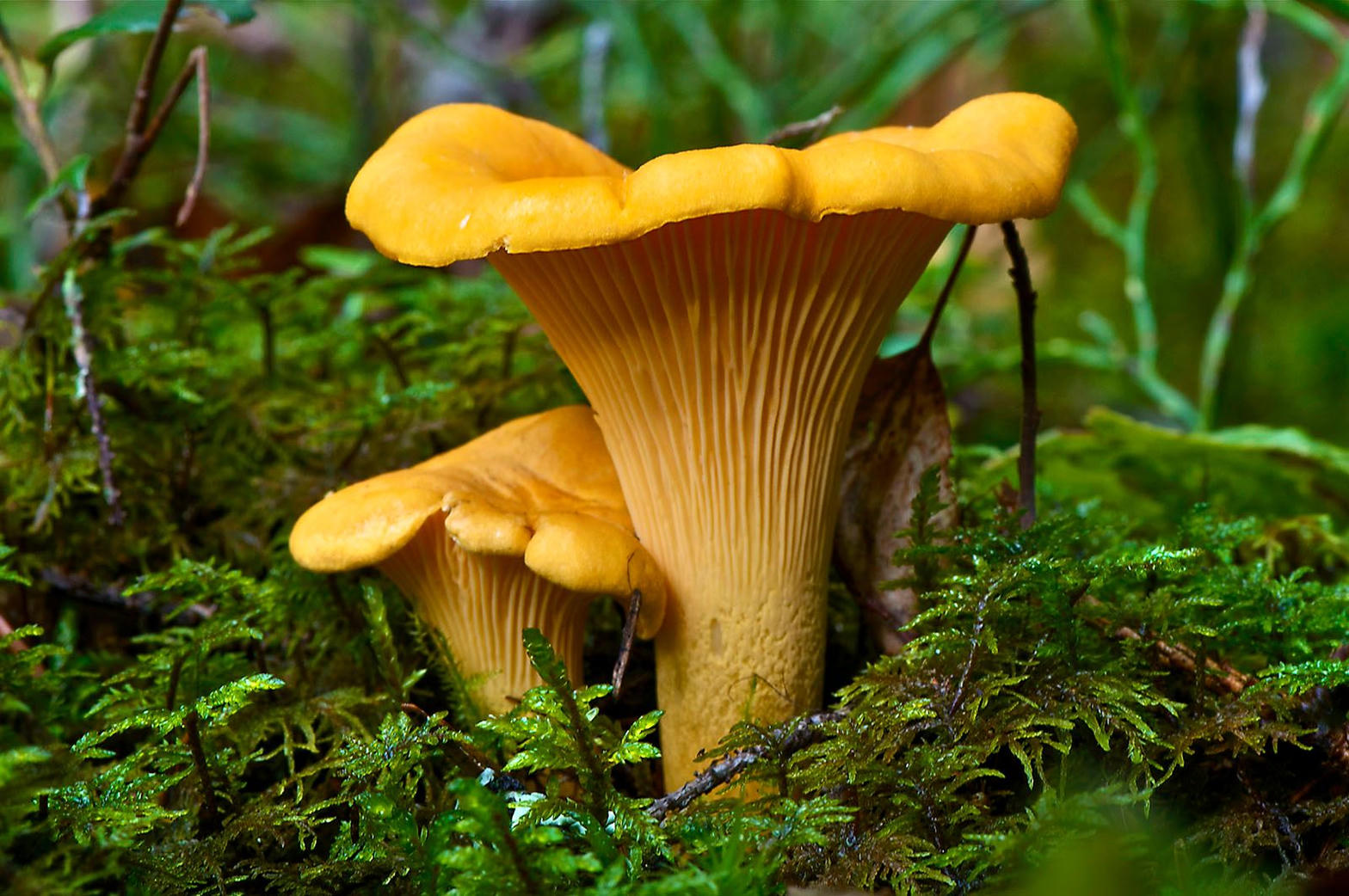
Golden Chanterelle
Cantharellus formosus / C. cibarius complex
Vase-shaped gold to apricot mushroom with blunt, forked false gills that run down the stem. Flesh is solid and white-yellow. Famous apricot scent. One of the safest beginner edibles if you confirm false gills + fruity smell + white interior.
Find: Look on mossy slopes under conifers 2–10 days after soaking rain when nights cool. They often fruit in the same patches yearly. Scan for gold against green moss, not on wood.
Pick: Cut or pinch at the base. Flick off slugs. Do not rake moss — that kills future flushes. Keep dry and cool; they sweat and sour if bagged wet.
- Blunt, forked ridges — not knife-edge gills
- Apricot / stone-fruit aroma
- Solid white-yellow flesh, not hollow
- Growing from soil, never from a log
Lookalikes: Jack-o'-lantern (Omphalotus); False chanterelle (Hygrophoropsis)
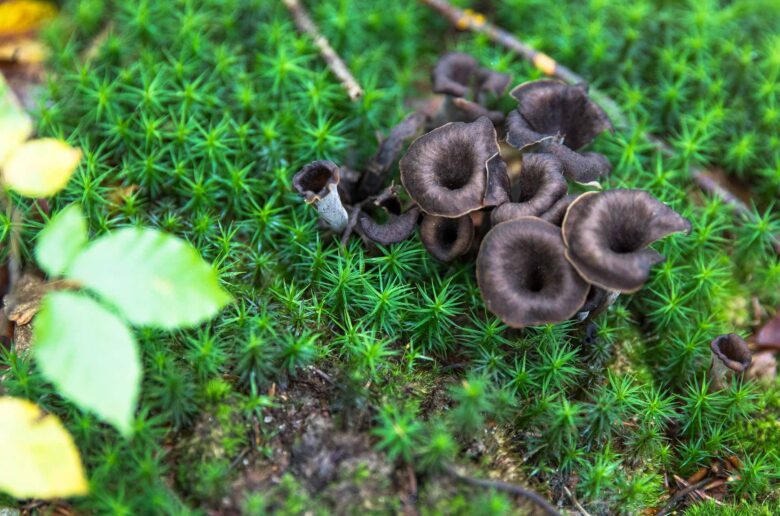
Black Trumpet
Craterellus cornucopioides / C. fallax
Thin black-to-charcoal hollow horns with a smooth or faintly wrinkled outer surface and no true gills. One of the most fragrant wild mushrooms. Easy to miss against duff.
Find: Look down, not out. They hide in oak and beech leaf litter after rain. Once you spot one, get on your knees — they fruit in troops.
Pick: Pinch at the base. They collapse if stacked wet. Dry the same day for sale.
- Hollow horn, open at the top
- Smooth or faintly wrinkled outside
- Paper-thin flesh
Lookalikes: Devil's urn (early spring)
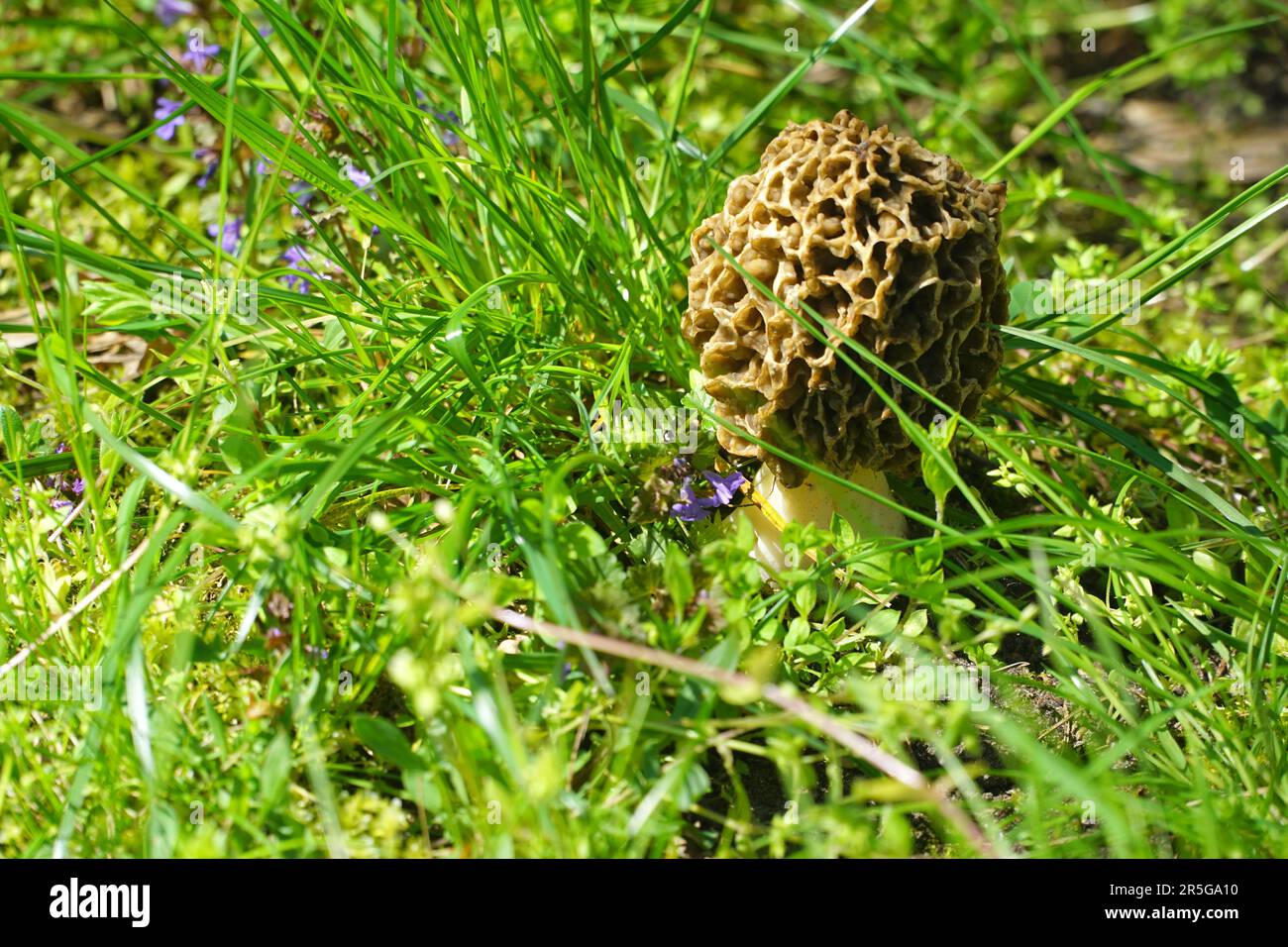
True Morel
Morchella spp.
Hollow honeycomb cap fused to a hollow stem. Pits are true pits (not wrinkles). The single most hunted spring mushroom in North America. Always cut in half lengthwise — true morels are hollow from tip to base.
Find: Hunt 10–18 °C soil after a warm rain. Natural morels hug dying elm, ash, apple, cottonwood and old-growth fir. Burn morels appear the spring after a wildfire, often at snowmelt line. Walk slowly and scan 1–3 m ahead; they camouflage as pinecones.
Pick: Pinch or cut at soil line. Do not yank the mycelium. Keep mesh bags so spores drop. Never wash in the woods. Split every specimen in the field and discard anything not fully hollow.
- True honeycomb pits, not wrinkles
- Completely hollow when sliced
- Cap fused to stem (not hanging)
- No reddish bruising or chambered pith
Lookalikes: False morel (Gyromitra); Verpa / half-free morel
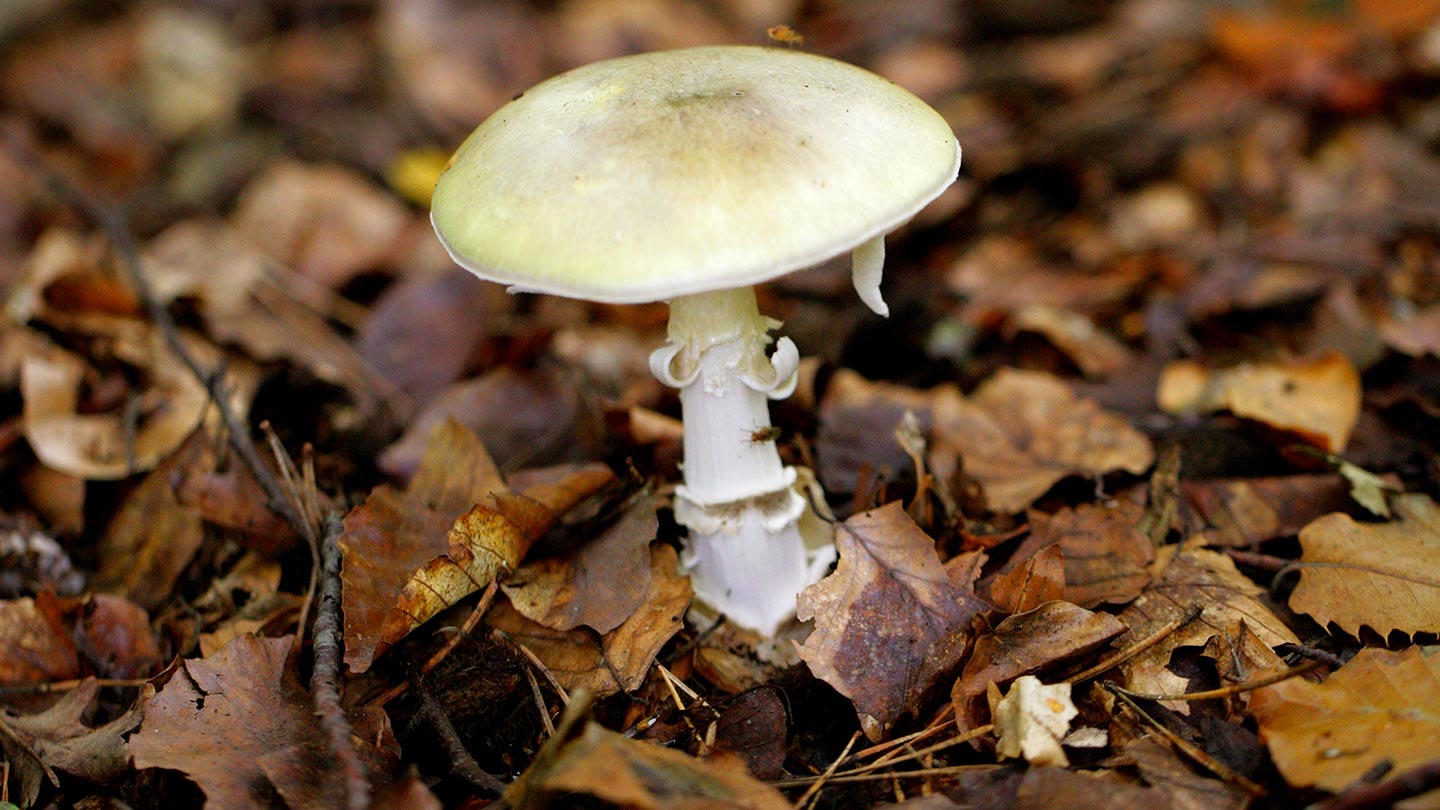
Death Cap
Amanita phalloides
Green-yellow to olive (sometimes pale) cap, white free gills, white ring, and a sack-like cup (volva) at the base. Smells sweet then sickly. Invading North American oaks and urban plantings. This is why you always dig the base of white-gilled mushrooms.
Find: You do not hunt this to eat. You learn it so you never pick it. Common under oak, hazel, and urban landscaping trees in fall.
Pick: Do not pick for the table. Photograph, bag separately if collecting for a club ID table, wash hands.
- Sac-like cup at the buried base
- Skirt-like ring on the stem
- White free gills, white spore print
- Green-olive to pale yellow cap
Lookalikes: Paddy straw / Caesar's / meadow mushrooms