pdfvoss.com · Field Ledger
Ukraine — Polissia & mixed forest
First flush Apr 10 · Last flush Oct 20
Sandy pine, birch, and wetland edges. Milkcaps, birch boletes, morels in spring, chaga on birch. Some districts still carry Chernobyl-era radiation maps — use official forage advisories.
Zones
Volyn pine
Sandy pine · 150–250 m
Rivne wetlands
Birch-alder · 150–220 m
Chernihiv mixed
Pine-oak · 120–200 m
Sumy forest-steppe edge
Oak-pine · 140–220 m
Season table
| Species | First | Last | Peak | $/lb |
|---|---|---|---|---|
| True Morel Morchella spp. | Apr 10 | May 20 | Apr 25–May 10 | 20–50 |
| Golden Chanterelle Cantharellus formosus / C. cibarius complex | Jun 20 | Sep 30 | Jul–Aug | 8–25 |
| Saffron Milkcap Lactarius deliciosus | Aug 5 | Oct 10 | Sep | 6–18 |
| Chaga Inonotus obliquus | Jan 1 | Dec 31 | Winter | 8–20 |
Permits & selling
Obey exclusion and radiation-control maps. Not every pine wood is a picnic. Local councils and state forest enterprises set the tone.
Traditional drying and pickling. Test morels vs gyromitra. Do not sell from restricted contamination zones.
Species plates
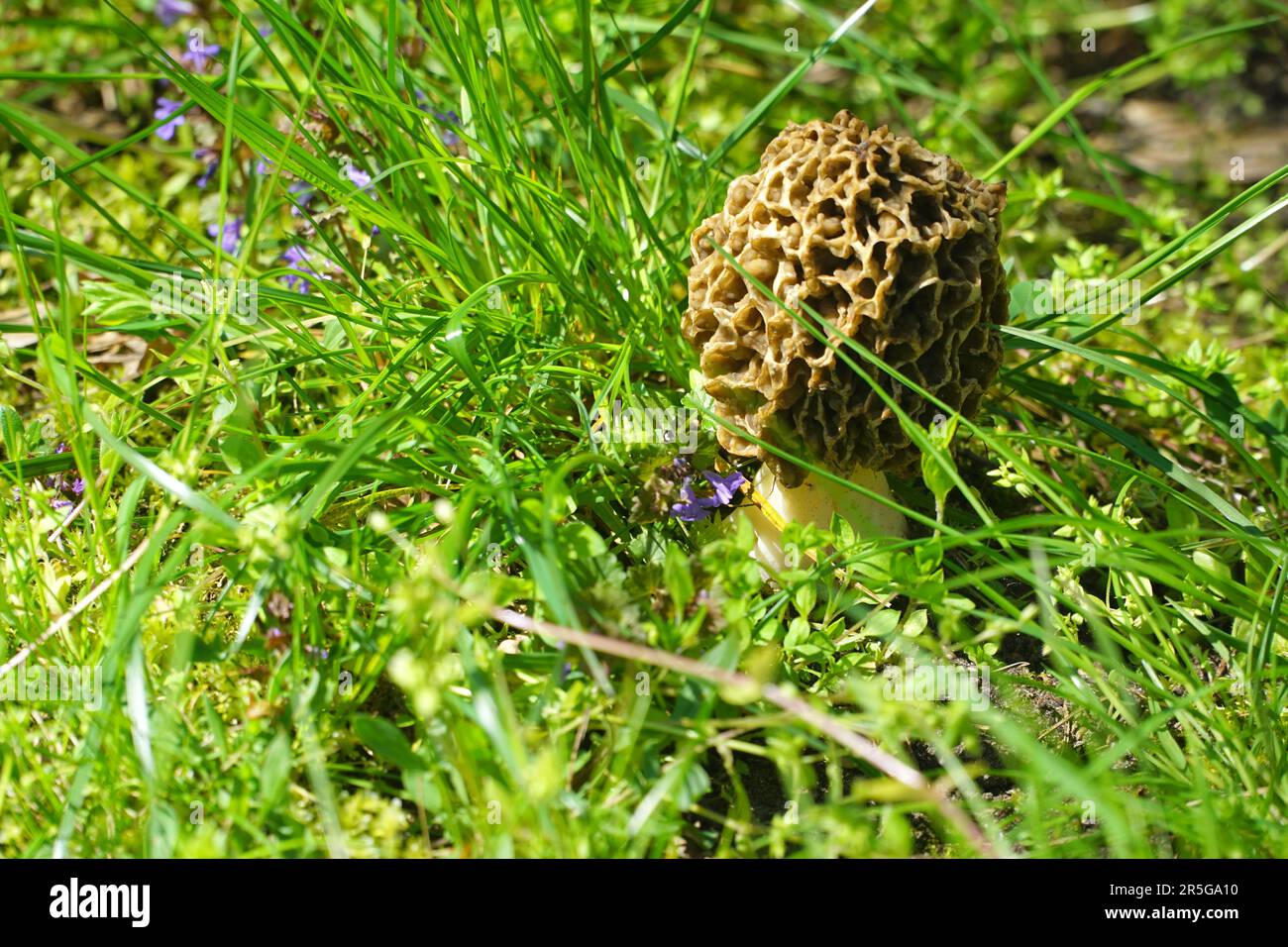
True Morel
Morchella spp.
Hollow honeycomb cap fused to a hollow stem. Pits are true pits (not wrinkles). The single most hunted spring mushroom in North America. Always cut in half lengthwise — true morels are hollow from tip to base.
Find: Hunt 10–18 °C soil after a warm rain. Natural morels hug dying elm, ash, apple, cottonwood and old-growth fir. Burn morels appear the spring after a wildfire, often at snowmelt line. Walk slowly and scan 1–3 m ahead; they camouflage as pinecones.
Pick: Pinch or cut at soil line. Do not yank the mycelium. Keep mesh bags so spores drop. Never wash in the woods. Split every specimen in the field and discard anything not fully hollow.
- True honeycomb pits, not wrinkles
- Completely hollow when sliced
- Cap fused to stem (not hanging)
- No reddish bruising or chambered pith
Lookalikes: False morel (Gyromitra); Verpa / half-free morel
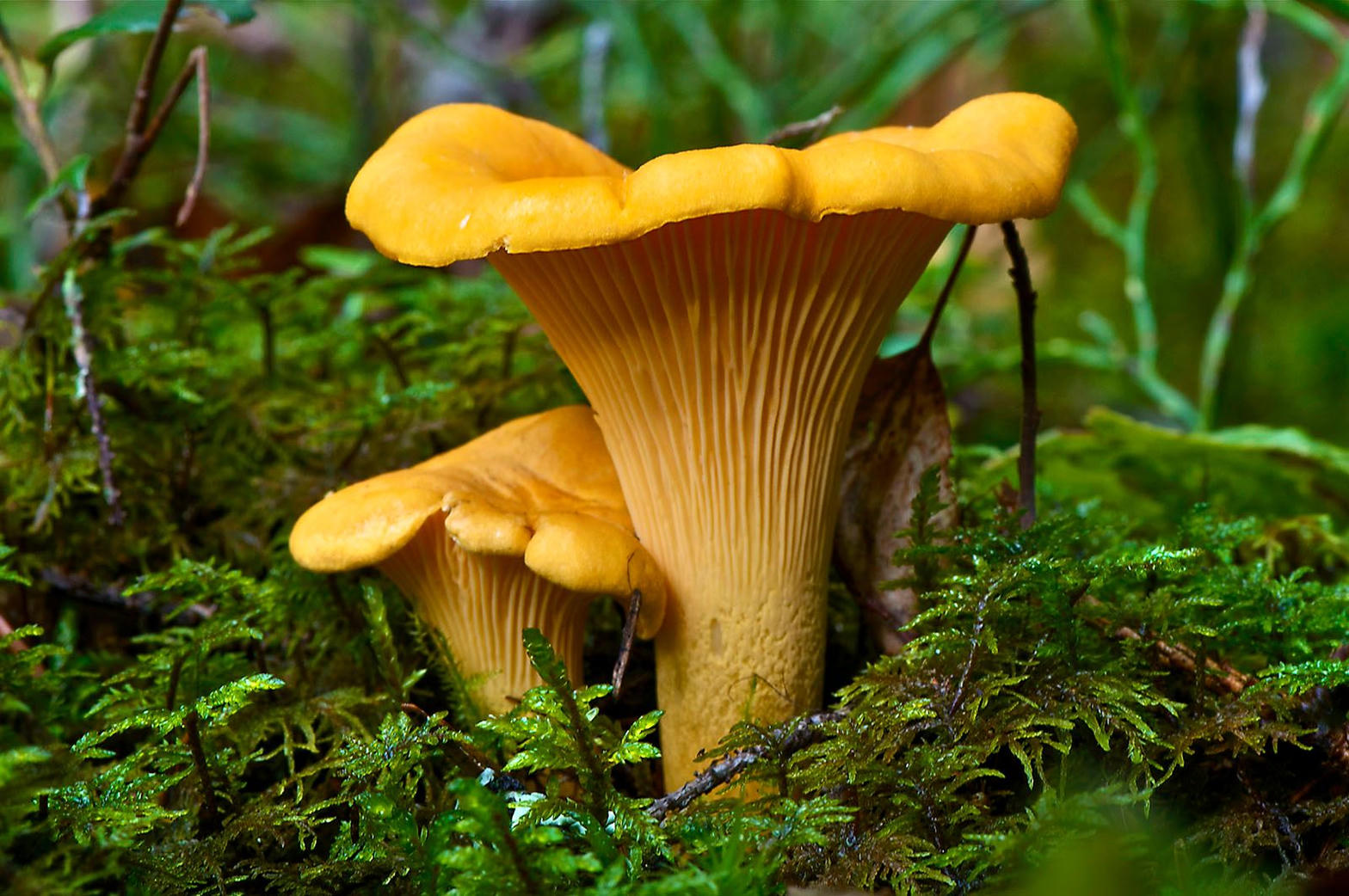
Golden Chanterelle
Cantharellus formosus / C. cibarius complex
Vase-shaped gold to apricot mushroom with blunt, forked false gills that run down the stem. Flesh is solid and white-yellow. Famous apricot scent. One of the safest beginner edibles if you confirm false gills + fruity smell + white interior.
Find: Look on mossy slopes under conifers 2–10 days after soaking rain when nights cool. They often fruit in the same patches yearly. Scan for gold against green moss, not on wood.
Pick: Cut or pinch at the base. Flick off slugs. Do not rake moss — that kills future flushes. Keep dry and cool; they sweat and sour if bagged wet.
- Blunt, forked ridges — not knife-edge gills
- Apricot / stone-fruit aroma
- Solid white-yellow flesh, not hollow
- Growing from soil, never from a log
Lookalikes: Jack-o'-lantern (Omphalotus); False chanterelle (Hygrophoropsis)
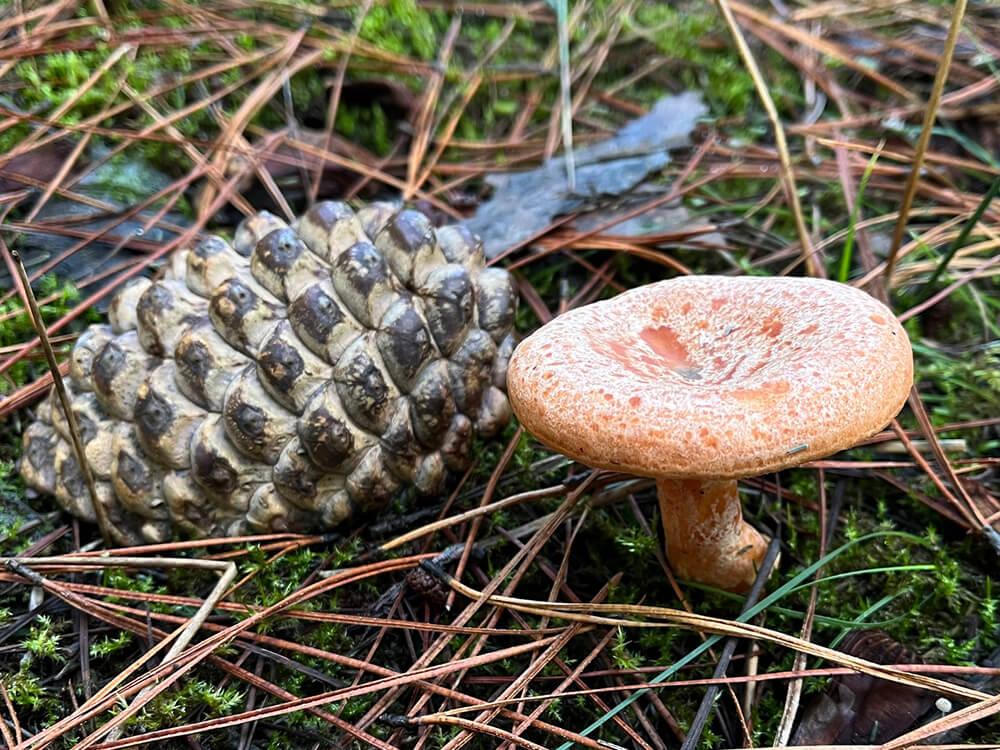
Saffron Milkcap
Lactarius deliciosus
Orange zoned cap that bleeds bright carrot-orange milk. Bruises green. Gills and stem are orange. The Ukrainian and East-European pine-forest classic.
Find: Young pine plantations and sandy pine woods after late-summer rain. Look for green-stained older caps as flags.
Pick: Cut and check for worms in the stem immediately. Young, firm, still-orange milk is the grade.
- Bright orange milk when cut
- Stains green with age or bruising
- Under pine
Lookalikes: Lactarius torminosus (bearded milkcap); Other hot Lactarius
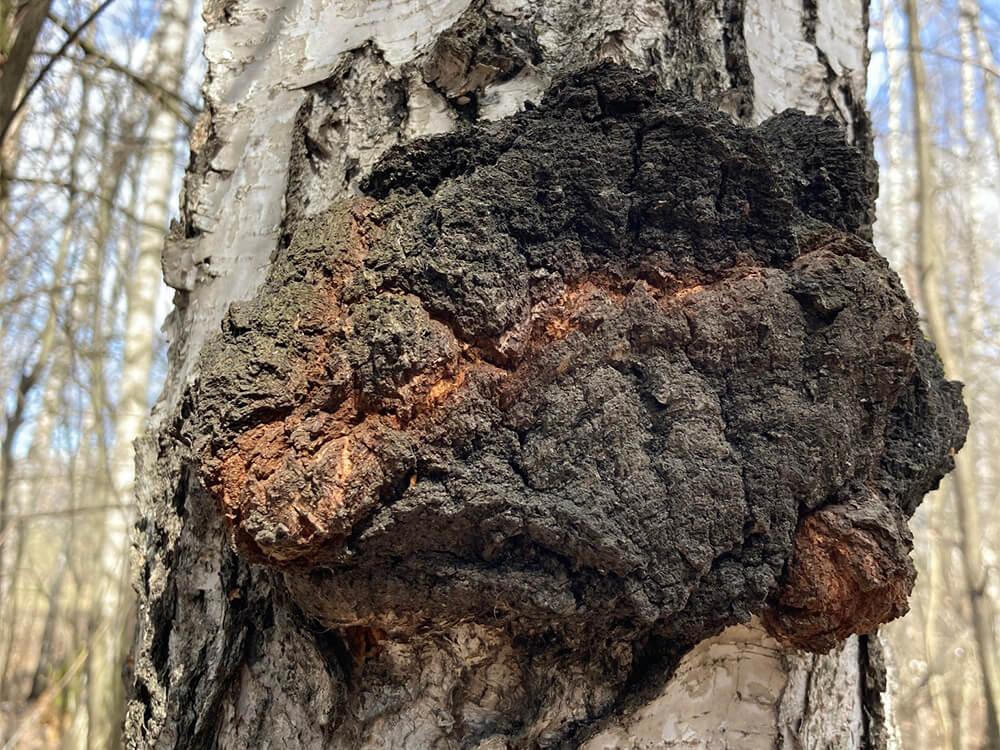
Chaga
Inonotus obliquus
Burned-looking black clinker on living birch. Inside is rust-orange and corky. It is a sterile conk, not a classic mushroom. Overharvest is a real conservation issue.
Find: Walk birch stands in winter when the black clinker pops against snow. Confirm living tree + gold interior.
Pick: Take a portion, never girdle the tree. A hatchet, not a truck winch. If the tree is dead, skip — quality and ethics drop.
- On living birch only
- Rust-gold corky interior
- Cracked charcoal exterior
Lookalikes: Black knot / burls / burned wood