pdfvoss.com · Field Ledger
Ukraine — Carpathians
First flush May 20 · Last flush Nov 5
One of Europe's great mycophilic cultures. White mushrooms (borovyk), ryzhyky, and chanterelles fill village markets. Know current access and safety notices before you travel.
Zones
Zakarpattia beech
Beech-fir · 400–1,200 m
Ivano-Frankivsk
Spruce-beech · 500–1,500 m
Chornohora high
Spruce, late season · 1,000–1,800 m
Bukovyna hills
Mixed, villages · 300–800 m
Season table
| Species | First | Last | Peak | $/lb |
|---|---|---|---|---|
| Golden Chanterelle Cantharellus formosus / C. cibarius complex | Jun 15 | Oct 10 | Jul–Sep | 8–25 |
| King Bolete / Porcini Boletus edulis complex | Jun 20 | Oct 20 | Aug–Sep | 10–40 |
| Saffron Milkcap Lactarius deliciosus | Aug 1 | Oct 15 | Sep | 6–18 |
| Hedgehog / Sweet Tooth Hydnum repandum | Aug 15 | Nov 5 | Sep–Oct | 6–18 |
Permits & selling
Forests are a mix of state and community use. Wartime access, checkpoints, and unexploded ordnance are real constraints in some oblasts — check official guidance. Do not treat a guidebook pin as a go-ahead.
Village markets are traditional. Formal export needs food-safety paperwork. Do not buy from or pick in restricted military zones.
Species plates
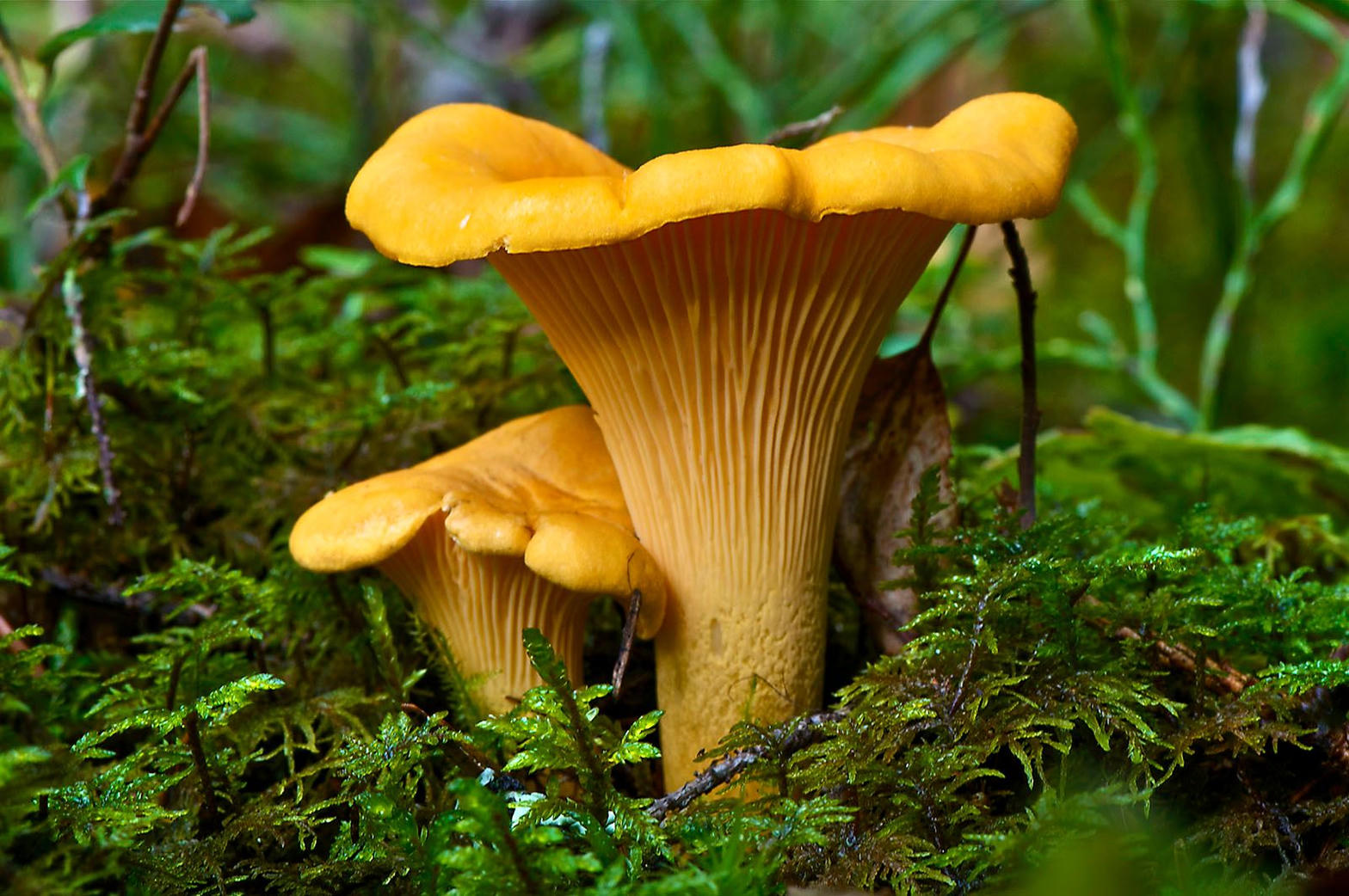
Golden Chanterelle
Cantharellus formosus / C. cibarius complex
Vase-shaped gold to apricot mushroom with blunt, forked false gills that run down the stem. Flesh is solid and white-yellow. Famous apricot scent. One of the safest beginner edibles if you confirm false gills + fruity smell + white interior.
Find: Look on mossy slopes under conifers 2–10 days after soaking rain when nights cool. They often fruit in the same patches yearly. Scan for gold against green moss, not on wood.
Pick: Cut or pinch at the base. Flick off slugs. Do not rake moss — that kills future flushes. Keep dry and cool; they sweat and sour if bagged wet.
- Blunt, forked ridges — not knife-edge gills
- Apricot / stone-fruit aroma
- Solid white-yellow flesh, not hollow
- Growing from soil, never from a log
Lookalikes: Jack-o'-lantern (Omphalotus); False chanterelle (Hygrophoropsis)
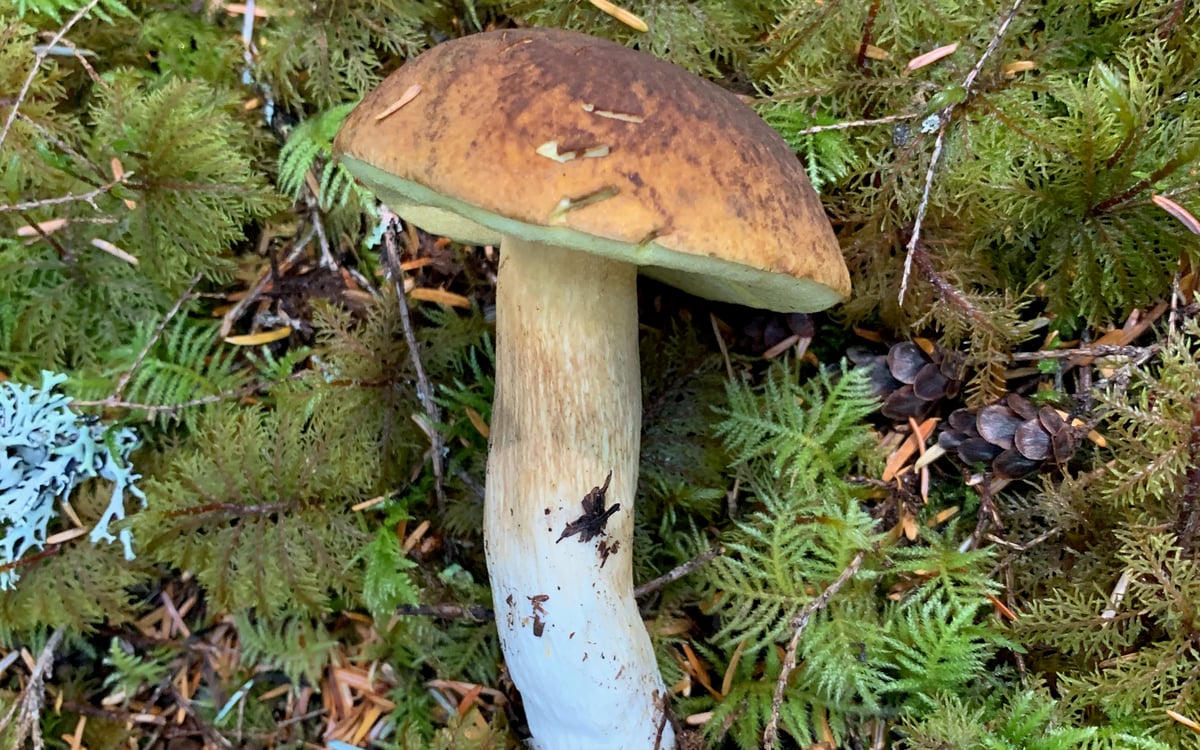
King Bolete / Porcini
Boletus edulis complex
Fat brown bun cap over a swollen white stem with a fine net (reticulum) near the top. Underside is a sponge of pores, never gills. Pores start white, age yellow-olive. Flesh does not stain blue in true B. edulis.
Find: Mycorrhizal with spruce, fir, pine, and birch. Hunt after cool rains in late summer–fall. Look on forest edges, old roads, and mossy benches. Check every button for maggots by slicing the stem.
Pick: Cut high enough to leave the base. Slice immediately — if the sponge is green and the stem is tunneled, dry it or leave it. Never soak.
- Pores (sponge), never gills
- White netting on upper stem
- Flesh does not stain blue
- Young pores white, not red
Lookalikes: Bitter bolete (Tylopilus felleus); Blue-staining boletes
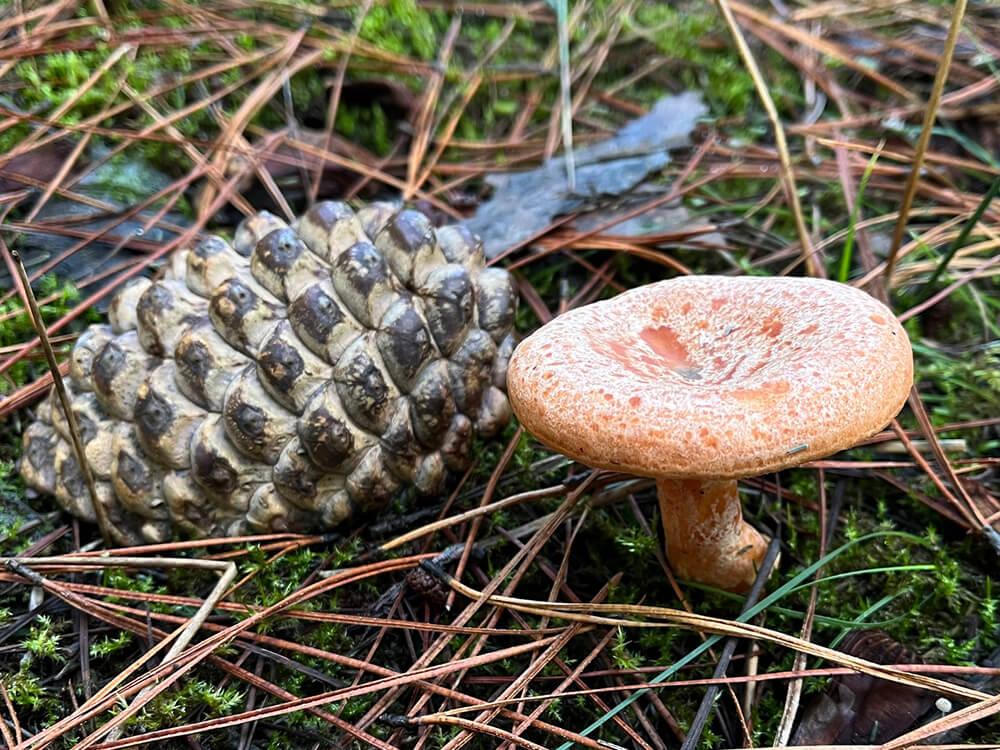
Saffron Milkcap
Lactarius deliciosus
Orange zoned cap that bleeds bright carrot-orange milk. Bruises green. Gills and stem are orange. The Ukrainian and East-European pine-forest classic.
Find: Young pine plantations and sandy pine woods after late-summer rain. Look for green-stained older caps as flags.
Pick: Cut and check for worms in the stem immediately. Young, firm, still-orange milk is the grade.
- Bright orange milk when cut
- Stains green with age or bruising
- Under pine
Lookalikes: Lactarius torminosus (bearded milkcap); Other hot Lactarius
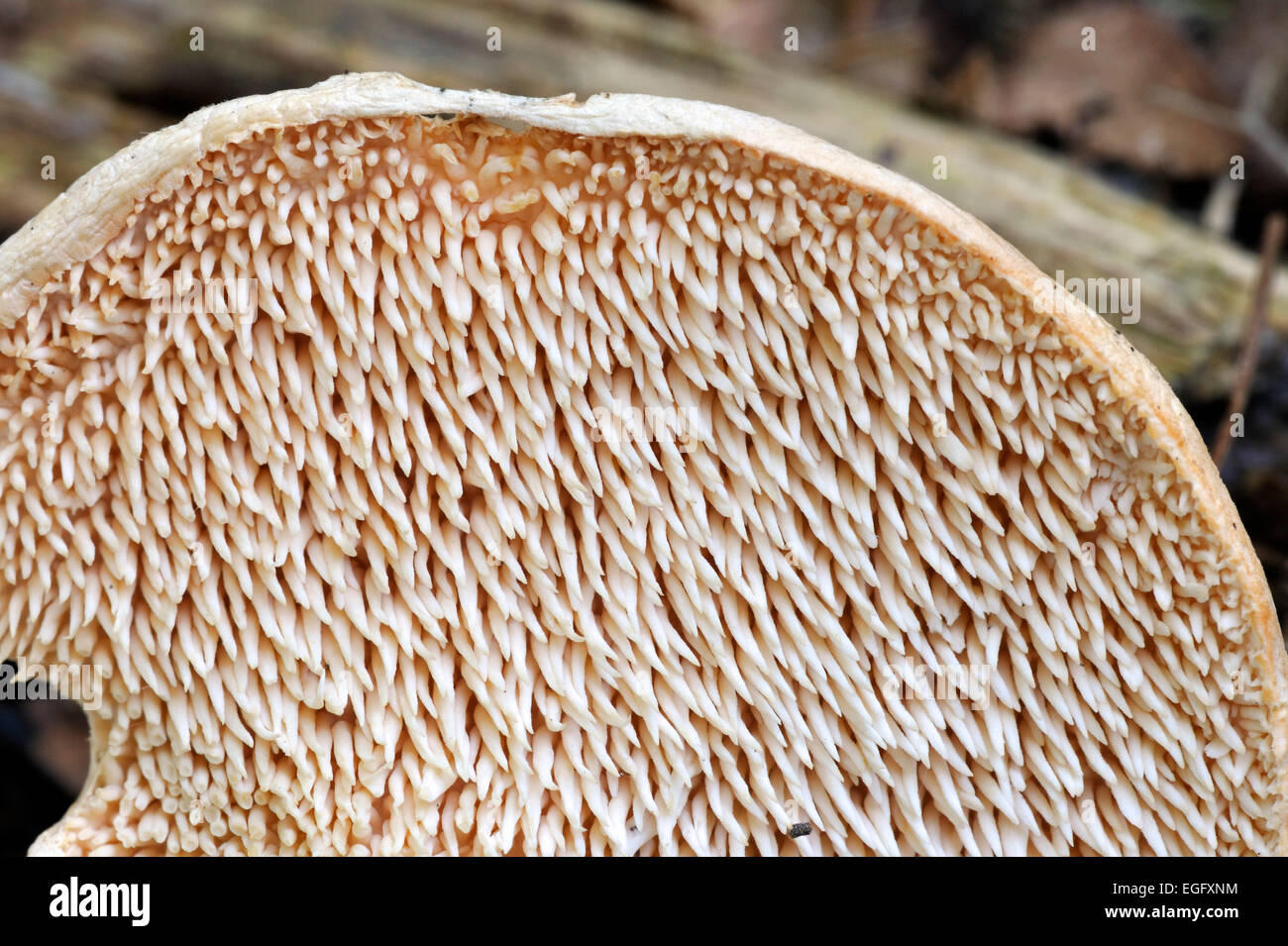
Hedgehog / Sweet Tooth
Hydnum repandum
Pale peach to cream mushroom with spines (teeth) under the cap instead of gills or pores. Flesh is brittle and stains slightly orange. One of the safest wild edibles on Earth.
Find: Same mossy conifer ground as chanterelles, often later in the season. They hide under sword ferns. Follow old chanterelle patches into November.
Pick: Cut at the base. Spines shed in the bag — that is normal. Firm young caps keep best.
- Soft spines/teeth under the cap
- Cream to peach, never dark brown
- Brittle, carrot-like snap
Lookalikes: Other Hydnum / Sarcodon