pdfvoss.com · Field Ledger
United Kingdom & Ireland
First flush Aug 20 · Last flush Nov 20
September–October is the national mushroom month. Strong club culture, strict site ethics (no rakes, 1.5 kg personal guidance in many woods), and a death-cap problem in urban parks.
Zones
Caledonian / Highland pine
Scots pine, birch · 50–500 m
Lakes / Pennines
Mixed upland · 100–600 m
Home Counties beech
Beech-oak on chalk · 50–250 m
West Ireland
Hazel, bog edge · 0–300 m
Season table
| Species | First | Last | Peak | $/lb |
|---|---|---|---|---|
| Golden Chanterelle Cantharellus formosus / C. cibarius complex | Aug 20 | Oct 31 | Sep | 8–25 |
| King Bolete / Porcini Boletus edulis complex | Aug 25 | Oct 25 | Sep–Oct | 10–40 |
| Hedgehog / Sweet Tooth Hydnum repandum | Sep 1 | Nov 15 | Oct | 6–18 |
| Death Cap Amanita phalloides | Aug 15 | Nov 10 | Sep–Oct | n/a |
Permits & selling
Most land is private or NGO. Forestry England / NRW / Coillte have written rules. Many nature reserves ban fungi harvest. The Scottish Outdoor Access Code is more generous but still not a commercial license.
Selling foraged fungi is a food business (EHO registration). Landowner permission is required for commercial picking. Psilocybe remains a Class A controlled drug in the UK.
Species plates
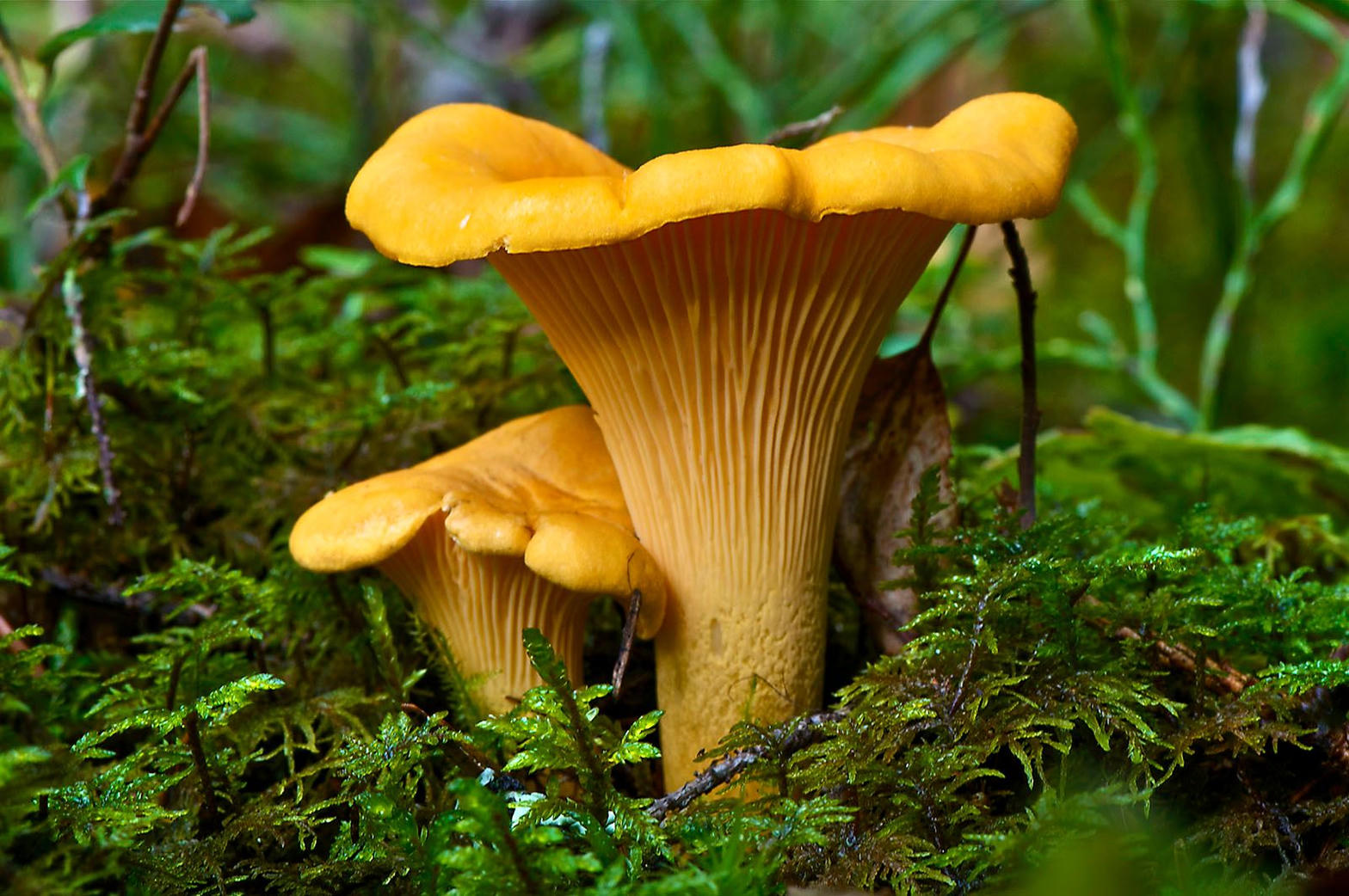
Golden Chanterelle
Cantharellus formosus / C. cibarius complex
Vase-shaped gold to apricot mushroom with blunt, forked false gills that run down the stem. Flesh is solid and white-yellow. Famous apricot scent. One of the safest beginner edibles if you confirm false gills + fruity smell + white interior.
Find: Look on mossy slopes under conifers 2–10 days after soaking rain when nights cool. They often fruit in the same patches yearly. Scan for gold against green moss, not on wood.
Pick: Cut or pinch at the base. Flick off slugs. Do not rake moss — that kills future flushes. Keep dry and cool; they sweat and sour if bagged wet.
- Blunt, forked ridges — not knife-edge gills
- Apricot / stone-fruit aroma
- Solid white-yellow flesh, not hollow
- Growing from soil, never from a log
Lookalikes: Jack-o'-lantern (Omphalotus); False chanterelle (Hygrophoropsis)
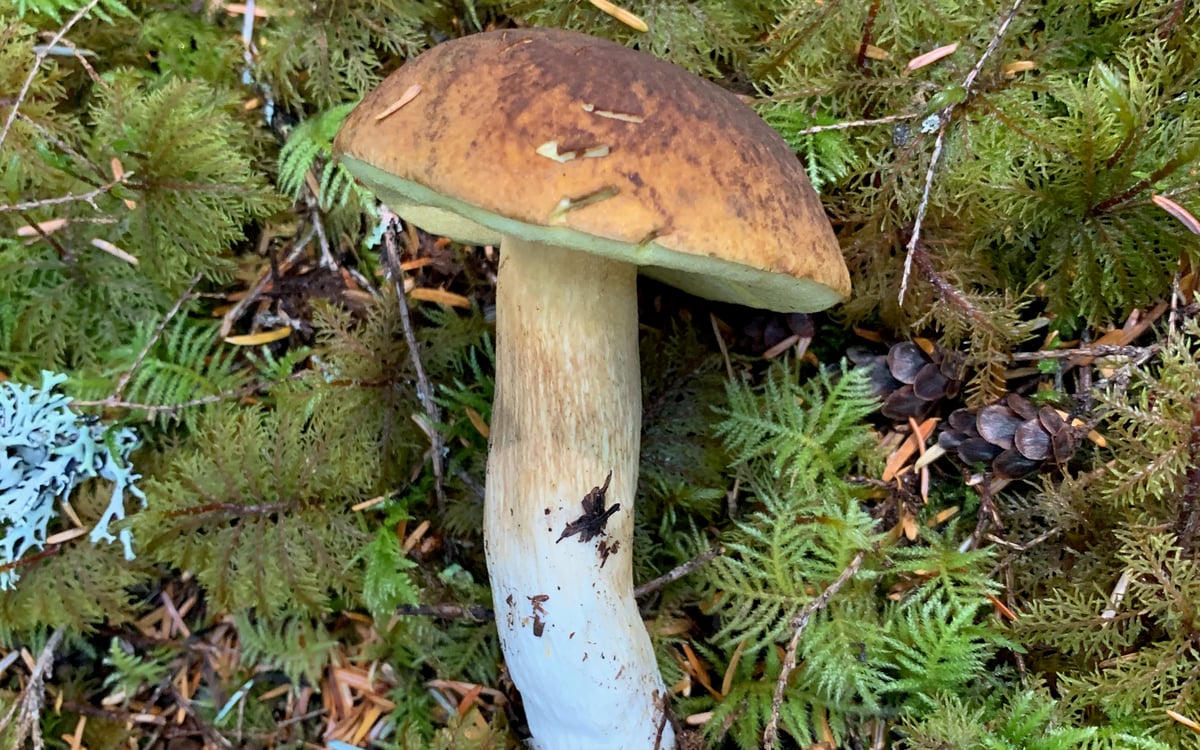
King Bolete / Porcini
Boletus edulis complex
Fat brown bun cap over a swollen white stem with a fine net (reticulum) near the top. Underside is a sponge of pores, never gills. Pores start white, age yellow-olive. Flesh does not stain blue in true B. edulis.
Find: Mycorrhizal with spruce, fir, pine, and birch. Hunt after cool rains in late summer–fall. Look on forest edges, old roads, and mossy benches. Check every button for maggots by slicing the stem.
Pick: Cut high enough to leave the base. Slice immediately — if the sponge is green and the stem is tunneled, dry it or leave it. Never soak.
- Pores (sponge), never gills
- White netting on upper stem
- Flesh does not stain blue
- Young pores white, not red
Lookalikes: Bitter bolete (Tylopilus felleus); Blue-staining boletes
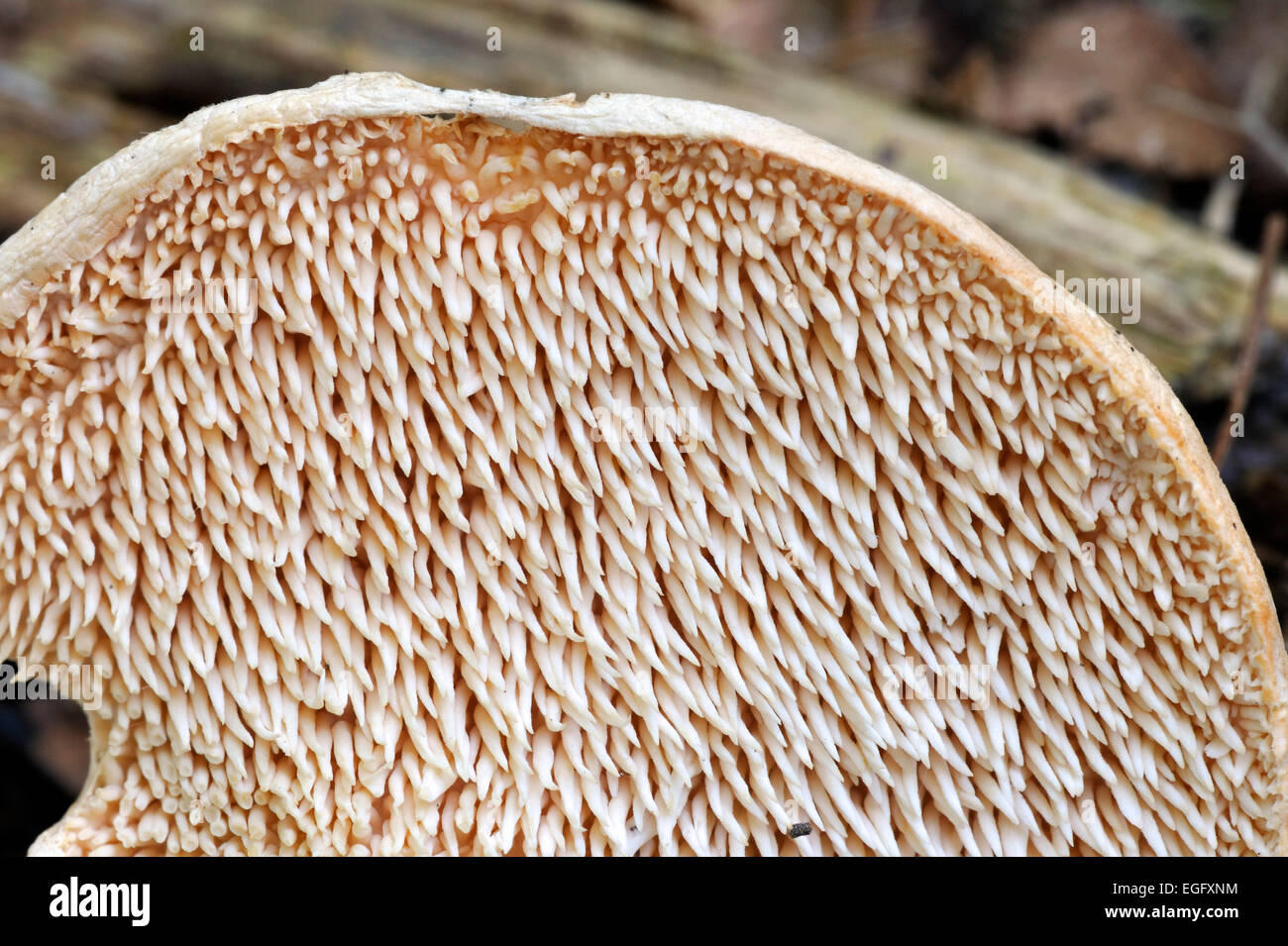
Hedgehog / Sweet Tooth
Hydnum repandum
Pale peach to cream mushroom with spines (teeth) under the cap instead of gills or pores. Flesh is brittle and stains slightly orange. One of the safest wild edibles on Earth.
Find: Same mossy conifer ground as chanterelles, often later in the season. They hide under sword ferns. Follow old chanterelle patches into November.
Pick: Cut at the base. Spines shed in the bag — that is normal. Firm young caps keep best.
- Soft spines/teeth under the cap
- Cream to peach, never dark brown
- Brittle, carrot-like snap
Lookalikes: Other Hydnum / Sarcodon
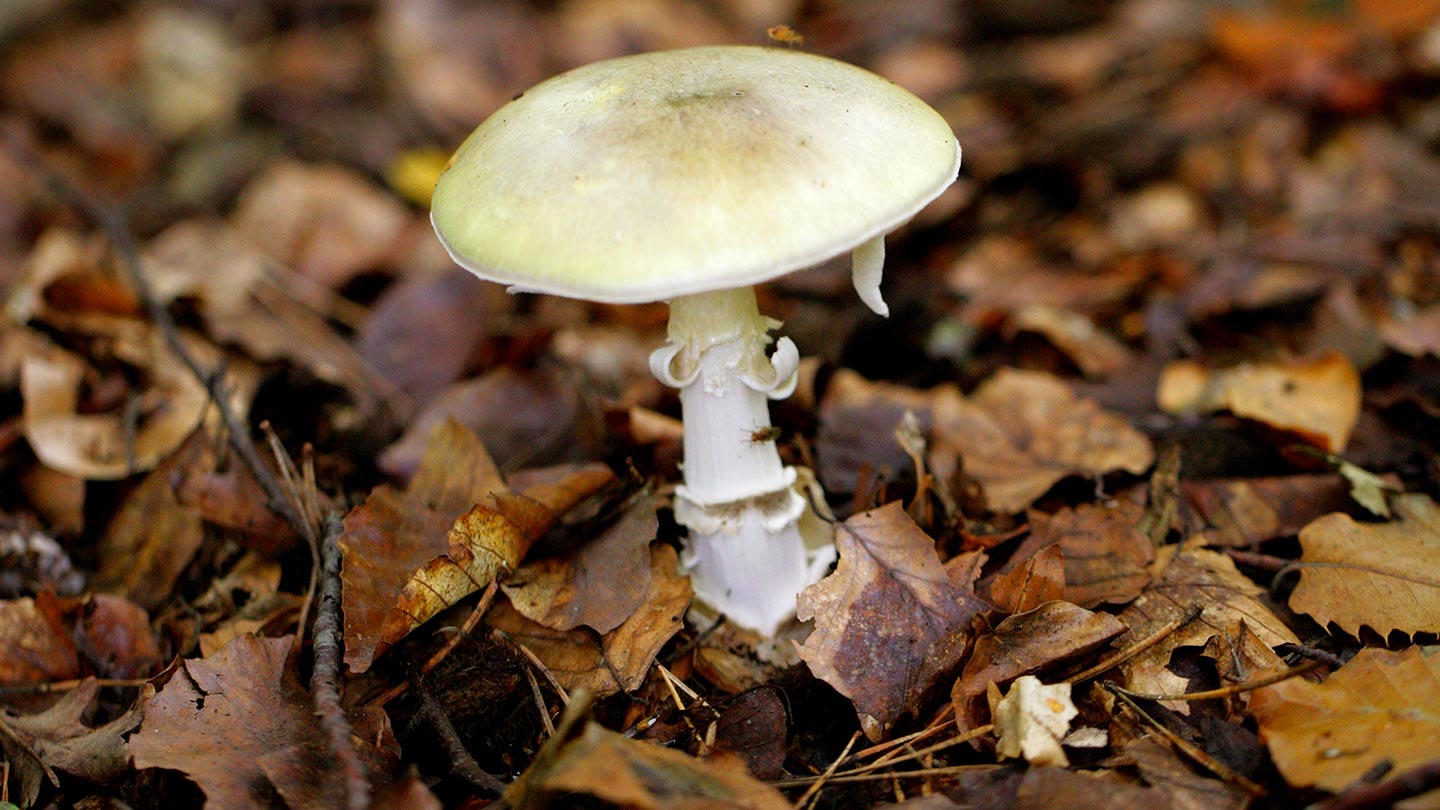
Death Cap
Amanita phalloides
Green-yellow to olive (sometimes pale) cap, white free gills, white ring, and a sack-like cup (volva) at the base. Smells sweet then sickly. Invading North American oaks and urban plantings. This is why you always dig the base of white-gilled mushrooms.
Find: You do not hunt this to eat. You learn it so you never pick it. Common under oak, hazel, and urban landscaping trees in fall.
Pick: Do not pick for the table. Photograph, bag separately if collecting for a club ID table, wash hands.
- Sac-like cup at the buried base
- Skirt-like ring on the stem
- White free gills, white spore print
- Green-olive to pale yellow cap
Lookalikes: Paddy straw / Caesar's / meadow mushrooms