pdfvoss.com · Field Ledger
South Asia — Western Ghats & monsoon forests
First flush Jun 5 · Last flush Oct 10
Termitomyces (termite mushrooms) after the first monsoon, plus paddy-straw cousins and a huge medicinal polypore flora. This is not a chanterelle forest — learn the local genera.
Zones
Sahyadri escarpment
Laterite, termite mounds · 200–1,200 m
Nilgiri / Wayanad
Shola-plantation edge · 800–2,000 m
Konkan coast
Farm bunds, groves · 0–200 m
Anamalai / Palani
Moist deciduous · 400–1,800 m
Season table
| Species | First | Last | Peak | $/lb |
|---|---|---|---|---|
| Termite Mushroom Termitomyces clypeatus / T. heimii / T. eurrhizus | Jun 5 | Sep 20 | Jun 10–Jul 15 | 2–12 |
| Oyster Mushroom Pleurotus ostreatus complex | Jul 1 | Oct 10 | Aug | 3–10 |
| Turkey Tail Trametes versicolor | Jun 15 | Oct 10 | Aug | 4–14 |
| Reishi / Varnished Conk Ganoderma lucidum / G. oregonense | Jun 20 | Oct 10 | Aug | 8–25 |
Permits & selling
Reserve forests and wildlife sanctuaries are generally closed to harvest. Village commons and farm bunds are the ethical ground.
Local wet markets already trade Termitomyces. Outsiders undercutting village women is a bad business and a worse ethic. Food-safety: cook thoroughly, same day.
Species plates
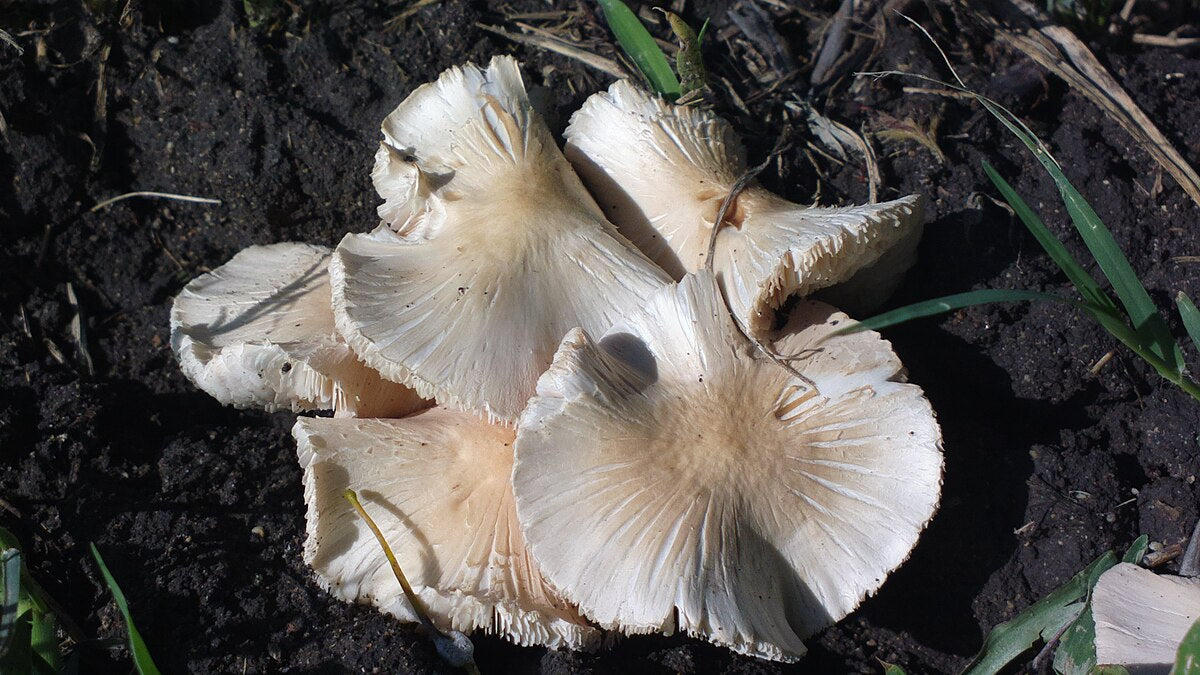
Termite Mushroom
Termitomyces clypeatus / T. heimii / T. eurrhizus
Pale cream to tan umbrella or spinytop mushrooms that fruit from termite combs. Many species have a long, rooting 'pseudorhiza' that traces down to the nest. Flesh is tender, gills crowded and free-to-adnexed, spore print pinkish-cream. This is the monsoon edible of South and Southeast Asia — not a chanterelle forest.
Find: Walk farm bunds, laterite, and village commons 3–10 days after the first soaking southwest-monsoon week. Look at active termite mounds and the soil around them. Small T. microcarpus fruits in dense white troops on the mound itself.
Pick: Twist and lift; the long root may snap. Brush dirt, do not soak. Cook the same day — they do not travel. Buy from the people who already work that ground if you are a visitor.
- On or next to an active termite mound / comb
- Long dirty rooting base (most species)
- Pinkish-cream spore print, not green
- No sack-like cup at the dug base
Lookalikes: Chlorophyllum / false parasol; Amanita buttons
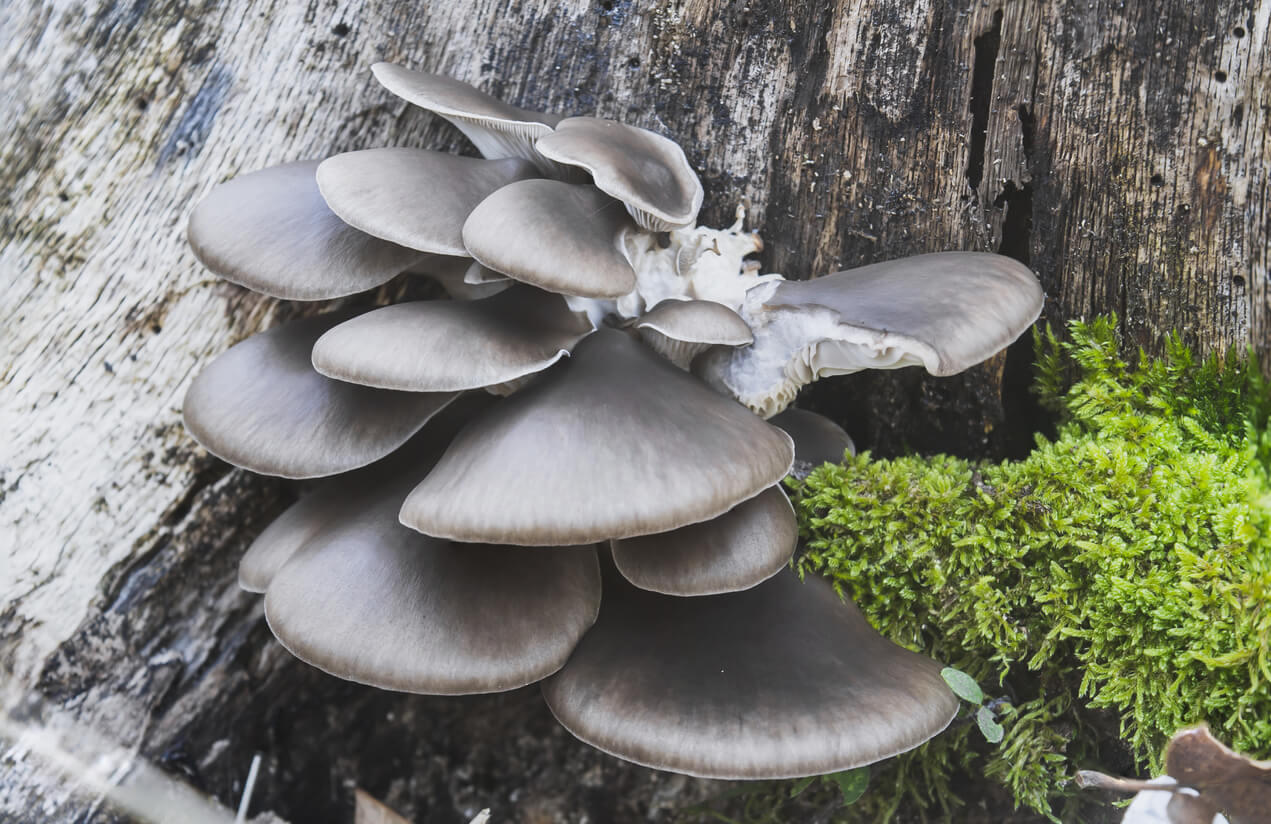
Oyster Mushroom
Pleurotus ostreatus complex
Shelf-like clusters on hardwood with off-center stems, decurrent white-to-cream gills, and a lilac-gray to tan cap. Spore print is lilac-gray. One of the safer beginner wood mushrooms — but still confirm gills + wood + no ring, and never confuse with small brown wood fungi.
Find: Scan standing dead and fallen hardwoods after cold rains. They often fruit in the same log for years. Winter on the coast, cooler months inland.
Pick: Cut the cluster at the wood. Leave a pad. Trim tough bases. Use within two days; they sour fast.
- Shelf/cluster on wood with decurrent gills
- Lilac-gray to white spore print
- No ring and no volva
- Does not bruise blue
Lookalikes: Angel wings (Pleurocybella); Deadly galerina
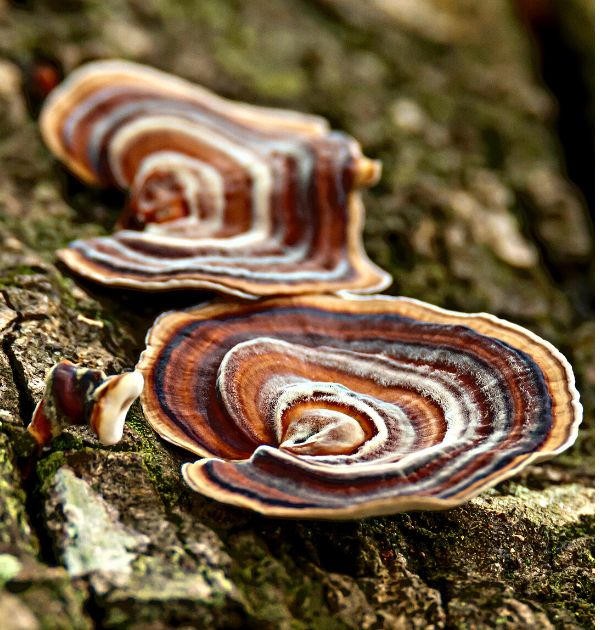
Turkey Tail
Trametes versicolor
Thin, flexible brackets with concentric zones of brown, rust, blue-gray, and a white growing edge. Underside is a layer of tiny round white-to-cream pores — never gills, never teeth. Flesh is thin and leathery. One of the most studied medicinal polypores (PSK).
Find: Almost any hardwood deadwood in the wet months. Look at the ends of oak, maple, and beech logs. Year-round woody body; new growth after rain.
Pick: Cut clean brackets, brush, and dry immediately. Leave plenty. Confirm pores with a hand lens — false turkey tails have a smooth or toothed underside.
- Thin concentric color zones + white edge
- Tiny round pores on the underside
- Thin and flexible, not woody-thick
Lookalikes: False turkey tail (Stereum); Violet-toothed polypore
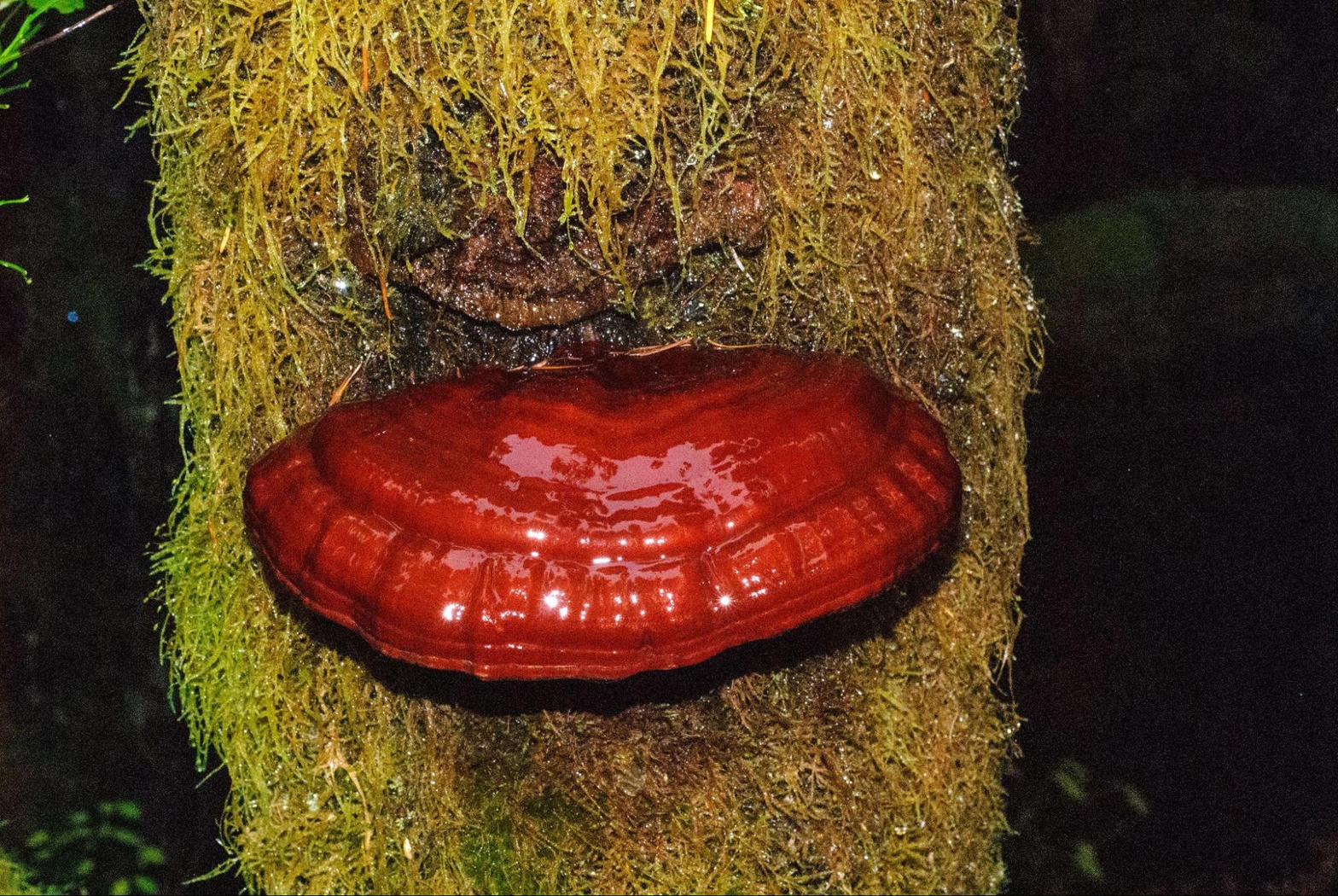
Reishi / Varnished Conk
Ganoderma lucidum / G. oregonense
Shiny, lacquered red-brown kidney-shaped shelf with white growing edge and brown pores. Woody — simmered for tea, not fried as a steak.
Find: Scan hemlock and hardwood stumps for a wet-looking red lacquer. Year-round woody body; new growth in summer–fall.
Pick: Cut at the attachment. Dry thoroughly to prevent mold. Leave some on each stump.
- Shiny varnished red surface
- Brown pores, woody flesh
- White growing margin when fresh
Lookalikes: Artist's conk (G. applanatum); Red-belted conk