pdfvoss.com · Field Ledger
British Columbia — Coast & Vancouver Island
First flush Sep 8 · Last flush Feb 20
Temperate rainforest. The global classroom for chanterelles, pine mushrooms, and winter yellowfeet. First fall rains flip the switch.
Zones
West Island hemlock
Old hemlock / fir, deep moss · 50–600 m
East Island rainshadow
Douglas-fir, rocky benches · 0–400 m
Sunshine Coast
Fir-hemlock slopes · 50–800 m
Sea-to-Sky
Montane fir, later season · 400–1,200 m
North Coast / Haida Gwaii approaches
Hypermaritime spruce-hemlock · 0–400 m
Season table
| Species | First | Last | Peak | $/lb |
|---|---|---|---|---|
| Lobster Mushroom Hypomyces lactifluorum | Aug 5 | Oct 10 | Sep | 3–16 |
| Golden Chanterelle Cantharellus formosus / C. cibarius complex | Sep 8 | Nov 30 | Oct 1–25 | 8–25 |
| American Matsutake Tricholoma murrillianum | Sep 15 | Nov 10 | Oct | 20–120 |
| Hedgehog / Sweet Tooth Hydnum repandum | Sep 20 | Dec 15 | Oct–Nov | 6–18 |
| Winter Chanterelle / Yellowfoot Craterellus tubaeformis | Oct 10 | Feb 20 | Nov–Jan | 4–12 |
| Oyster Mushroom Pleurotus ostreatus complex | Oct 1 | Mar 15 | Nov–Jan | 3–10 |
| Turkey Tail Trametes versicolor | Jan 1 | Dec 31 | Oct–Mar | 4–14 |
| Reishi / Varnished Conk Ganoderma lucidum / G. oregonense | Jul 1 | Oct 31 | Aug–Sep | 8–25 |
Permits & selling
Crown land: personal harvest is generally tolerated in small amounts; commercial picking on Crown land needs authorization. Parks and ecological reserves are closed. First Nations territories — ask. Rec sites and community watersheds may ban harvest.
Selling wild mushrooms in BC is food: you need a food-premises path, clean coolers, and a buyer who will reject dirty product. Export (matsutake) has additional paperwork. Never sell controlled species.
Species plates
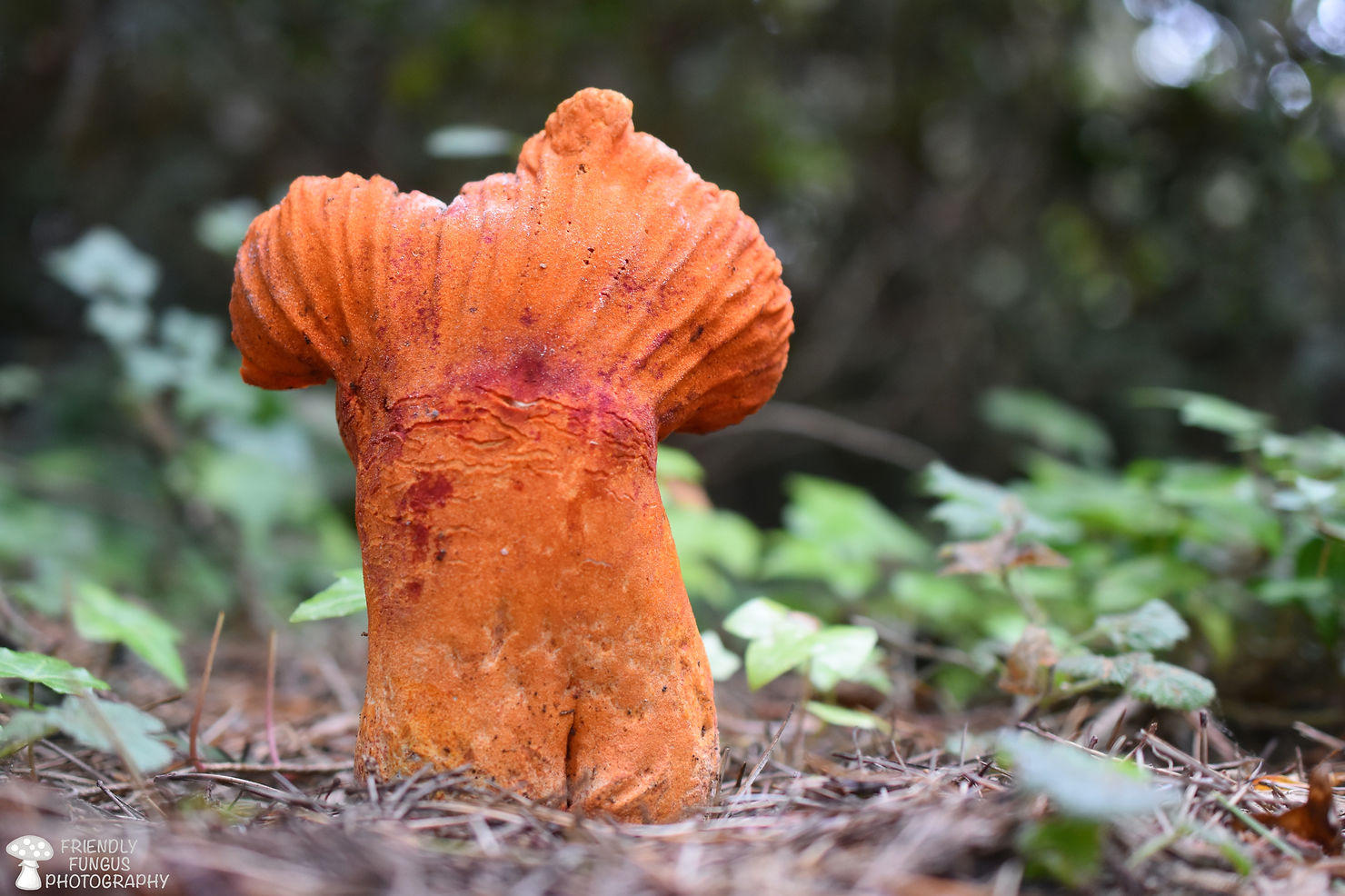
Lobster Mushroom
Hypomyces lactifluorum
Not its own mushroom — a bright orange-red parasite that takes over Russula or Lactarius, turning them into a seafood-scented, dense club. Interior should be firm and white-orange, never mushy or insect-riddled.
Find: Scan duff for neon orange. Often half-buried. Common in fir and hemlock after summer rains into early fall.
Pick: Cut, then trim any soft, white, or buggy parts in the field. Only keep dense, fully colored specimens.
- Bright lobster-orange skin overall
- Dense, not spongy or wet
- Interior firm white to pale orange
Lookalikes: Under-parasitized Russula
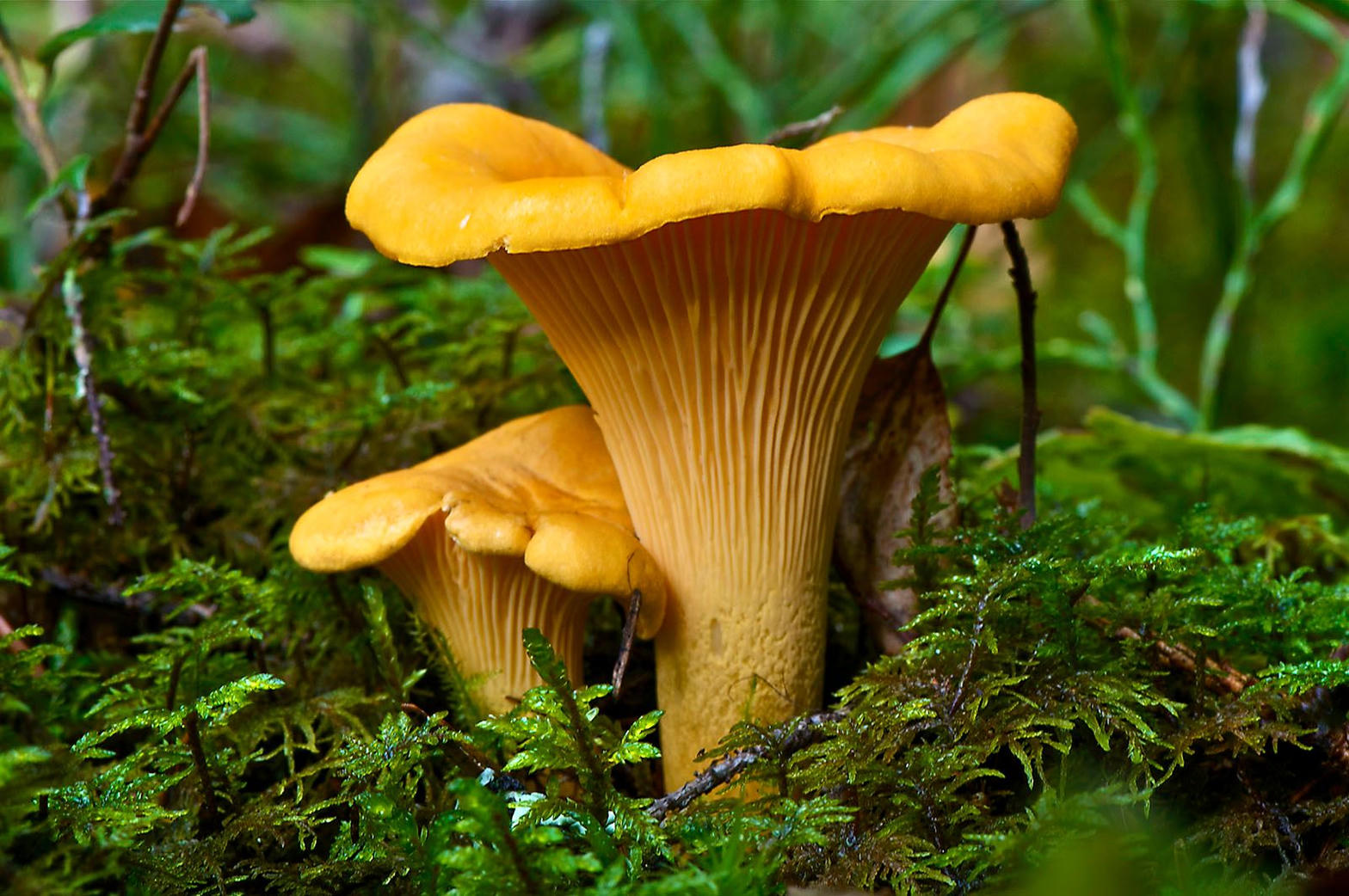
Golden Chanterelle
Cantharellus formosus / C. cibarius complex
Vase-shaped gold to apricot mushroom with blunt, forked false gills that run down the stem. Flesh is solid and white-yellow. Famous apricot scent. One of the safest beginner edibles if you confirm false gills + fruity smell + white interior.
Find: Look on mossy slopes under conifers 2–10 days after soaking rain when nights cool. They often fruit in the same patches yearly. Scan for gold against green moss, not on wood.
Pick: Cut or pinch at the base. Flick off slugs. Do not rake moss — that kills future flushes. Keep dry and cool; they sweat and sour if bagged wet.
- Blunt, forked ridges — not knife-edge gills
- Apricot / stone-fruit aroma
- Solid white-yellow flesh, not hollow
- Growing from soil, never from a log
Lookalikes: Jack-o'-lantern (Omphalotus); False chanterelle (Hygrophoropsis)
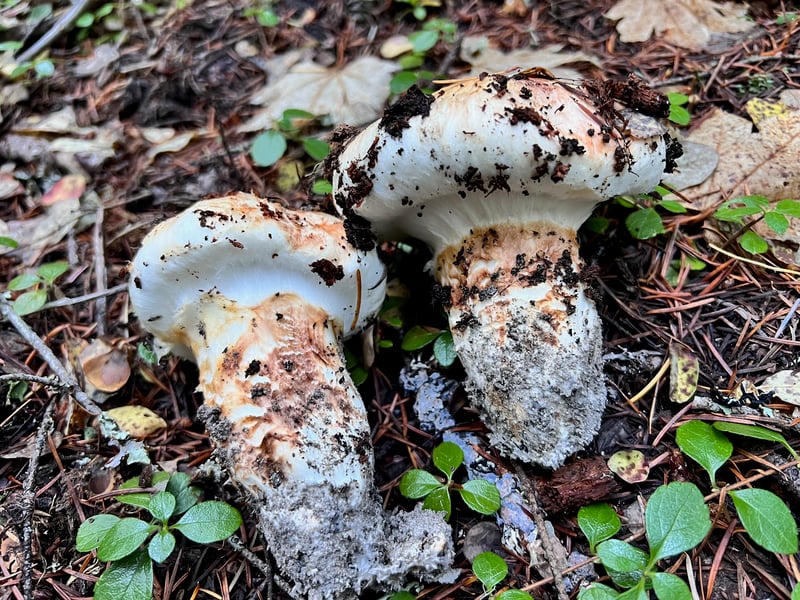
American Matsutake
Tricholoma murrillianum
White to cinnamon-stained robust mushroom often buried in duff. Spicy cinnamon-red-hots + gym-sock aroma is the field tell. Gills are white, attached, and do not bruise blue. Stem has a cottony ring zone and a dirty, tapered rooting base.
Find: Hunt tanoak, pine, and hemlock duff after the first hard fall rains. Look for humps ('mushrumps') in the needles — they fruit underground. Poke gently; do not rake.
Pick: A wooden stick to lift duff, then a twist. Re-cover the hole. Grade on the spot: veil intact = #1. Never wash; brush only.
- Cinnamon + gym-sock spice smell
- No cup/volva at the dug base
- Attached white gills, not free
- Dirty, tapering, rooting stem
Lookalikes: Destroying angel (Amanita); Catathelasma / other white trichs
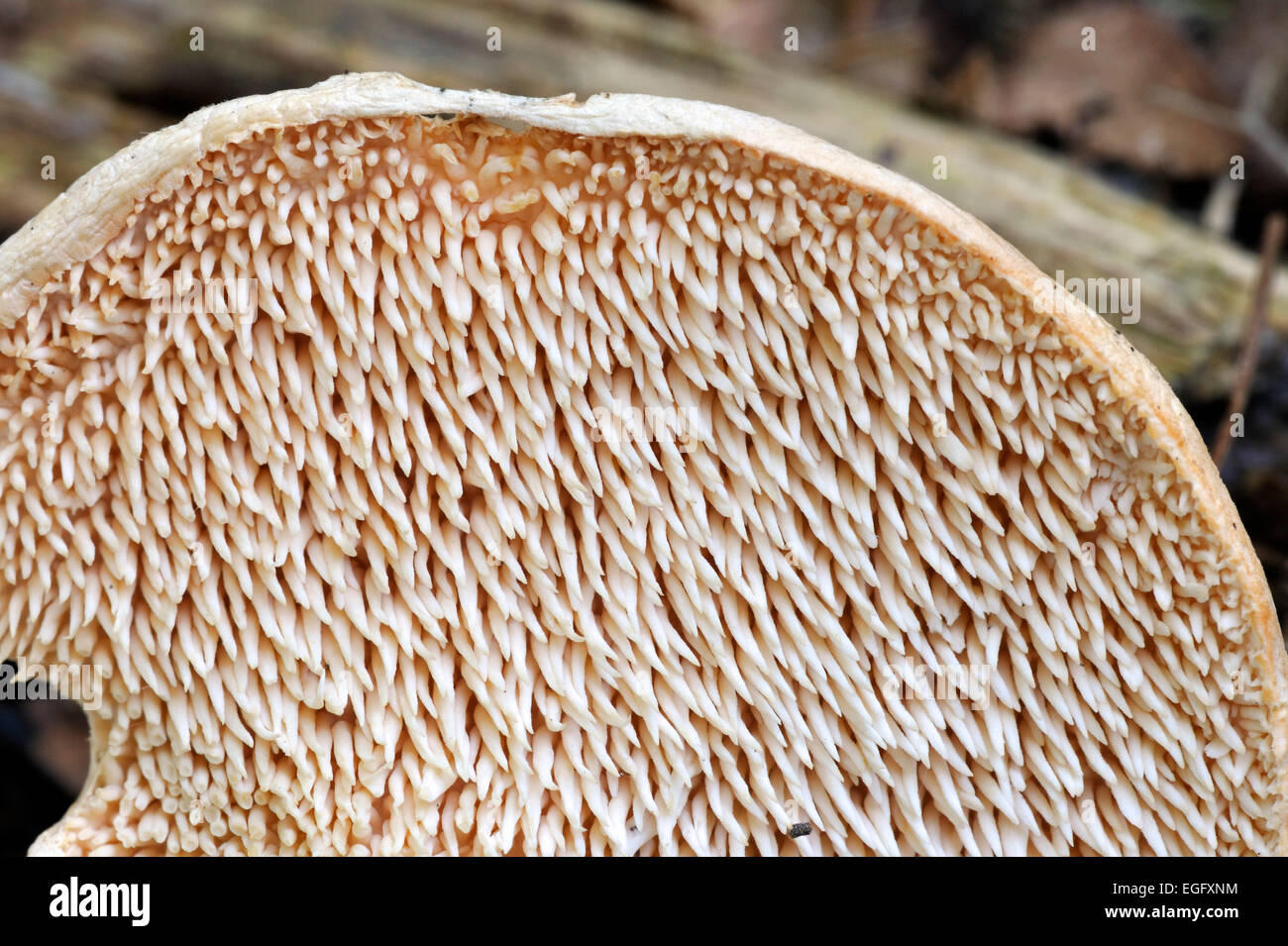
Hedgehog / Sweet Tooth
Hydnum repandum
Pale peach to cream mushroom with spines (teeth) under the cap instead of gills or pores. Flesh is brittle and stains slightly orange. One of the safest wild edibles on Earth.
Find: Same mossy conifer ground as chanterelles, often later in the season. They hide under sword ferns. Follow old chanterelle patches into November.
Pick: Cut at the base. Spines shed in the bag — that is normal. Firm young caps keep best.
- Soft spines/teeth under the cap
- Cream to peach, never dark brown
- Brittle, carrot-like snap
Lookalikes: Other Hydnum / Sarcodon
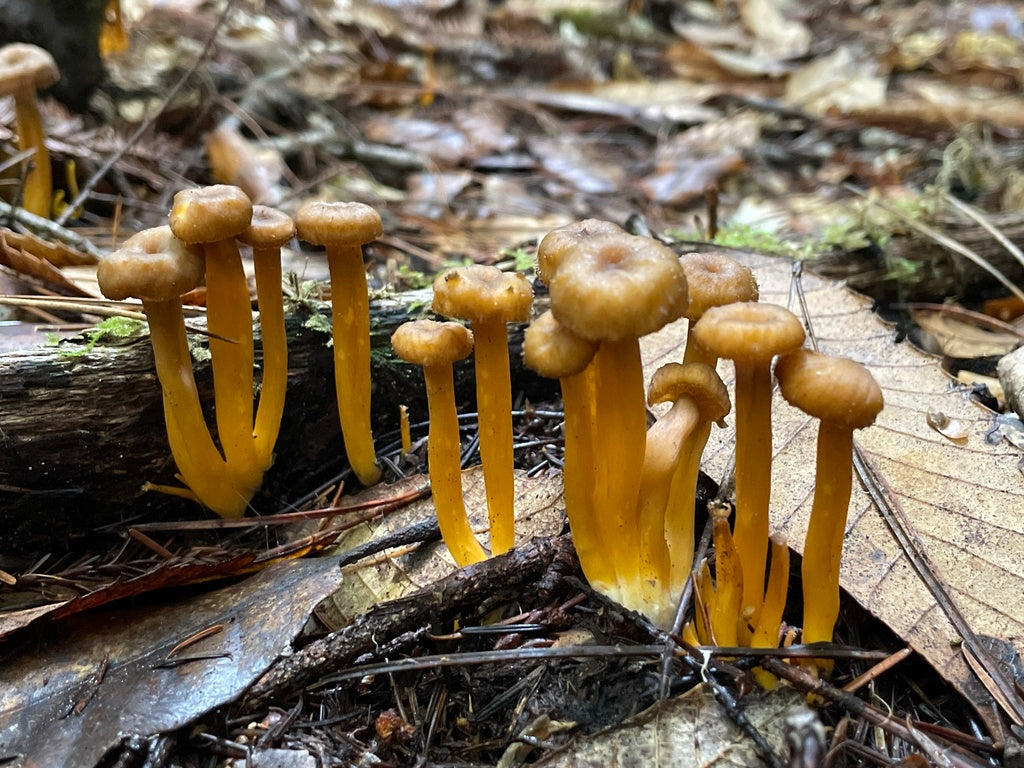
Winter Chanterelle / Yellowfoot
Craterellus tubaeformis
Small funnel with a brown-yellow cap, blunt ridges, and a hollow yellow-orange stem. Fruits in huge troops late fall into winter on mossy conifer ground.
Find: After frosts, walk wet moss under hemlock. Once you see one, the hillside is often covered.
Pick: Pinch clusters. They dry beautifully. Check for slugs in the hollow stem.
- Hollow yellow-orange stem
- Blunt decurrent ridges
- Cap depressed to funnel
Lookalikes: Small brown gilled mushrooms
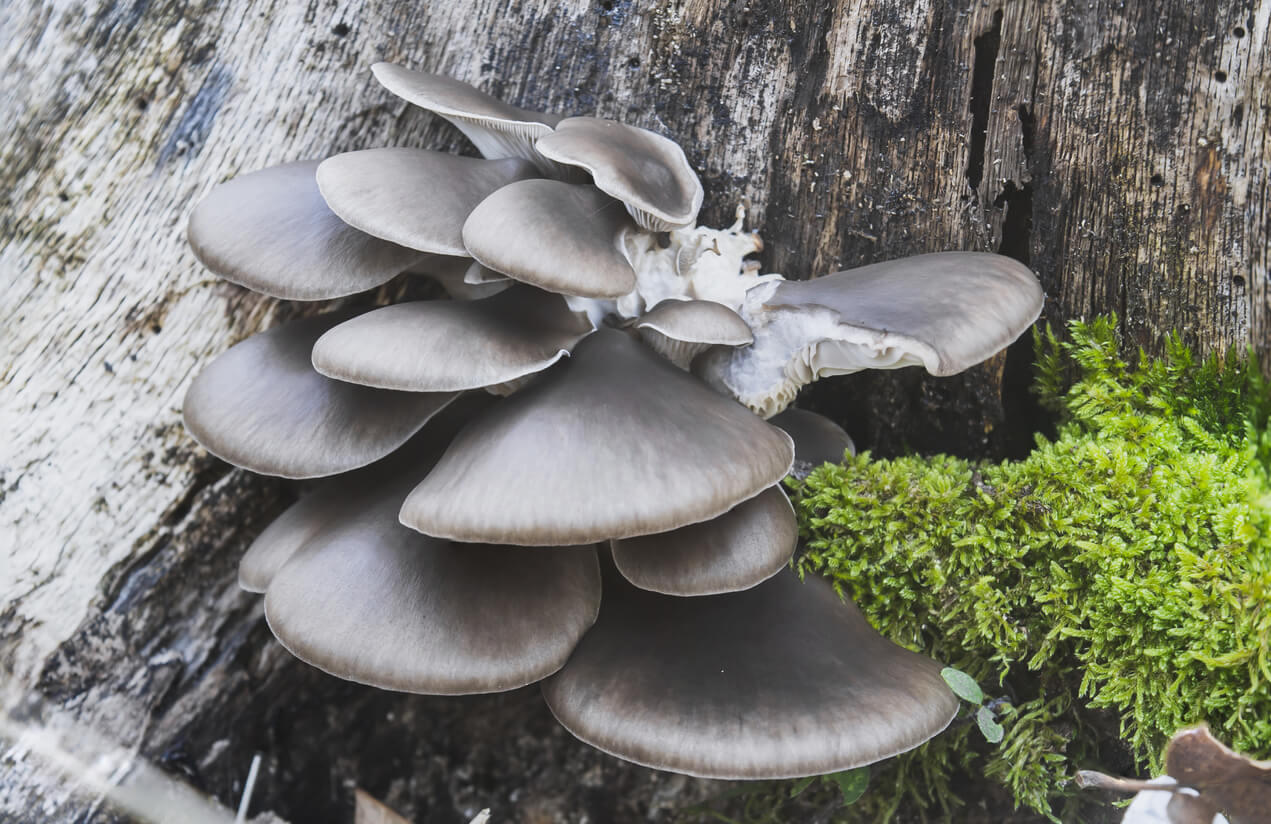
Oyster Mushroom
Pleurotus ostreatus complex
Shelf-like clusters on hardwood with off-center stems, decurrent white-to-cream gills, and a lilac-gray to tan cap. Spore print is lilac-gray. One of the safer beginner wood mushrooms — but still confirm gills + wood + no ring, and never confuse with small brown wood fungi.
Find: Scan standing dead and fallen hardwoods after cold rains. They often fruit in the same log for years. Winter on the coast, cooler months inland.
Pick: Cut the cluster at the wood. Leave a pad. Trim tough bases. Use within two days; they sour fast.
- Shelf/cluster on wood with decurrent gills
- Lilac-gray to white spore print
- No ring and no volva
- Does not bruise blue
Lookalikes: Angel wings (Pleurocybella); Deadly galerina
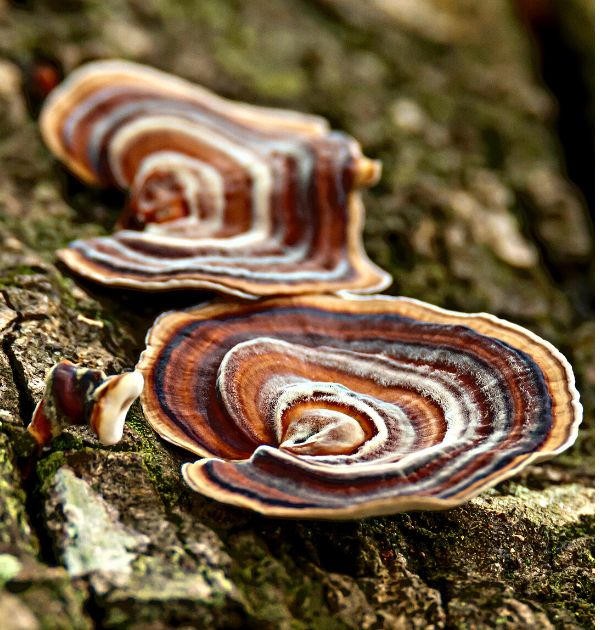
Turkey Tail
Trametes versicolor
Thin, flexible brackets with concentric zones of brown, rust, blue-gray, and a white growing edge. Underside is a layer of tiny round white-to-cream pores — never gills, never teeth. Flesh is thin and leathery. One of the most studied medicinal polypores (PSK).
Find: Almost any hardwood deadwood in the wet months. Look at the ends of oak, maple, and beech logs. Year-round woody body; new growth after rain.
Pick: Cut clean brackets, brush, and dry immediately. Leave plenty. Confirm pores with a hand lens — false turkey tails have a smooth or toothed underside.
- Thin concentric color zones + white edge
- Tiny round pores on the underside
- Thin and flexible, not woody-thick
Lookalikes: False turkey tail (Stereum); Violet-toothed polypore
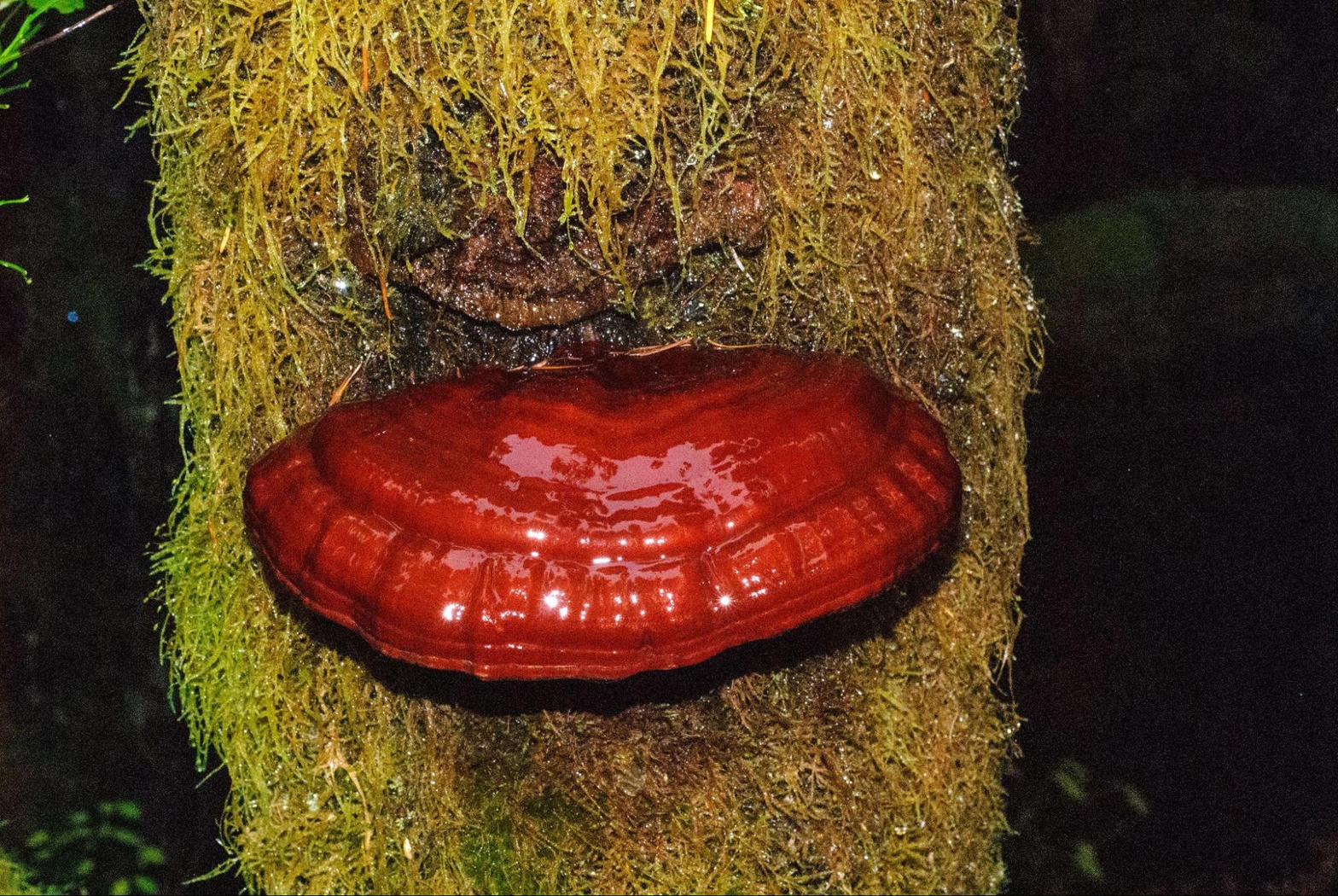
Reishi / Varnished Conk
Ganoderma lucidum / G. oregonense
Shiny, lacquered red-brown kidney-shaped shelf with white growing edge and brown pores. Woody — simmered for tea, not fried as a steak.
Find: Scan hemlock and hardwood stumps for a wet-looking red lacquer. Year-round woody body; new growth in summer–fall.
Pick: Cut at the attachment. Dry thoroughly to prevent mold. Leave some on each stump.
- Shiny varnished red surface
- Brown pores, woody flesh
- White growing margin when fresh
Lookalikes: Artist's conk (G. applanatum); Red-belted conk